DAV Glacier Course / Johannisberg (3,453 m) - Hohe Tauern, Austria
July 18 - 21, 2013
Report
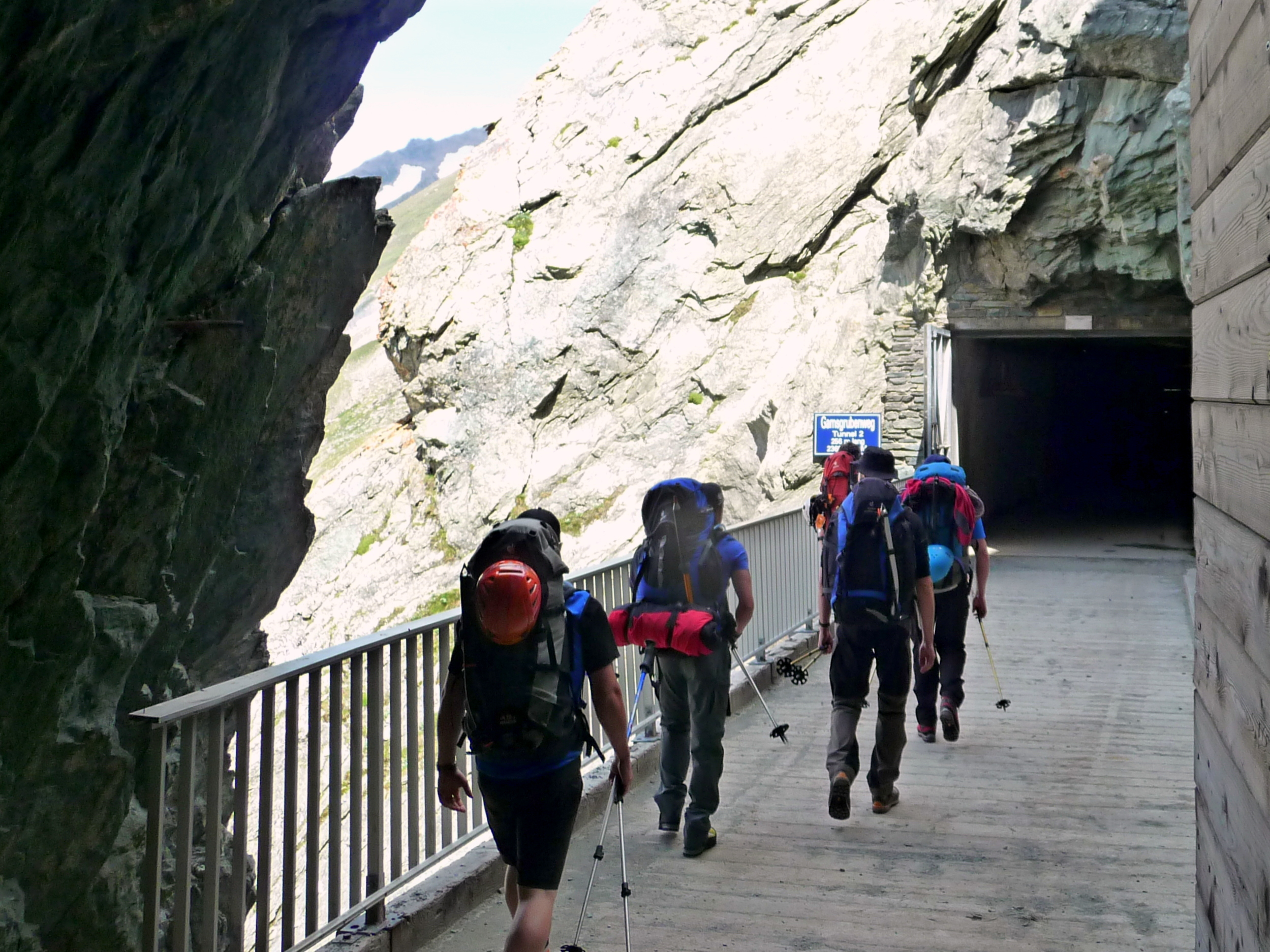
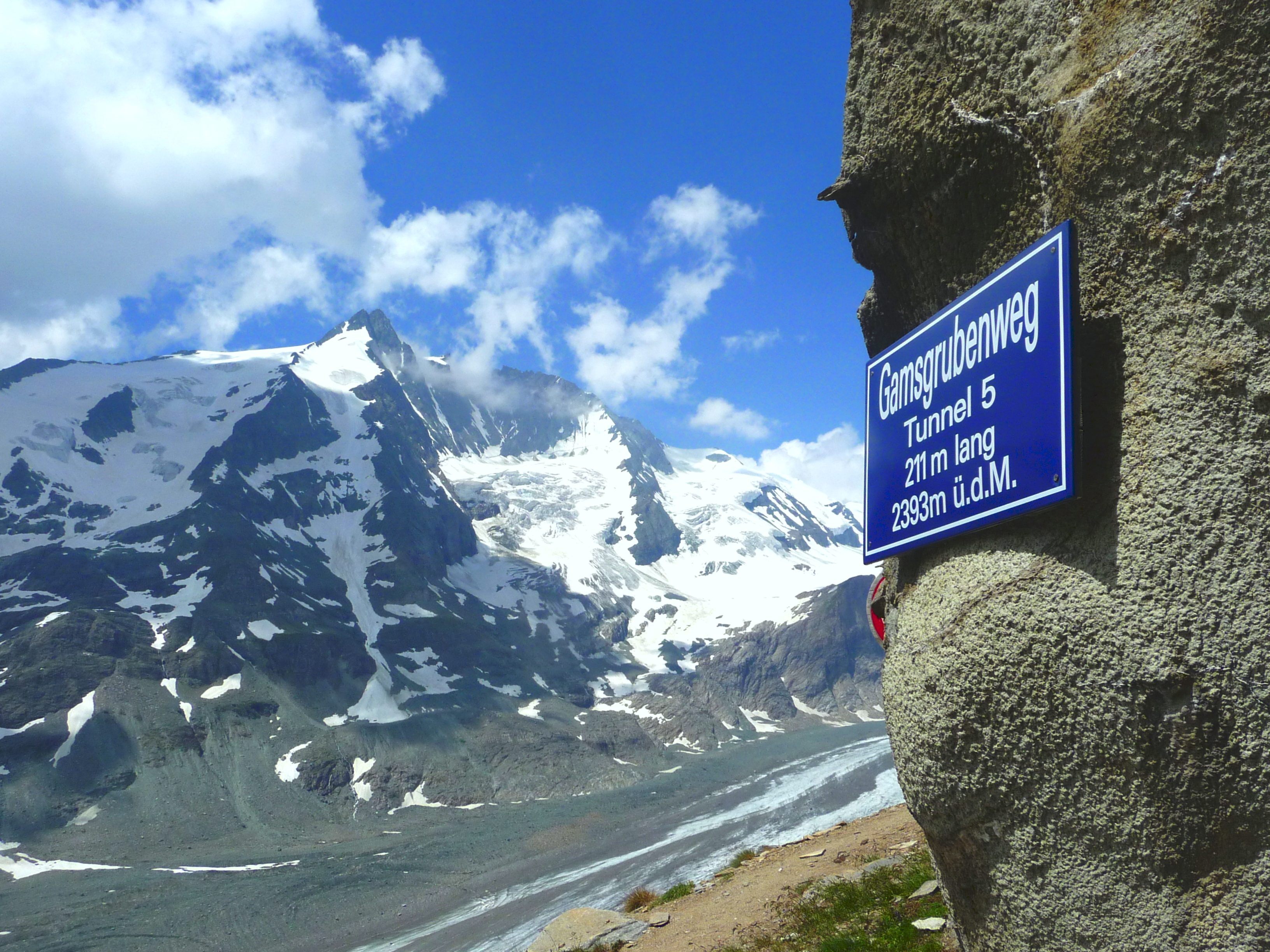
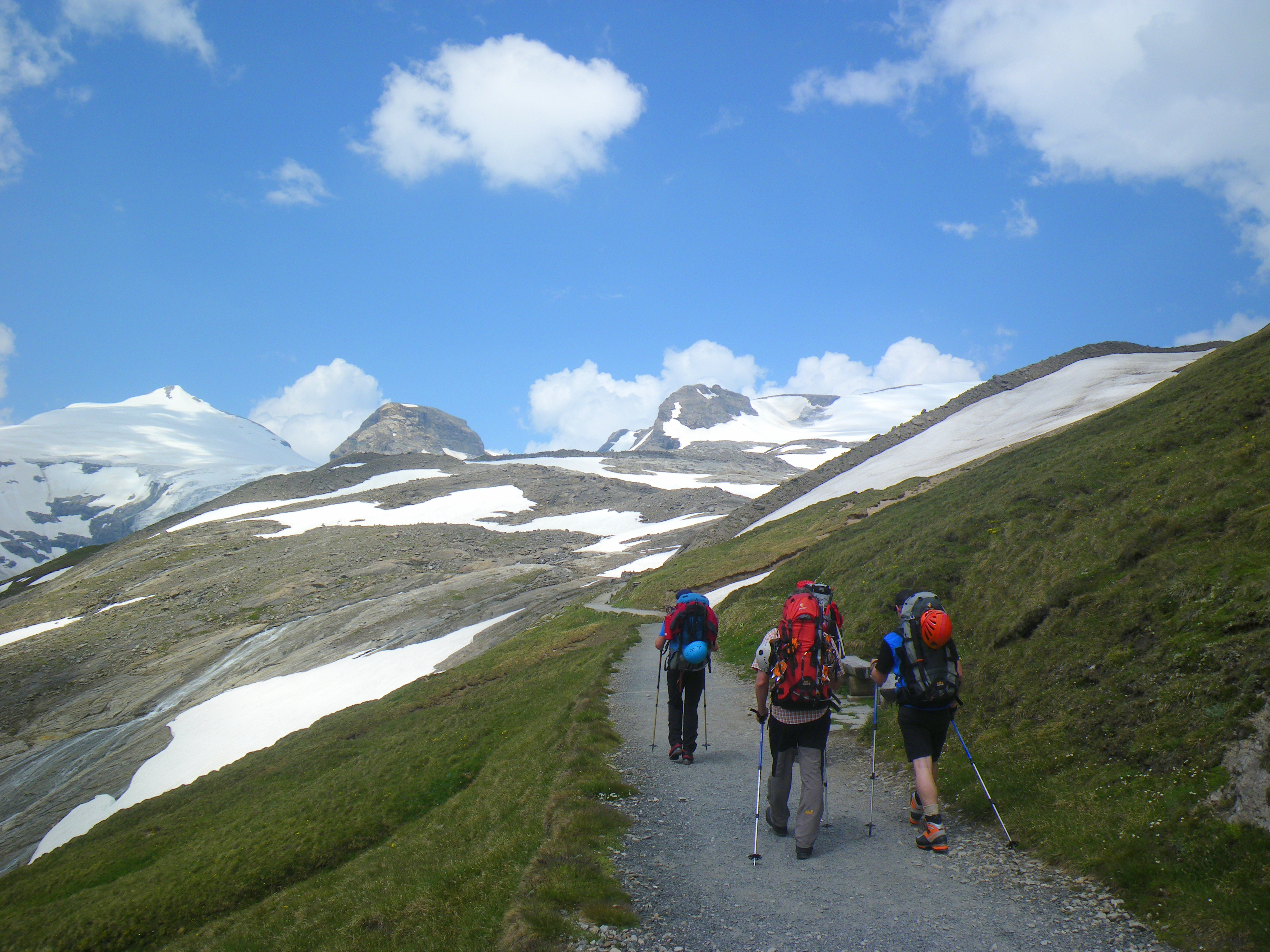
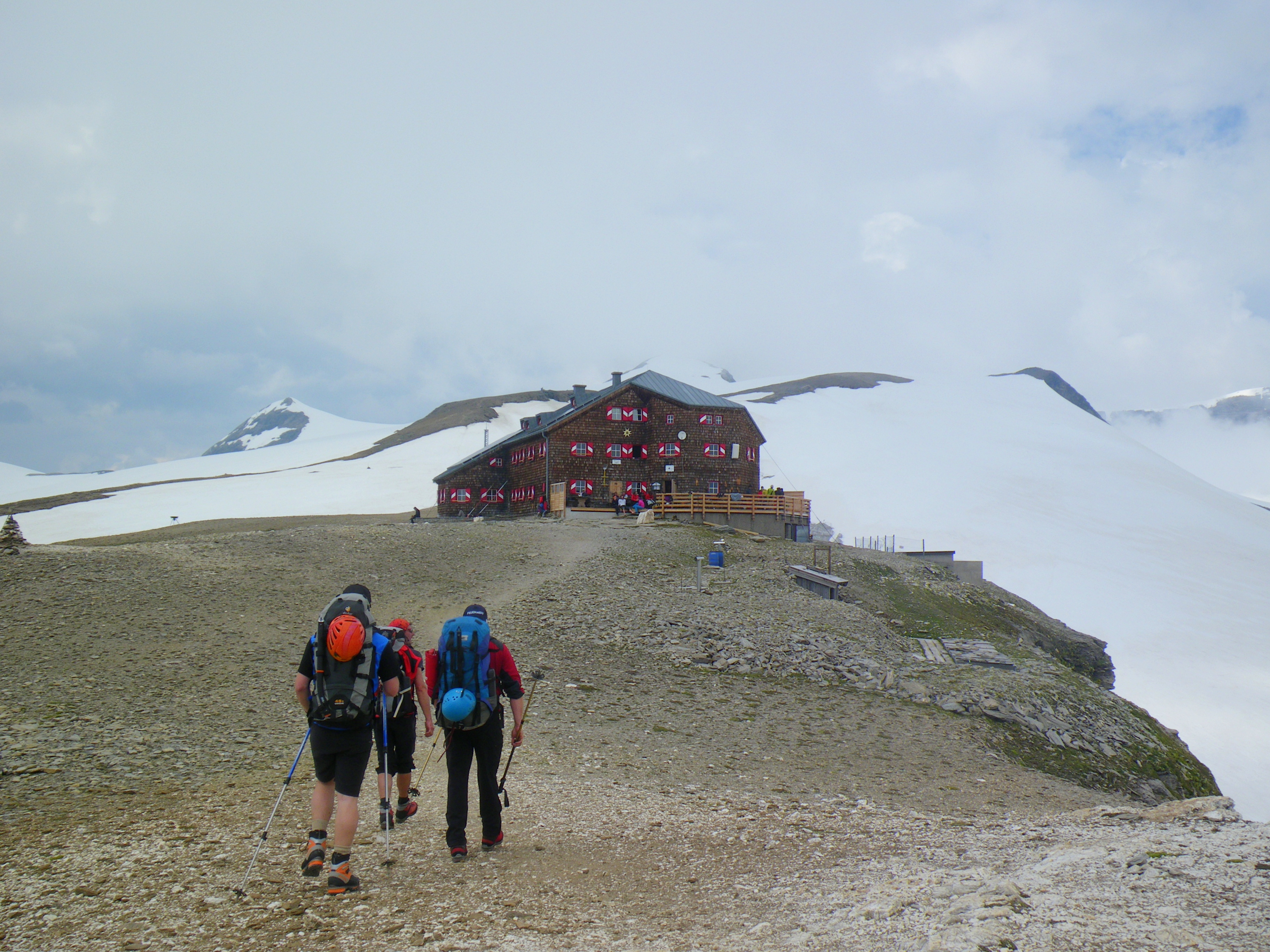
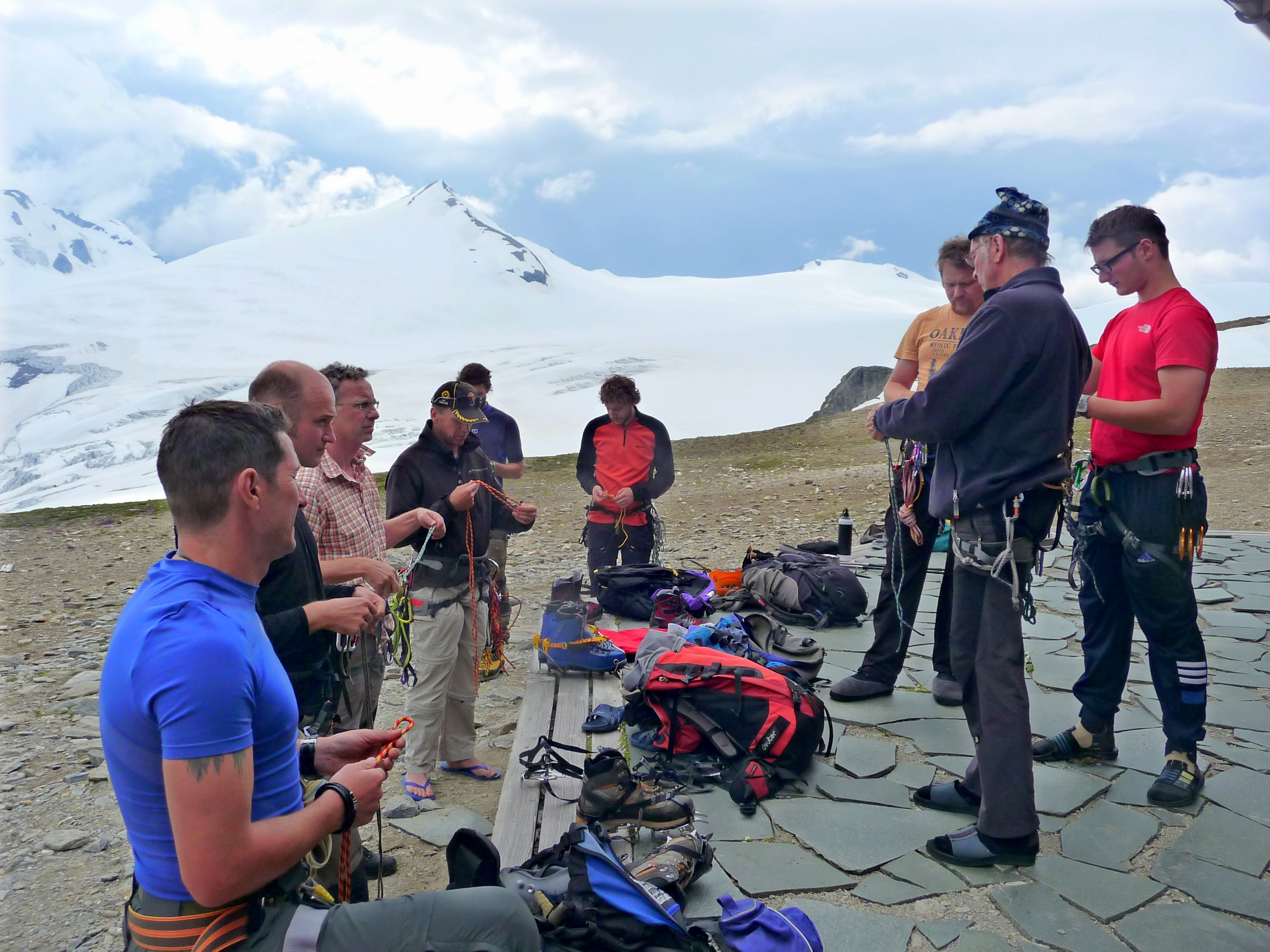
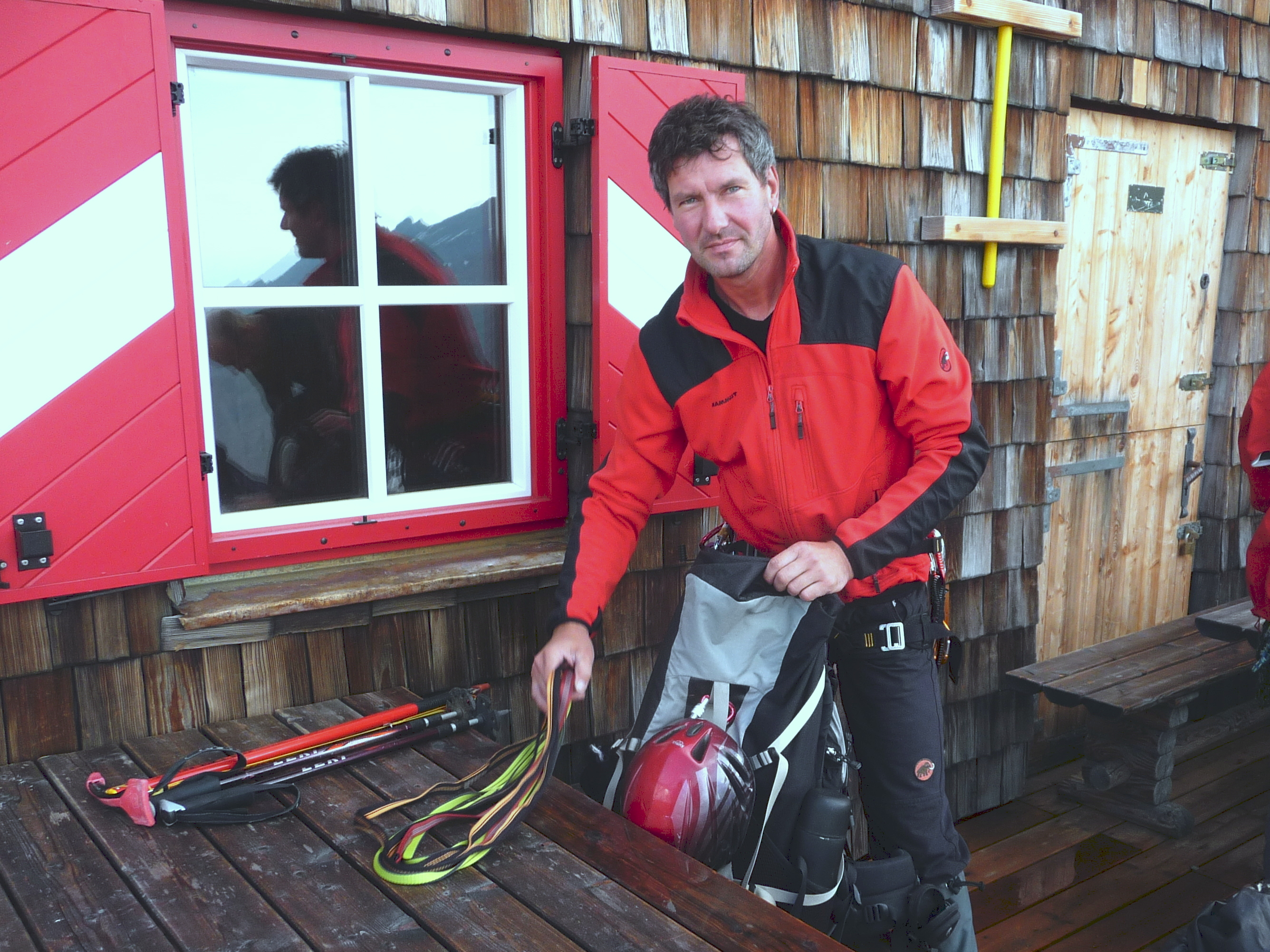
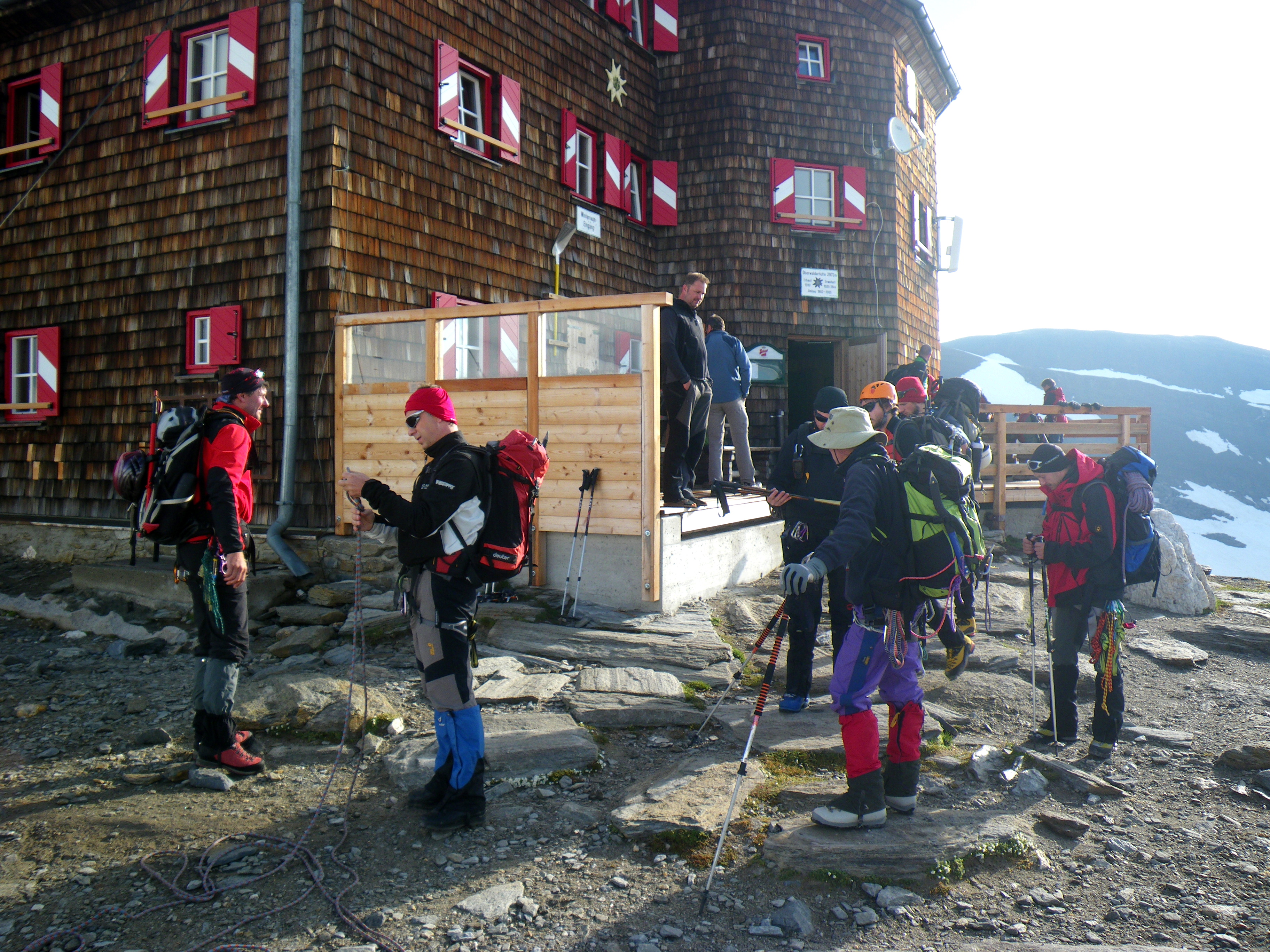
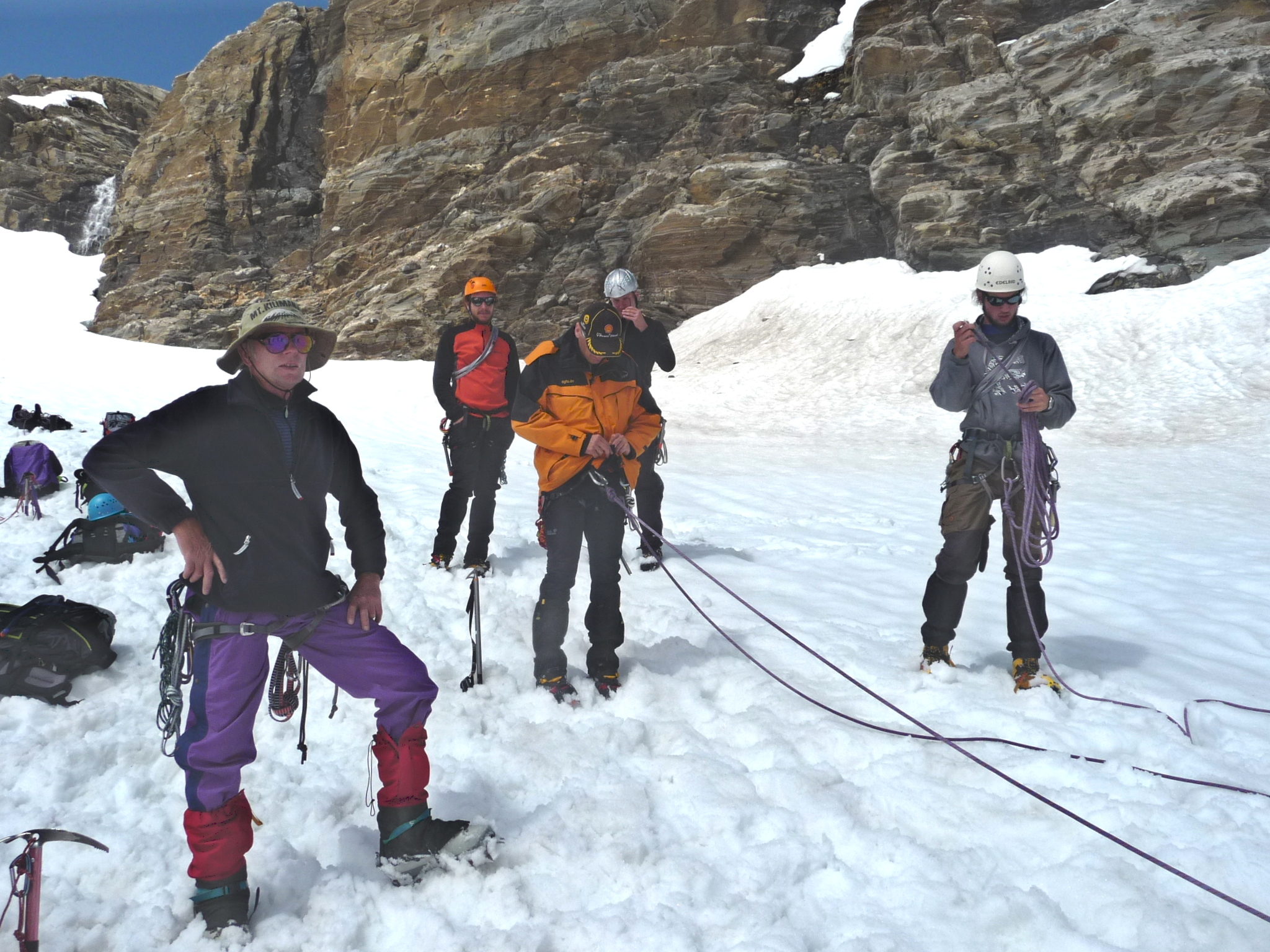
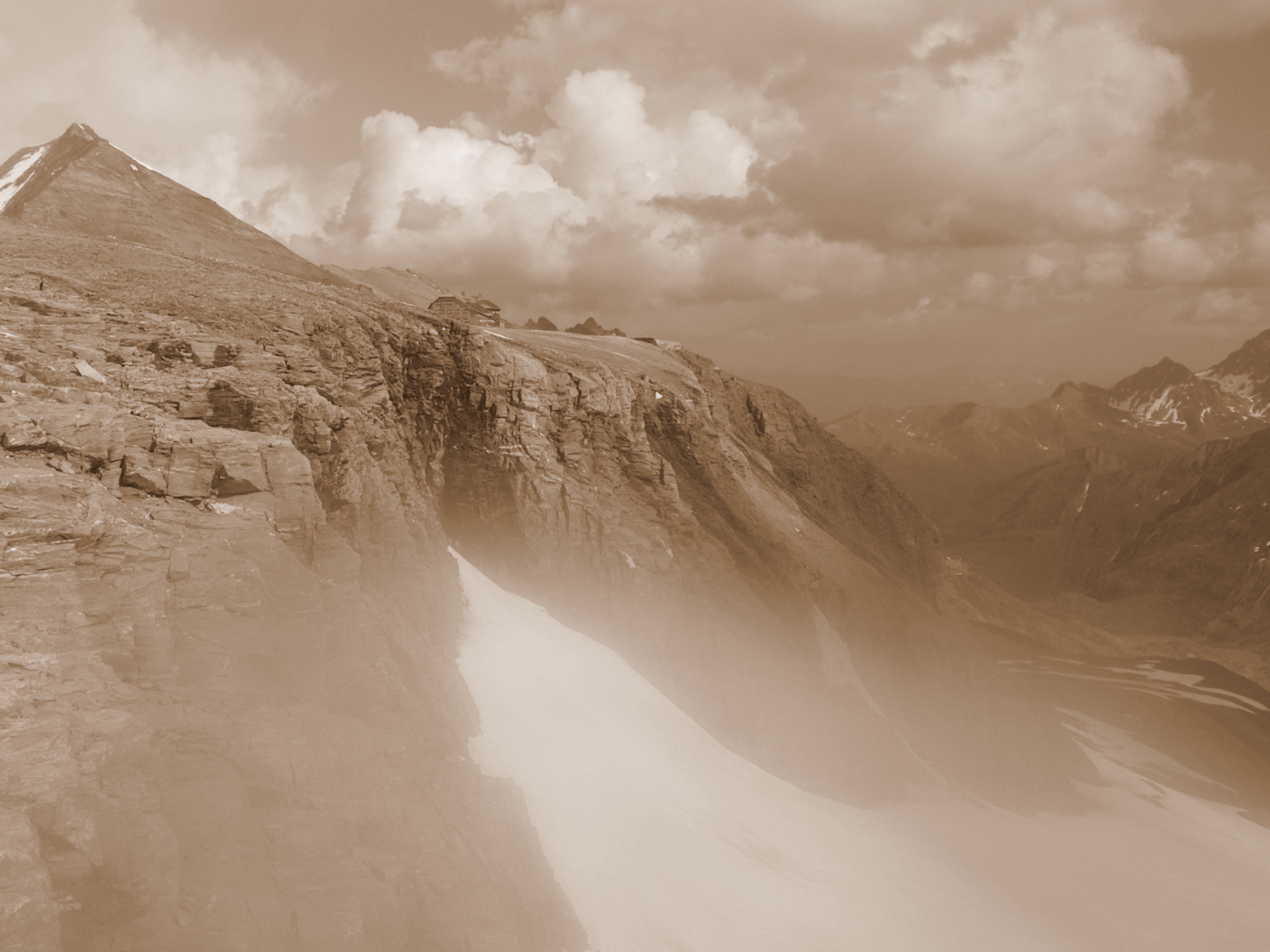
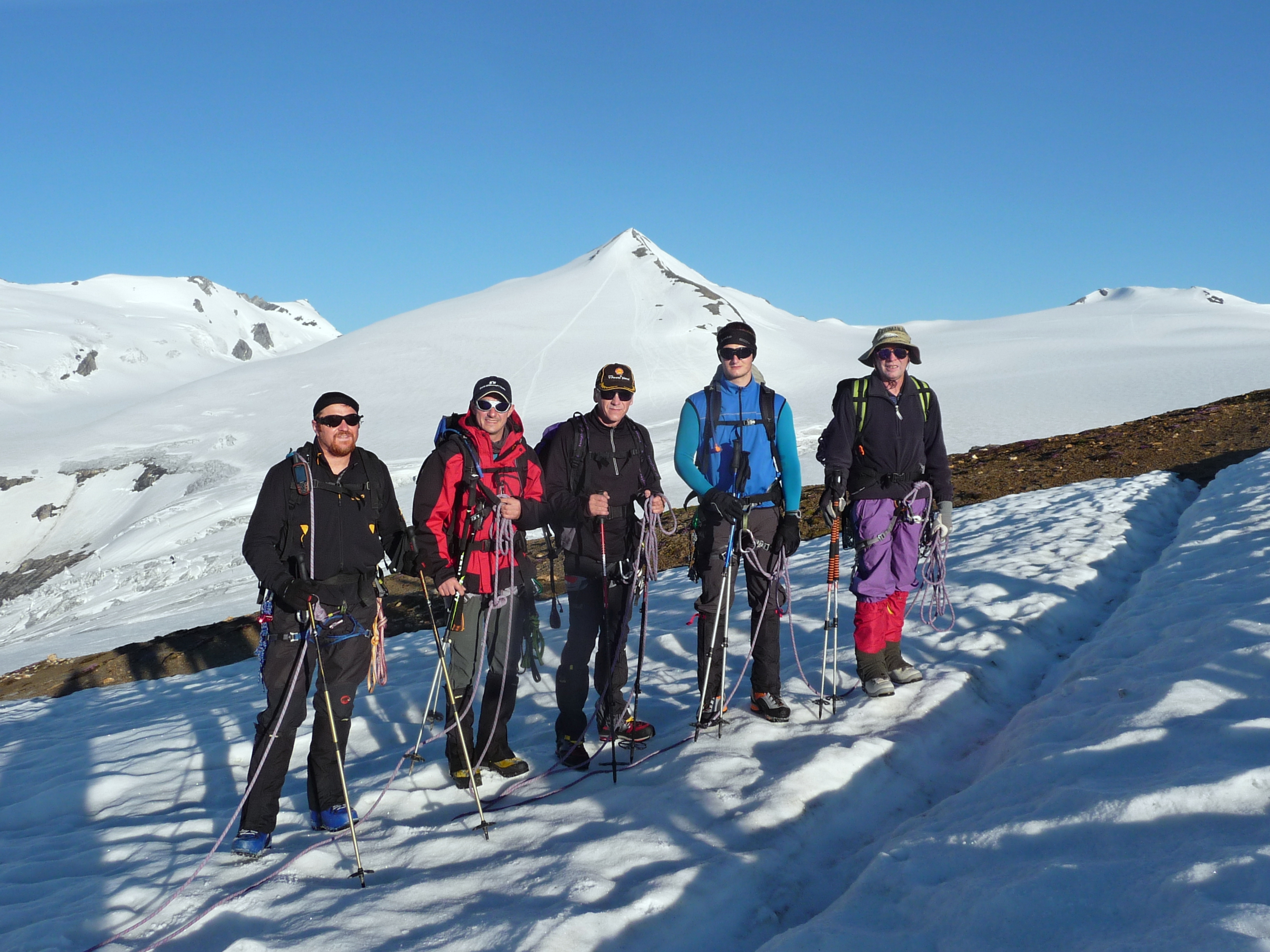
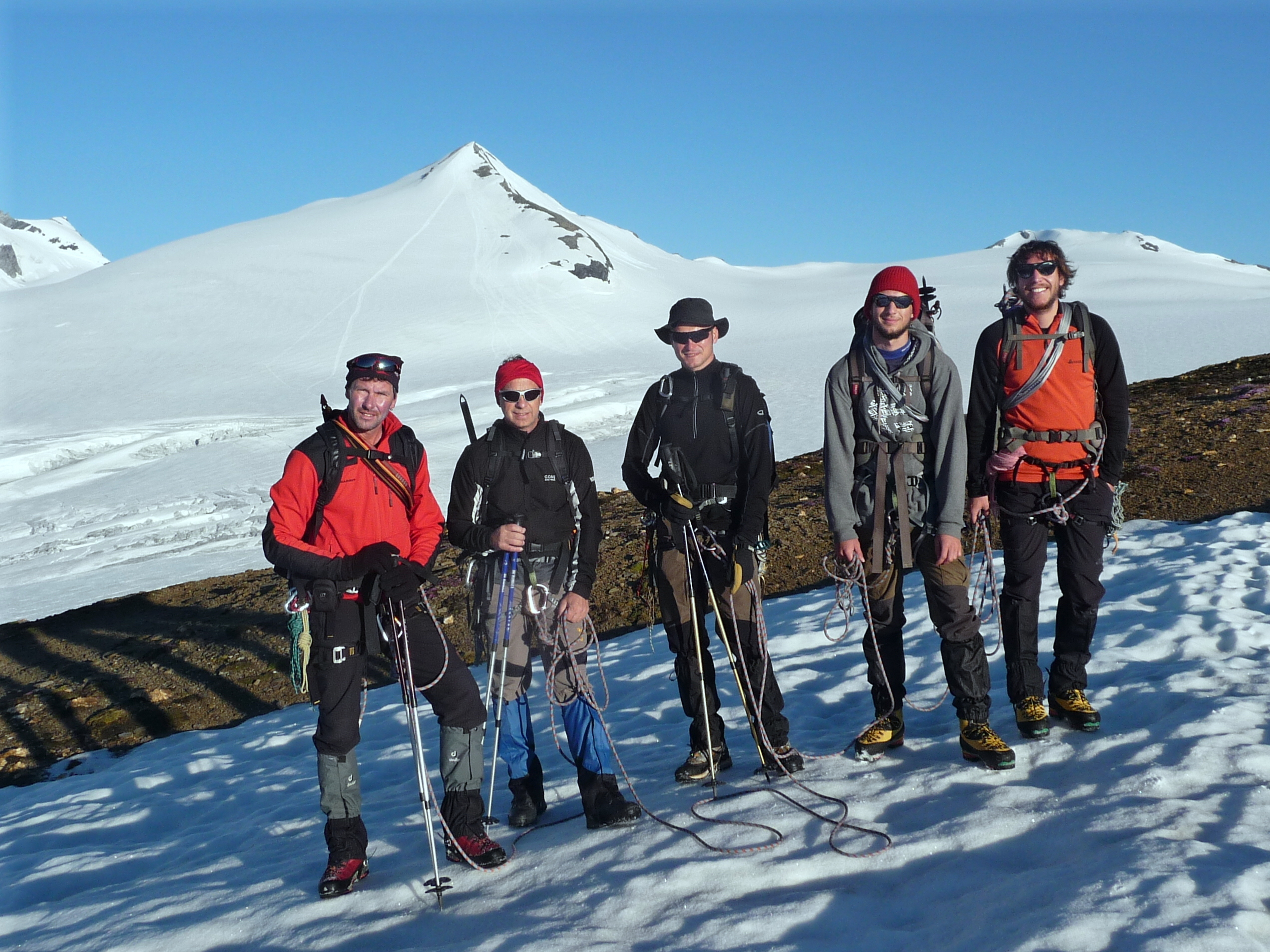
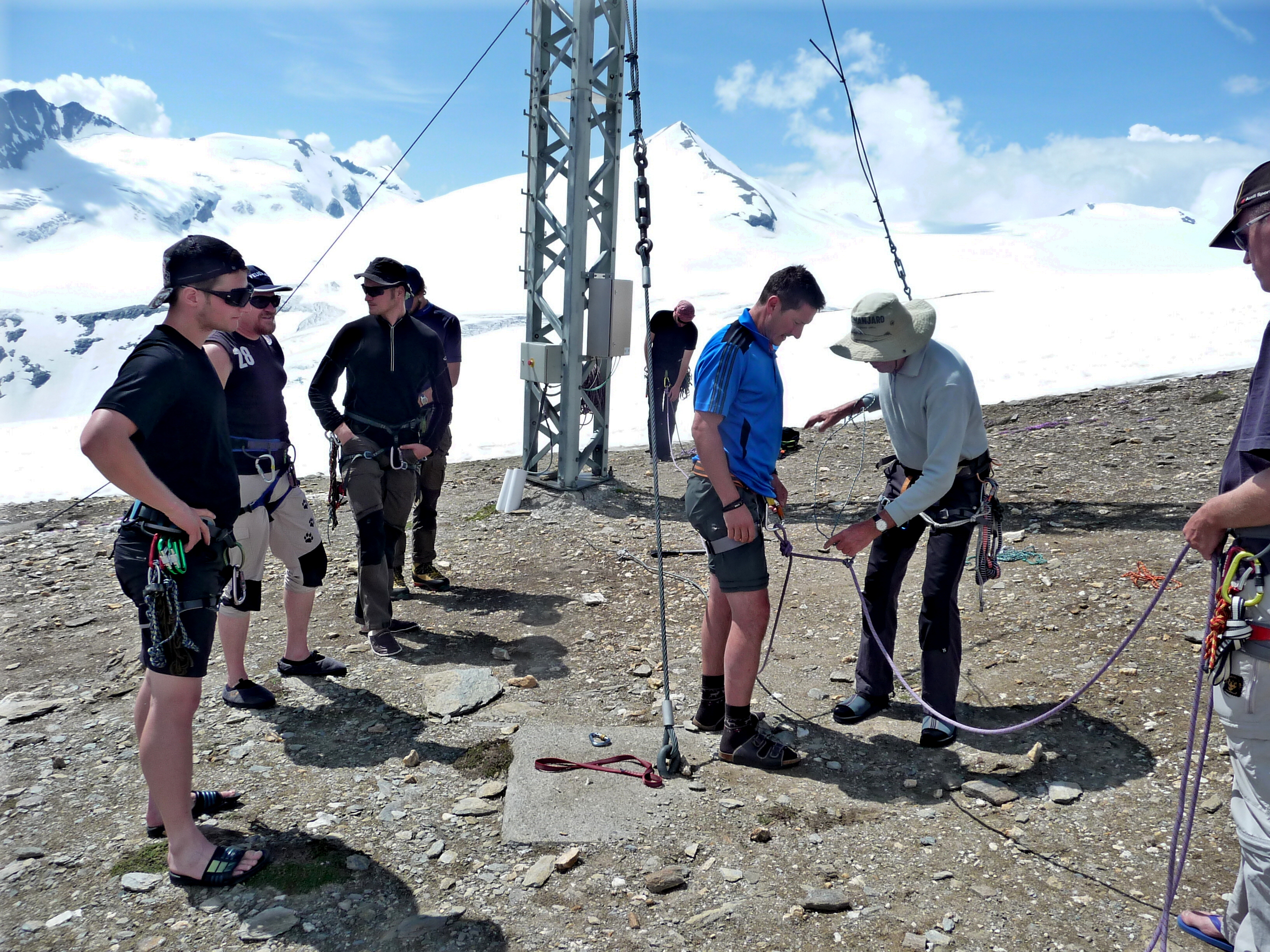
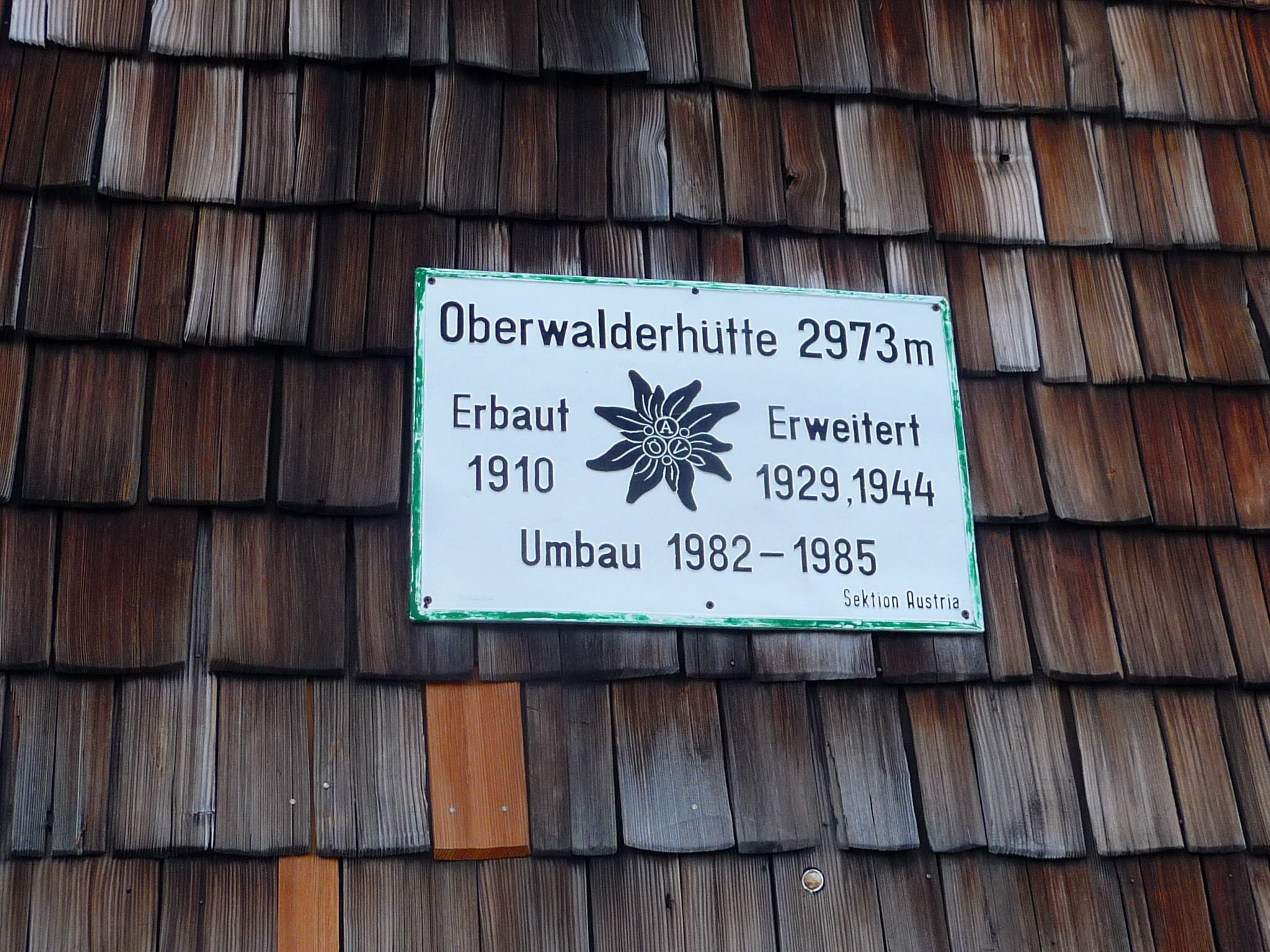
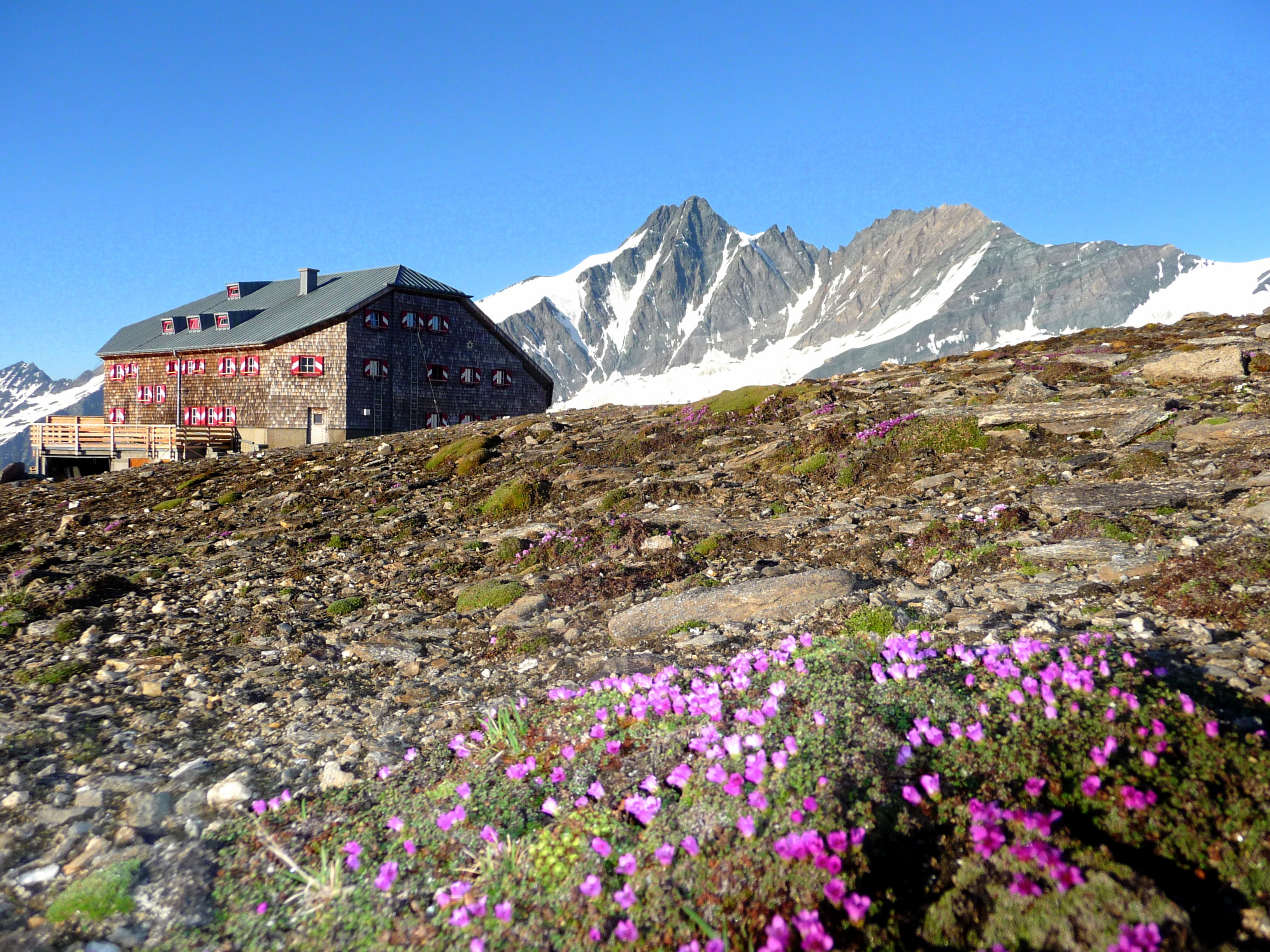
In July, the annual high-altitude mountaineering training of DAV Section Deggendorf took place in the Großglockner area. The ten participants in total, four of whom belonged to DAV Section Passau, had set up base at the Oberwalderhütte (2,973 m), a mountain hut operated by the Austria Section of the Austrian Alpine Club (OeAV). Built around 1910 and renovated in 1985, the Oberwalderhütte is undoubtedly a first-class mountain hut. It served as the participants’ base camp throughout the entire course. Right after the two-and-a-half-hour ascent via the Gamsgrubenweg, an equipment check was carried out under the guidance of tour leaders Erich Binder and Sigi Stangl. Crampons were checked for proper fit and knot-tying skills were refreshed. After dinner, the participants were briefed on the dangers of high-altitude terrain and the signs of altitude sickness. To this end, each participant recorded their resting pulse and blood oxygen saturation throughout the entire course, as well as during the week before.
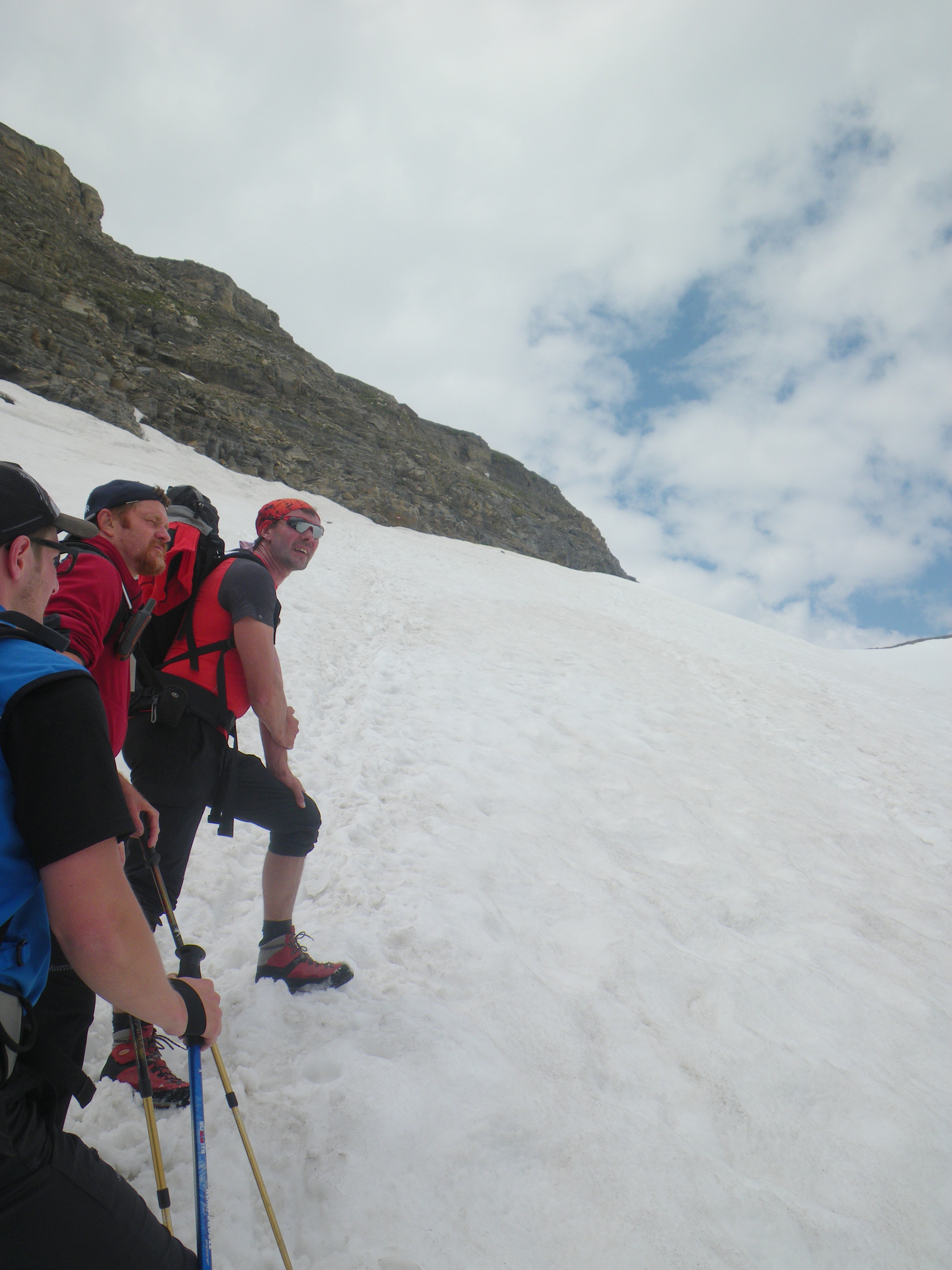
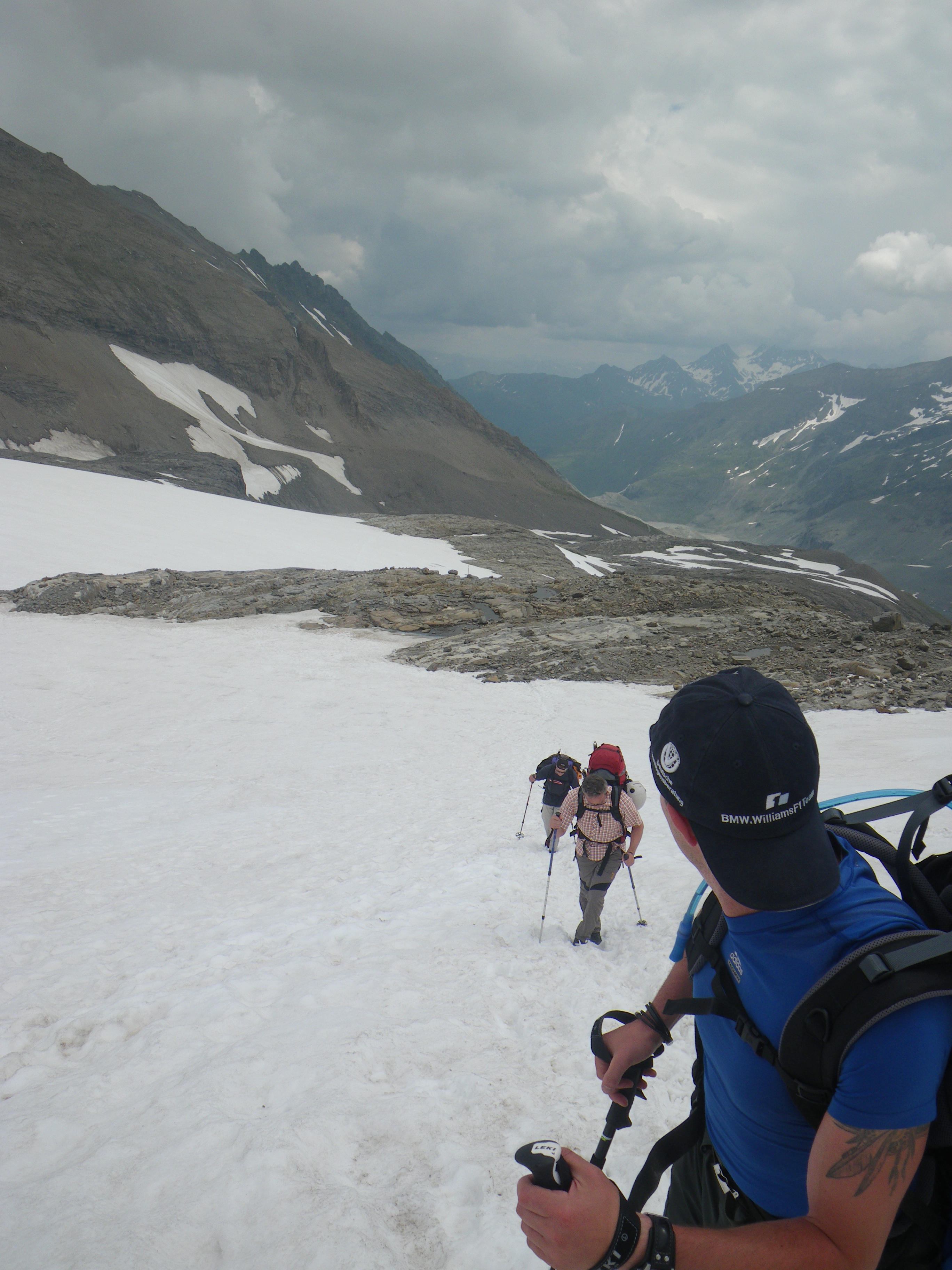
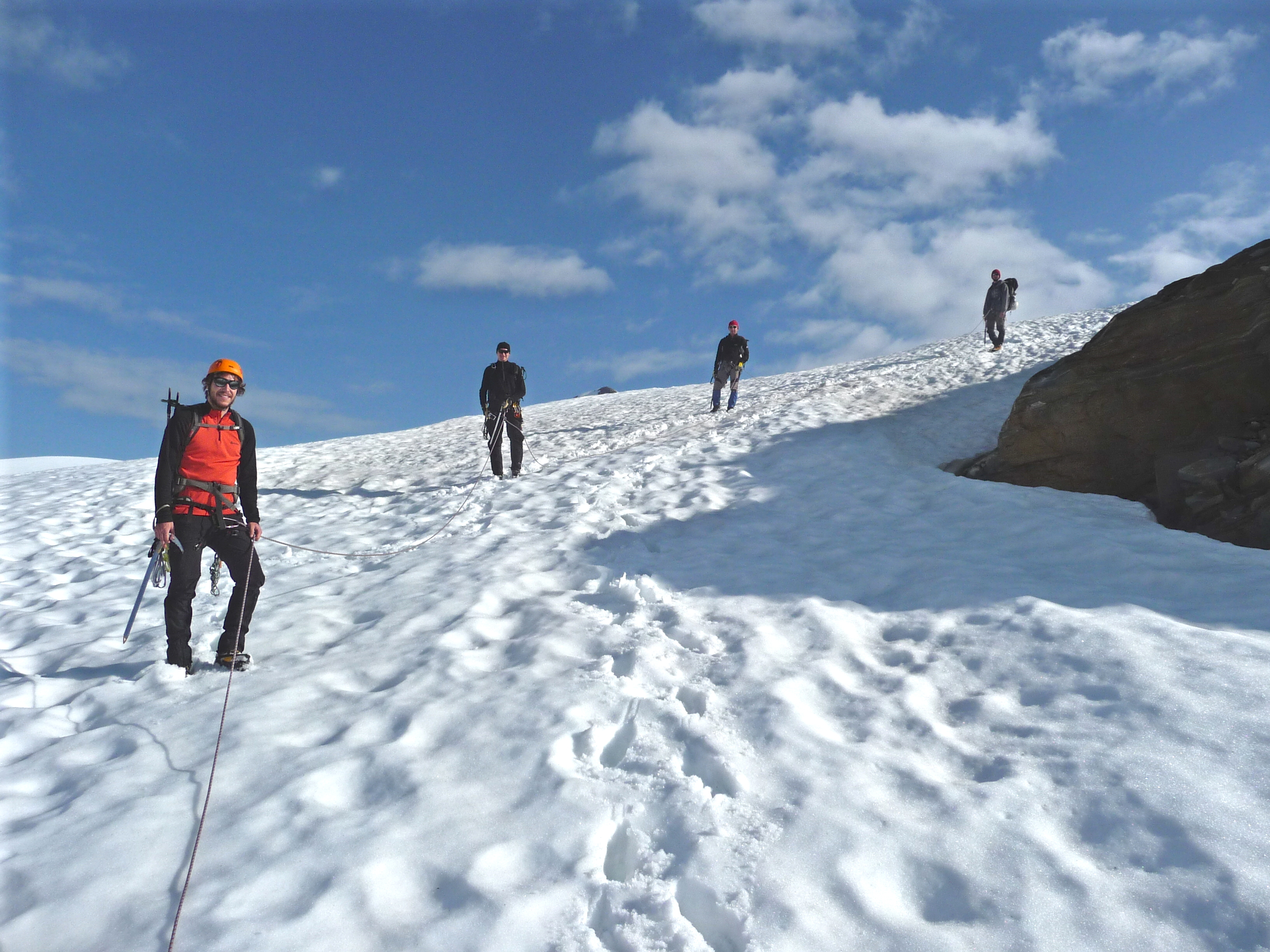
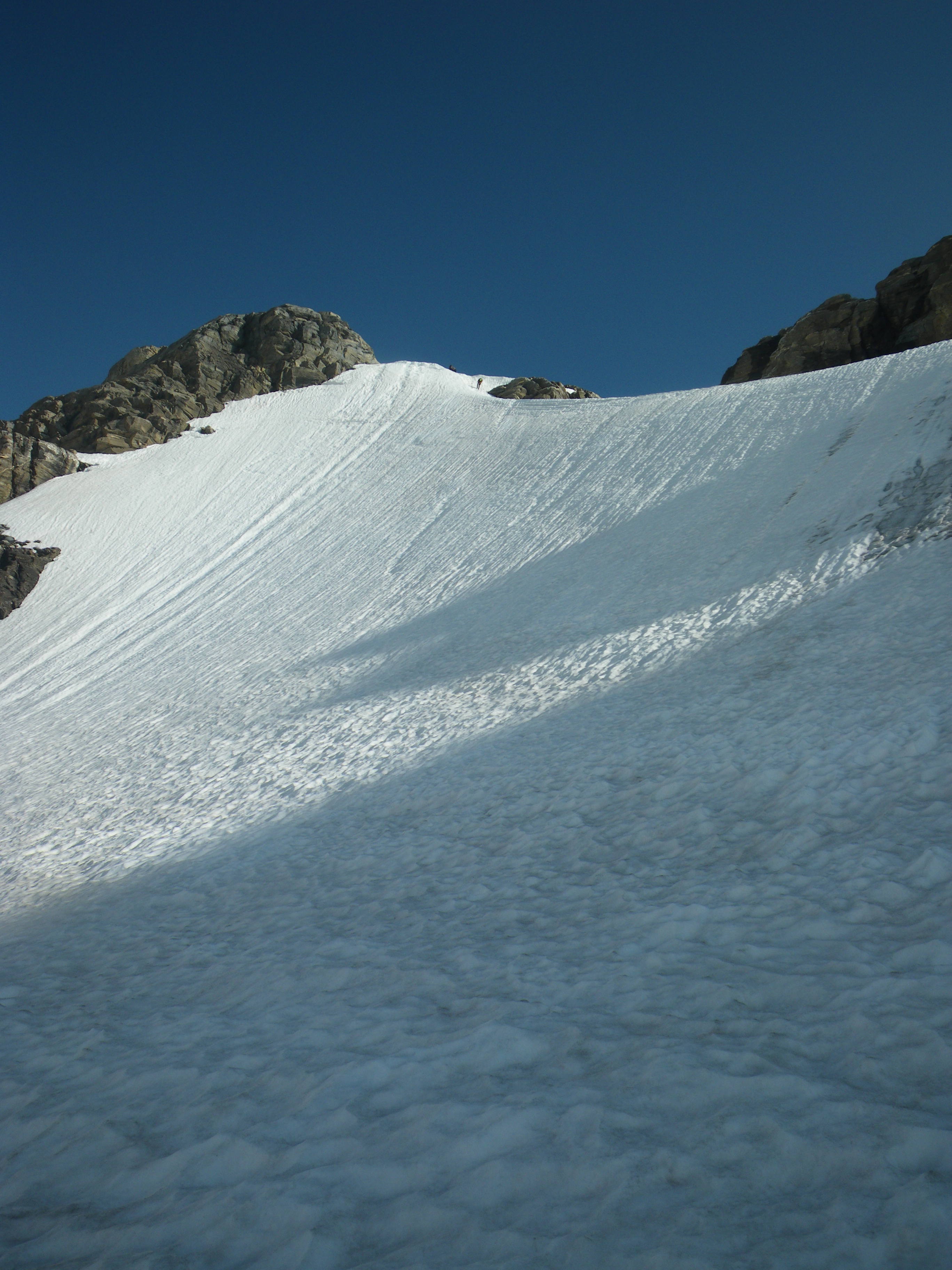
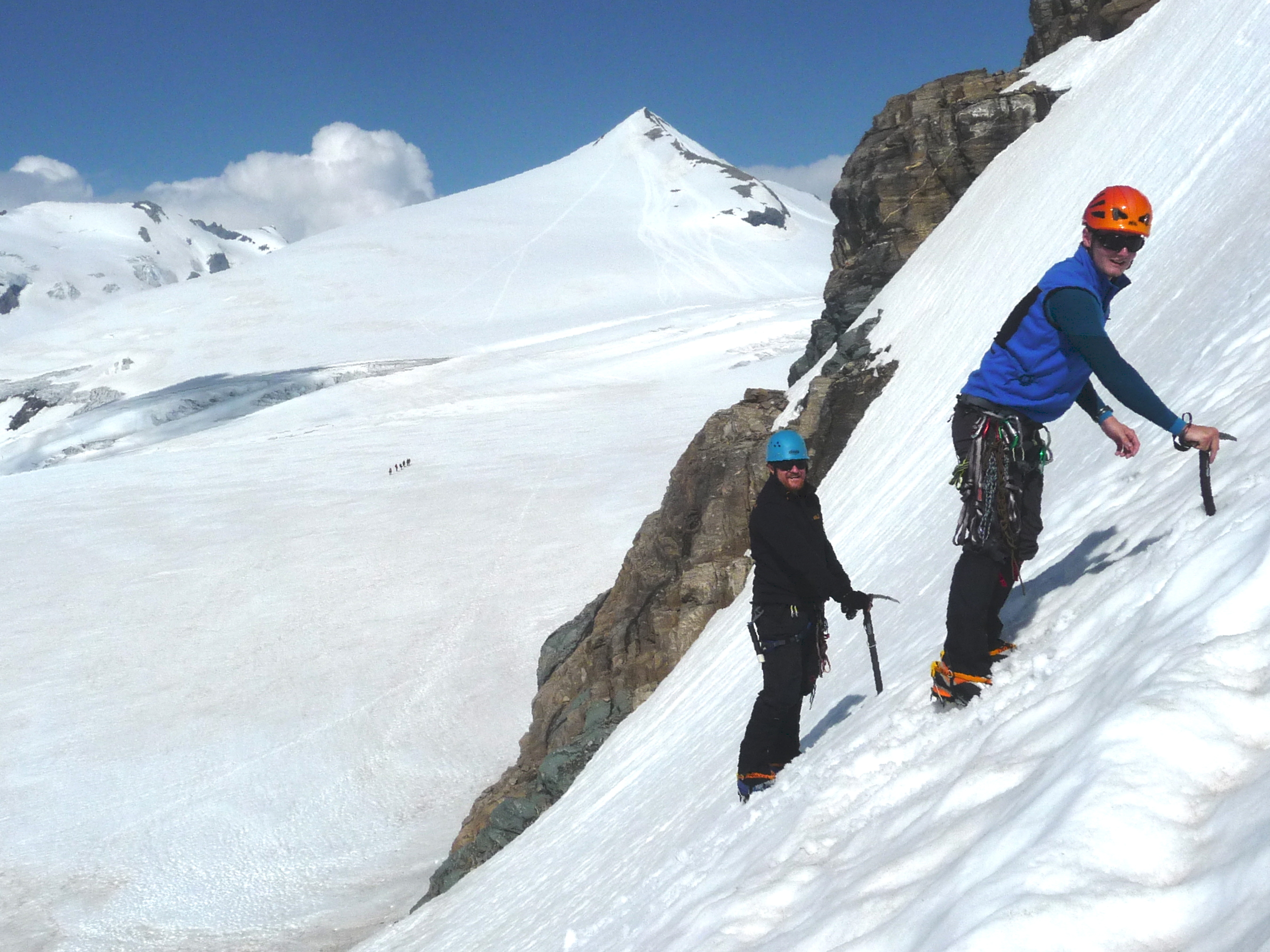
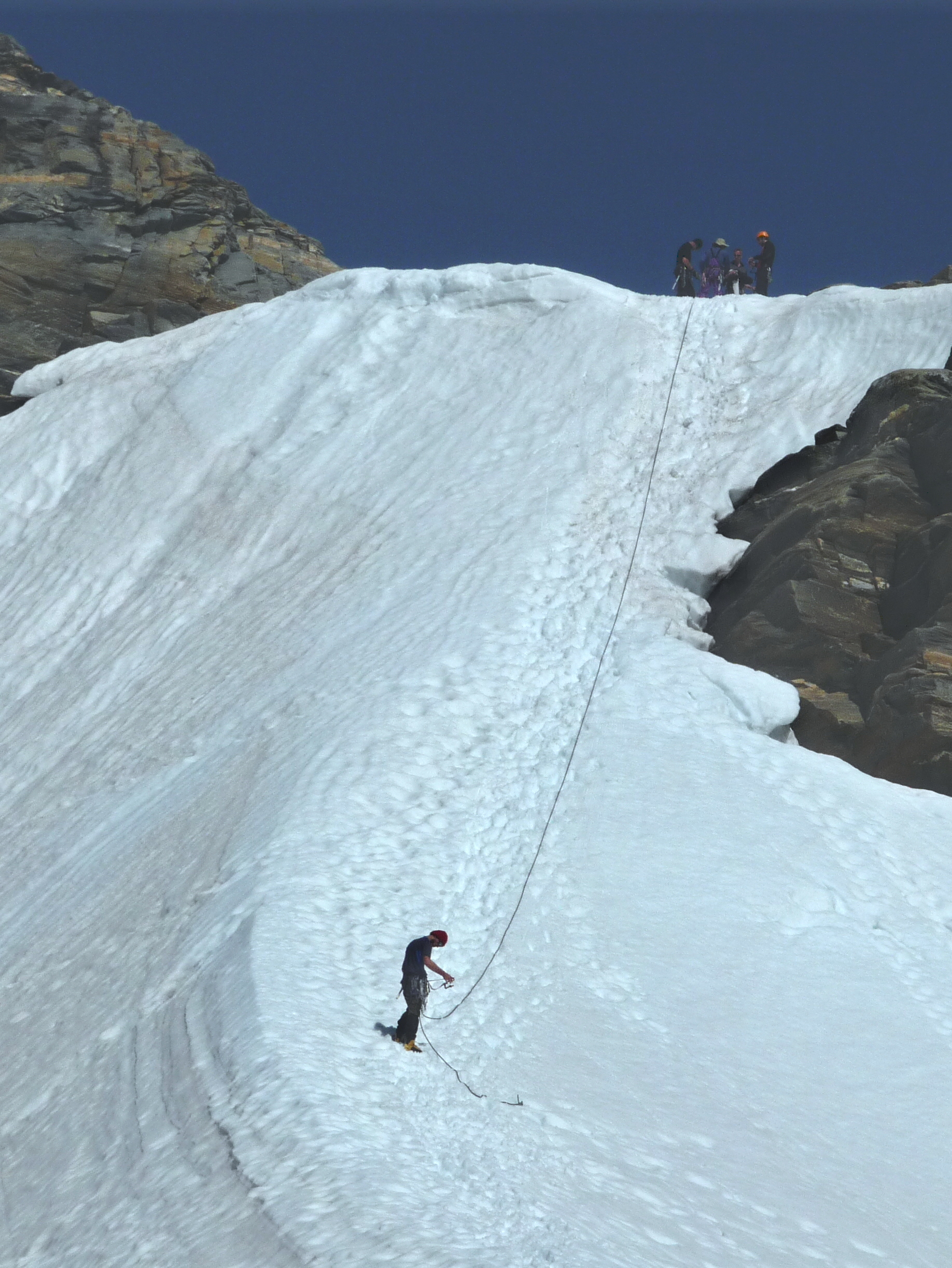
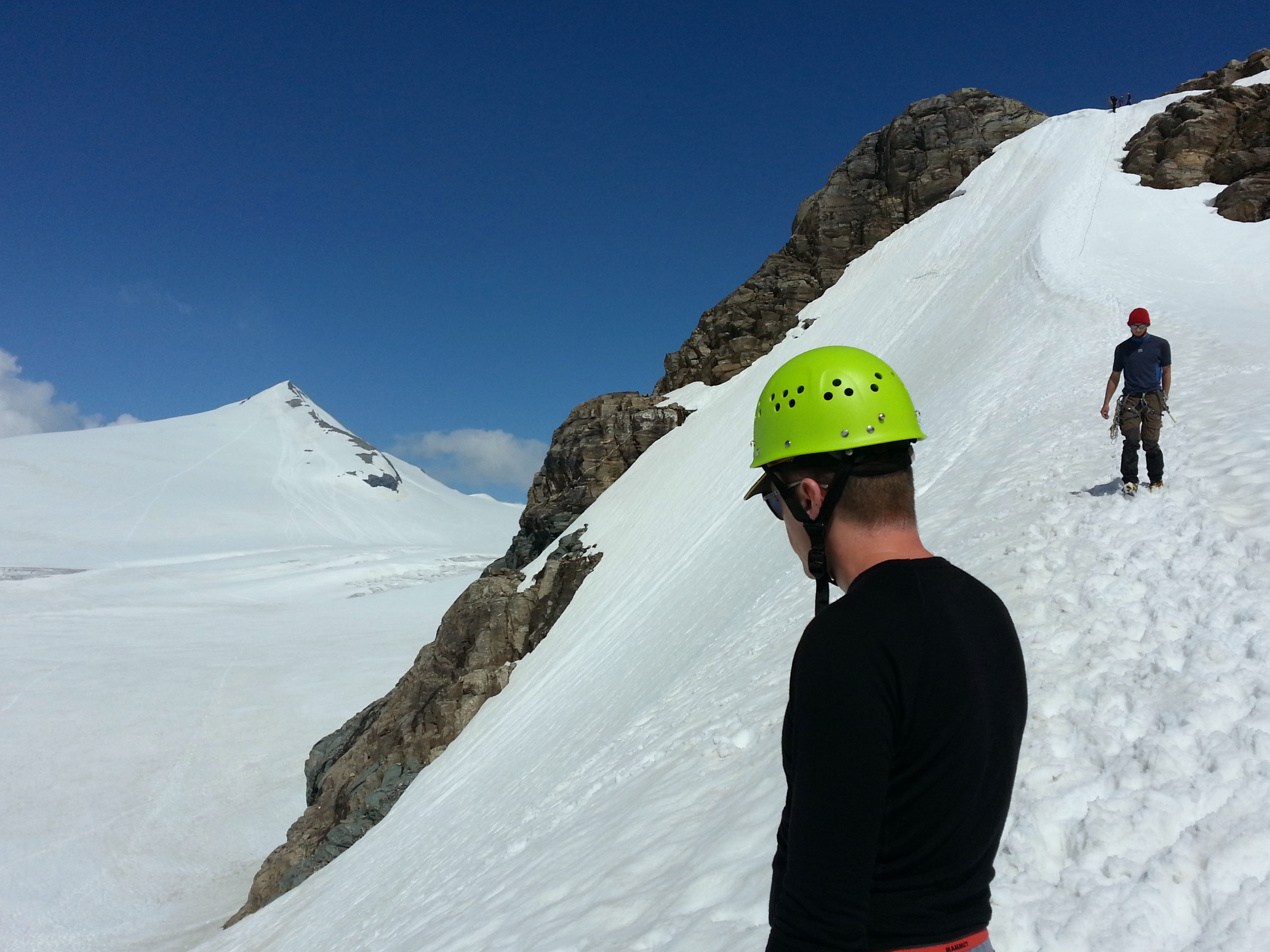
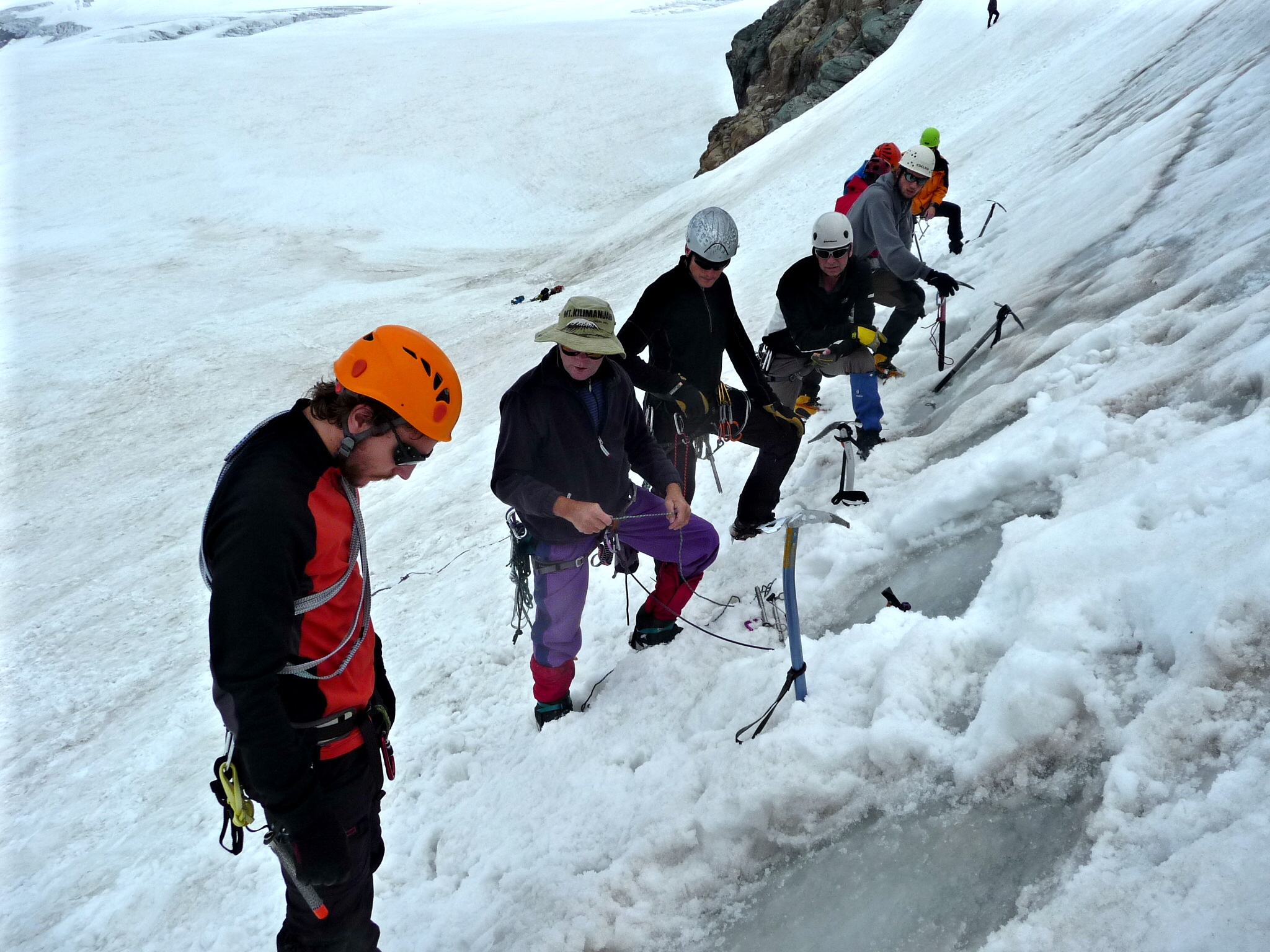
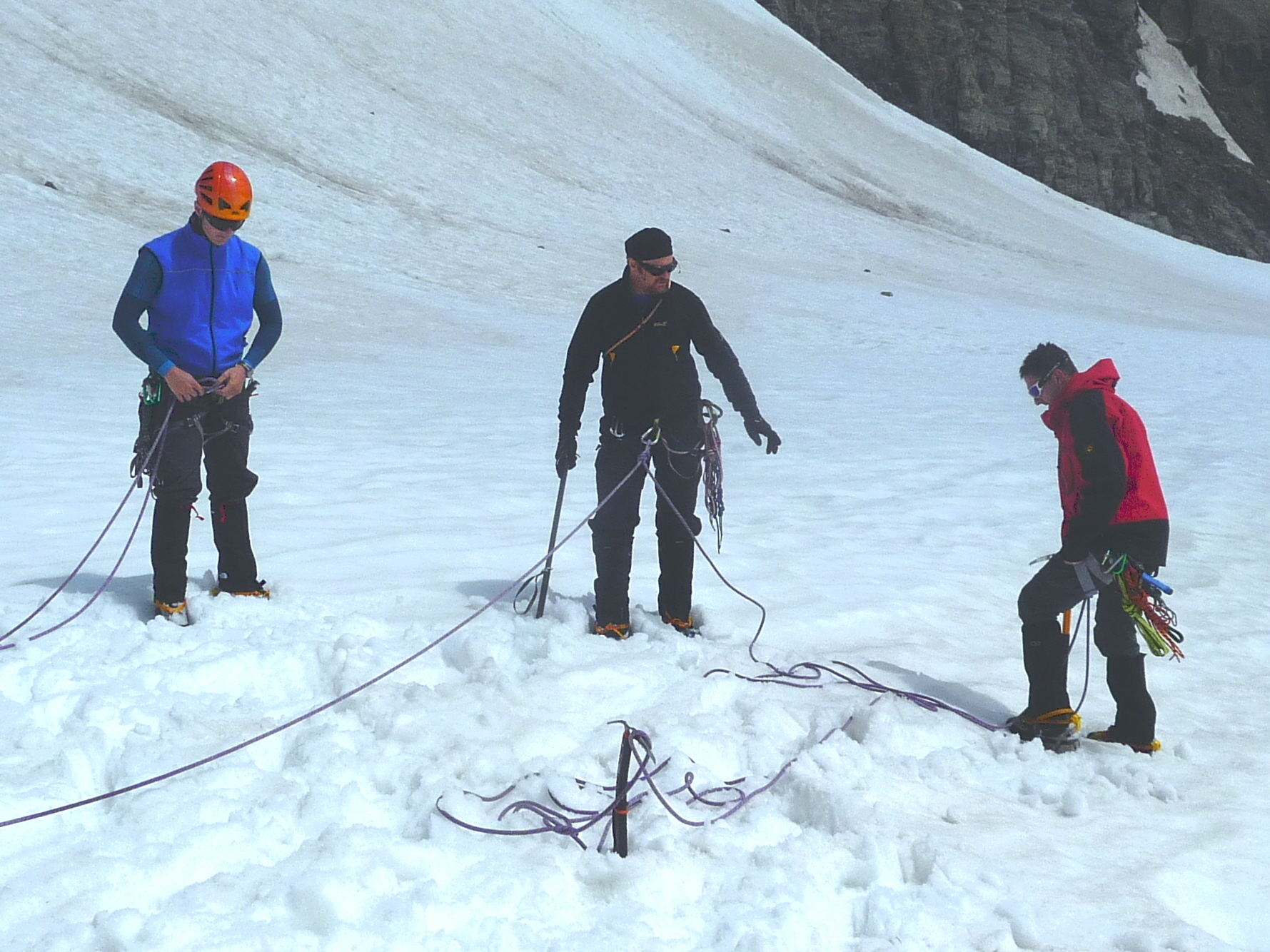
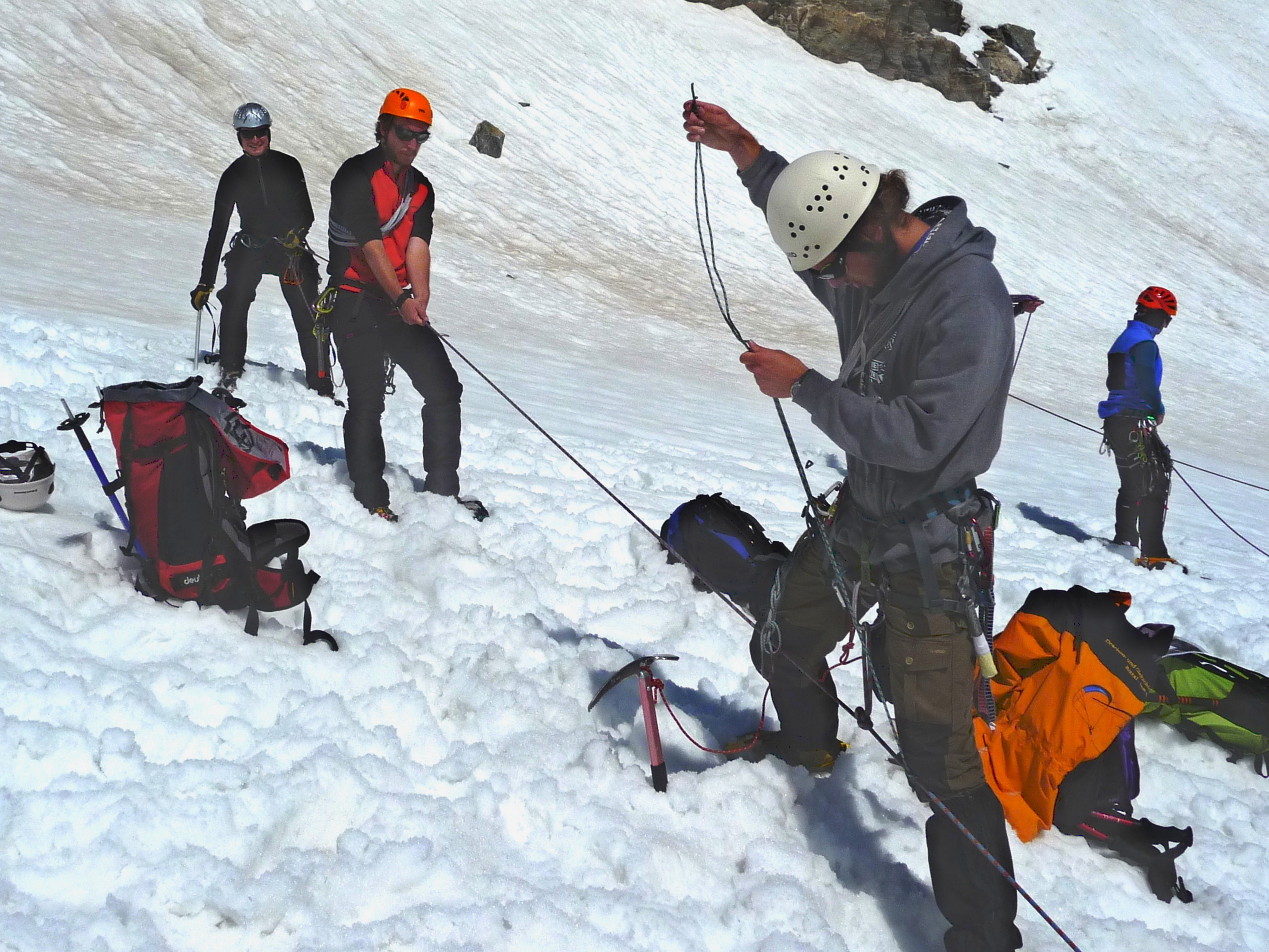
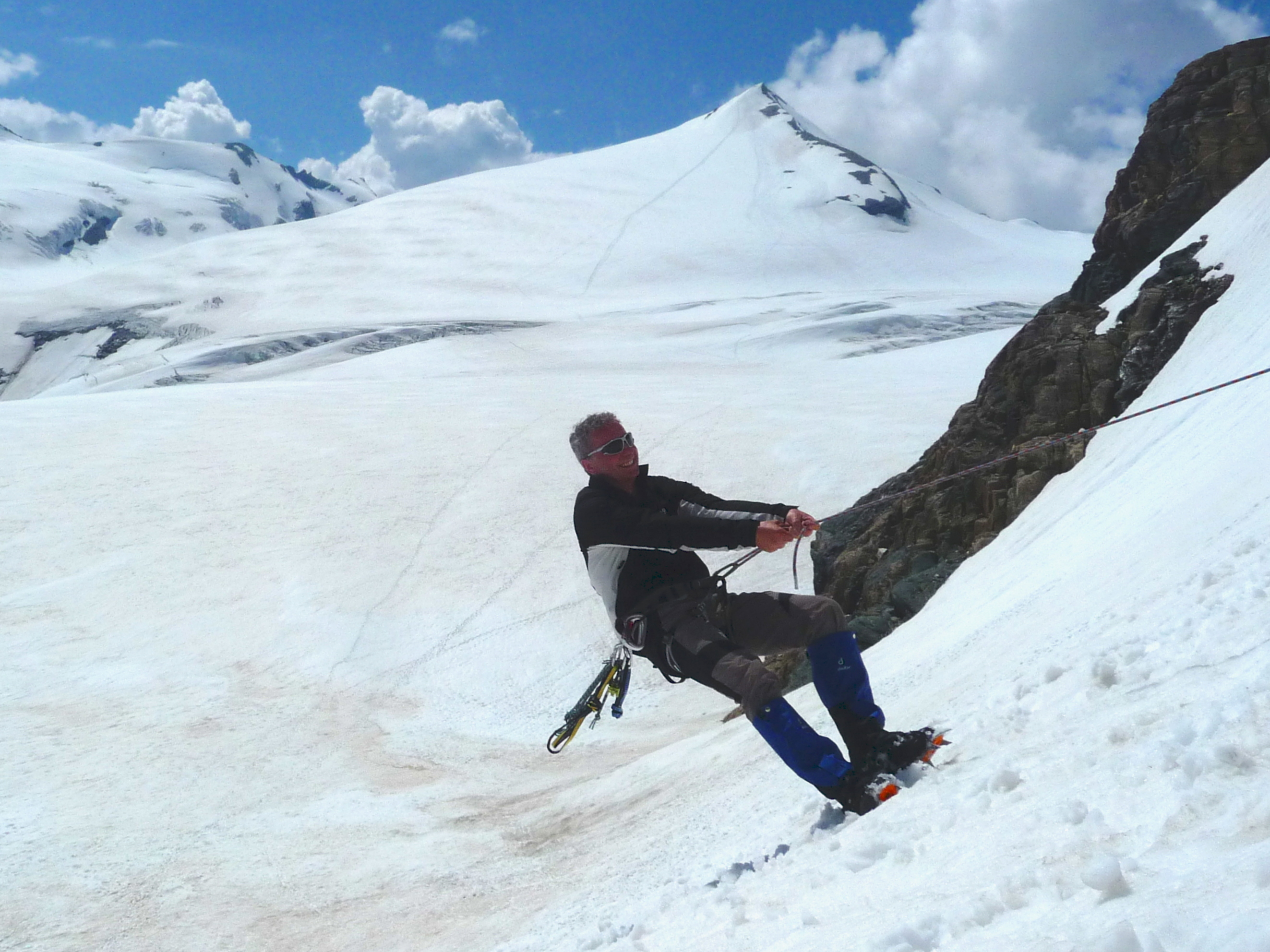
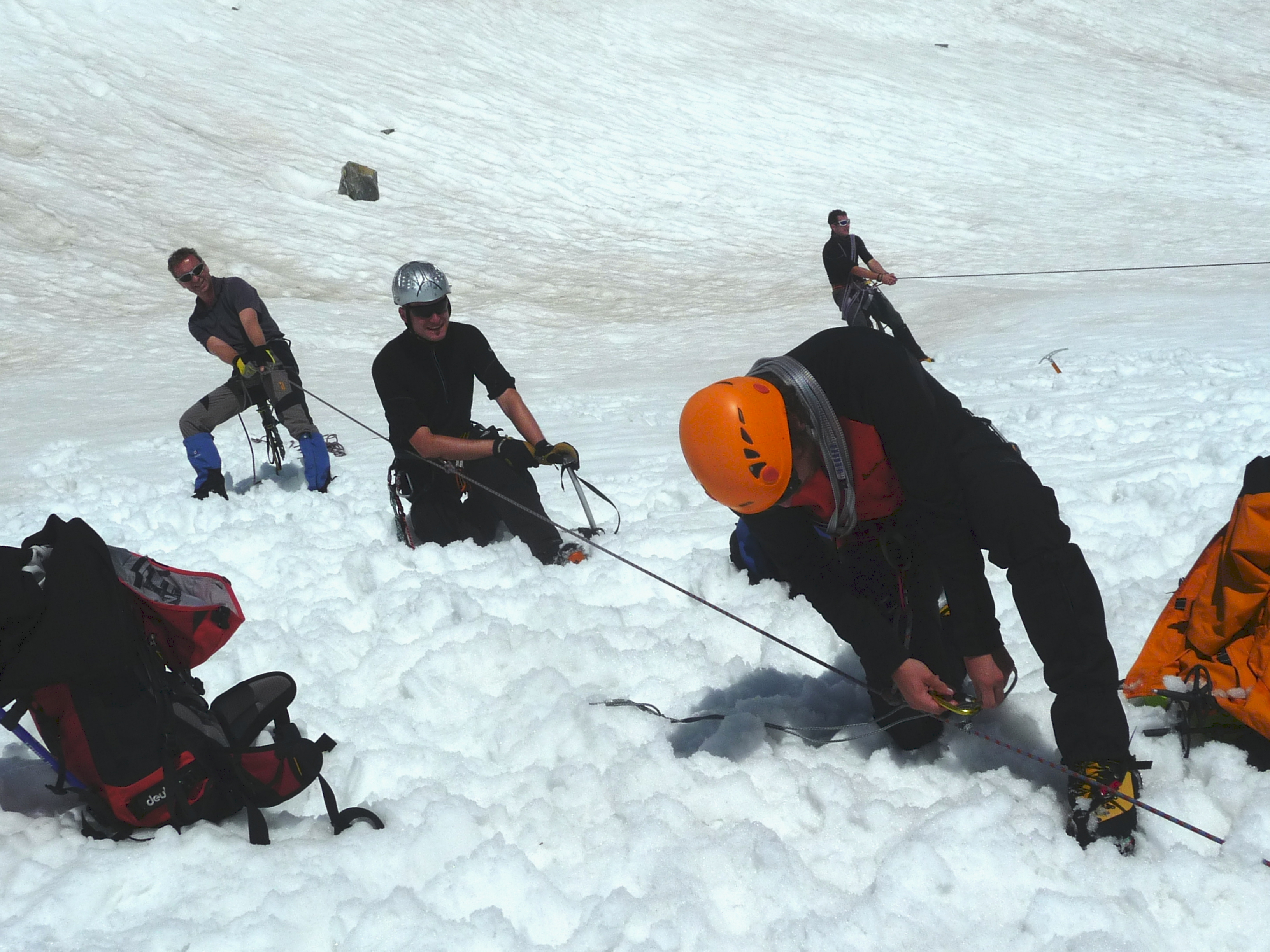
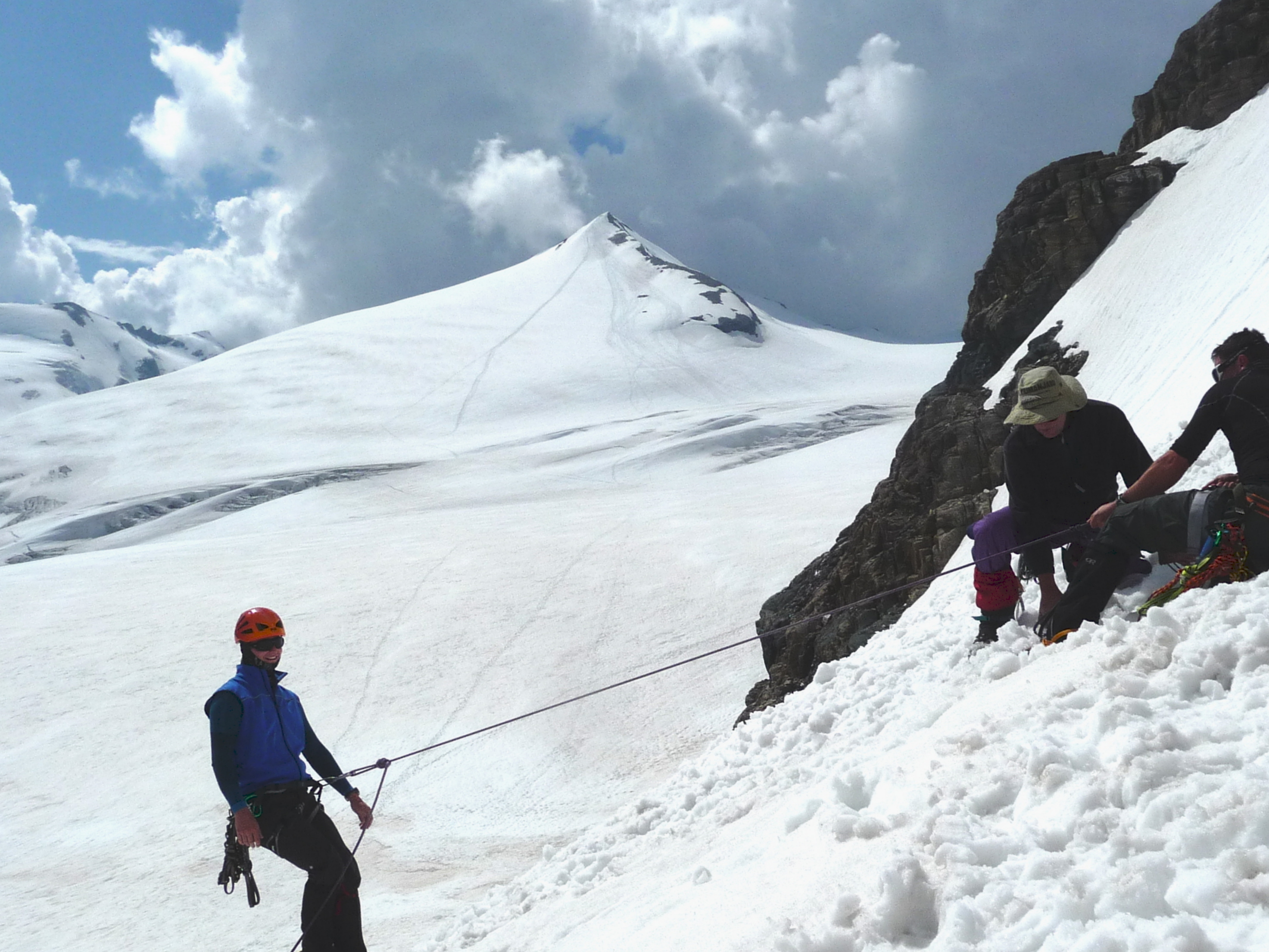
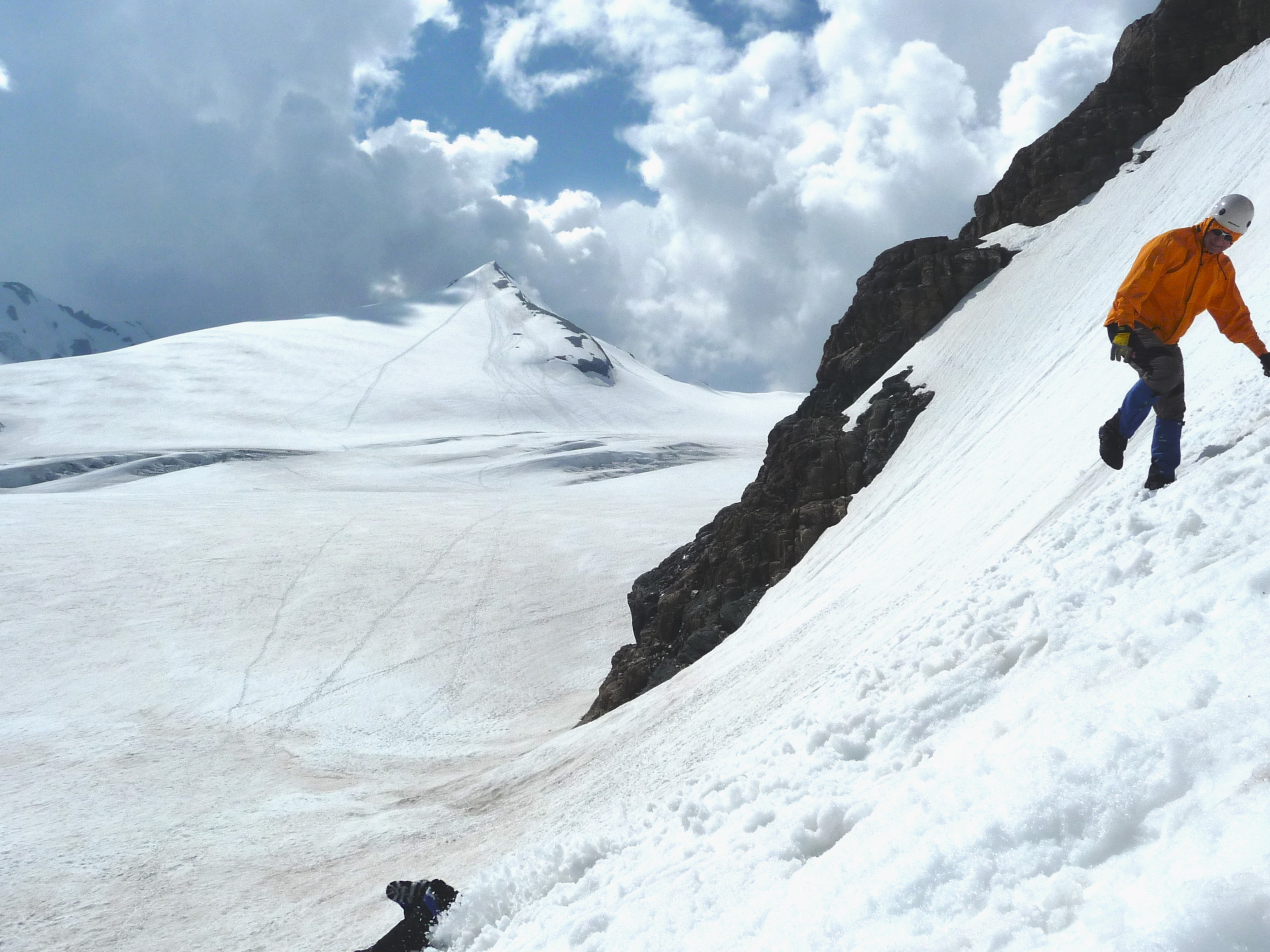
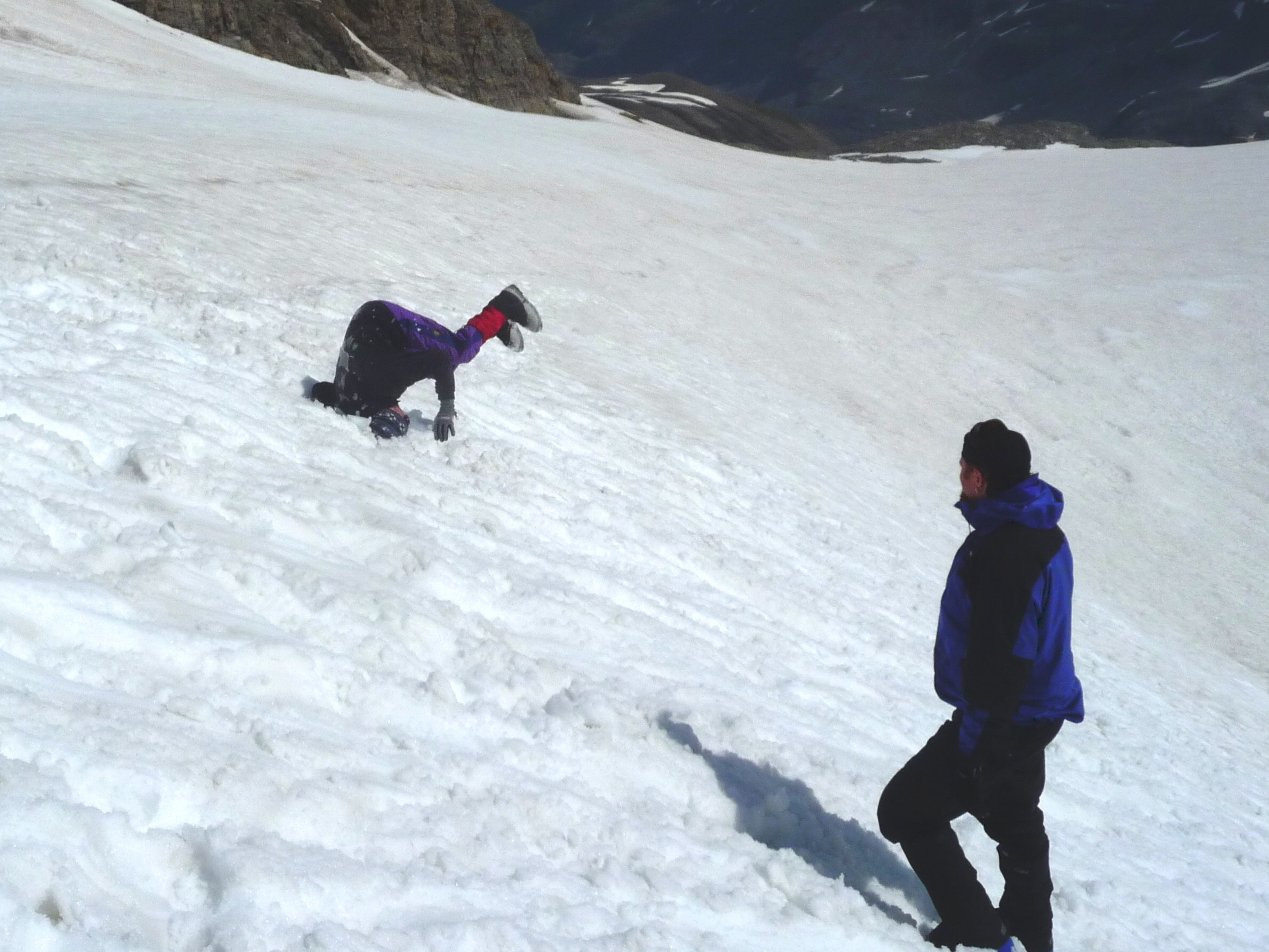
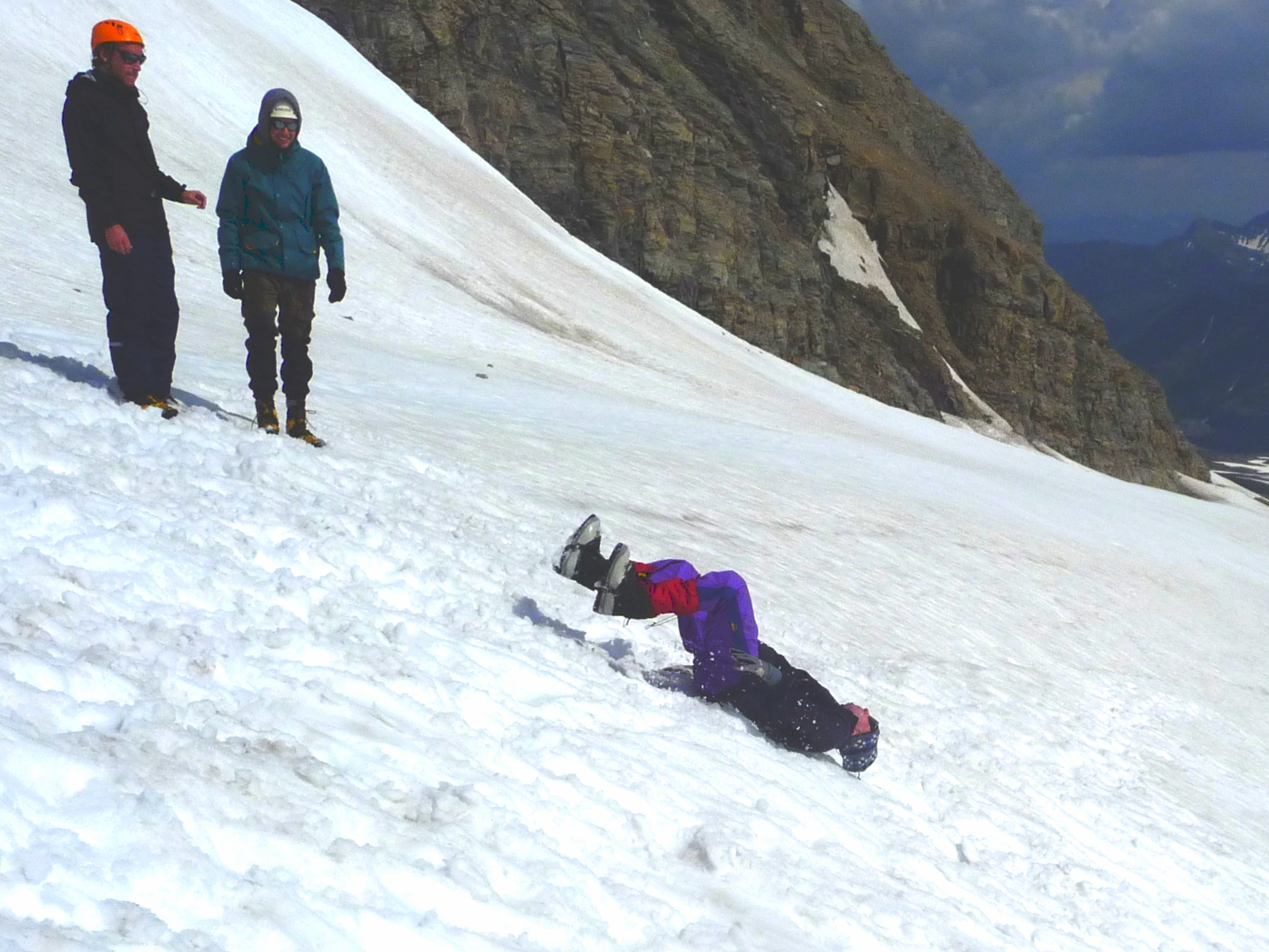
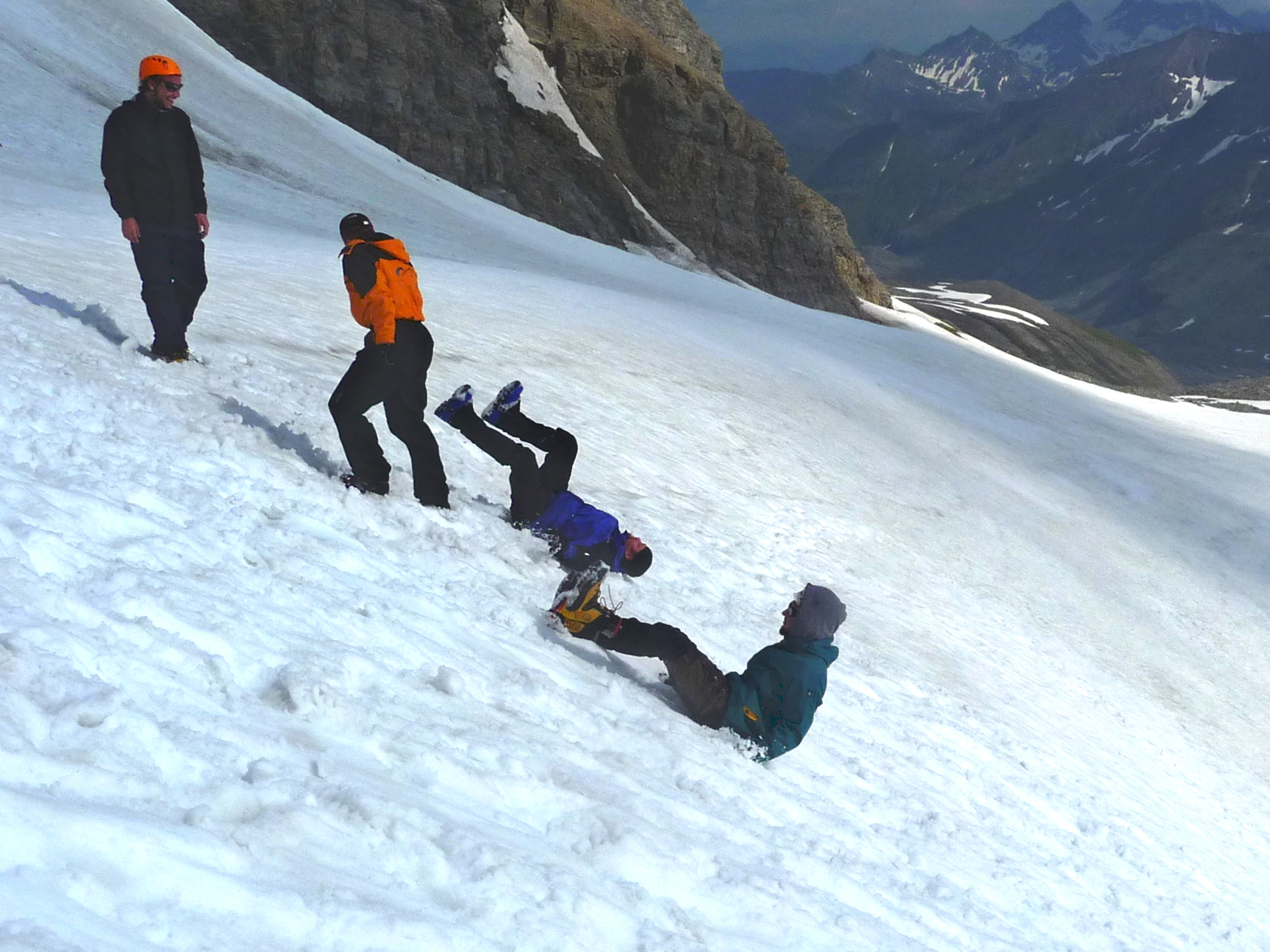
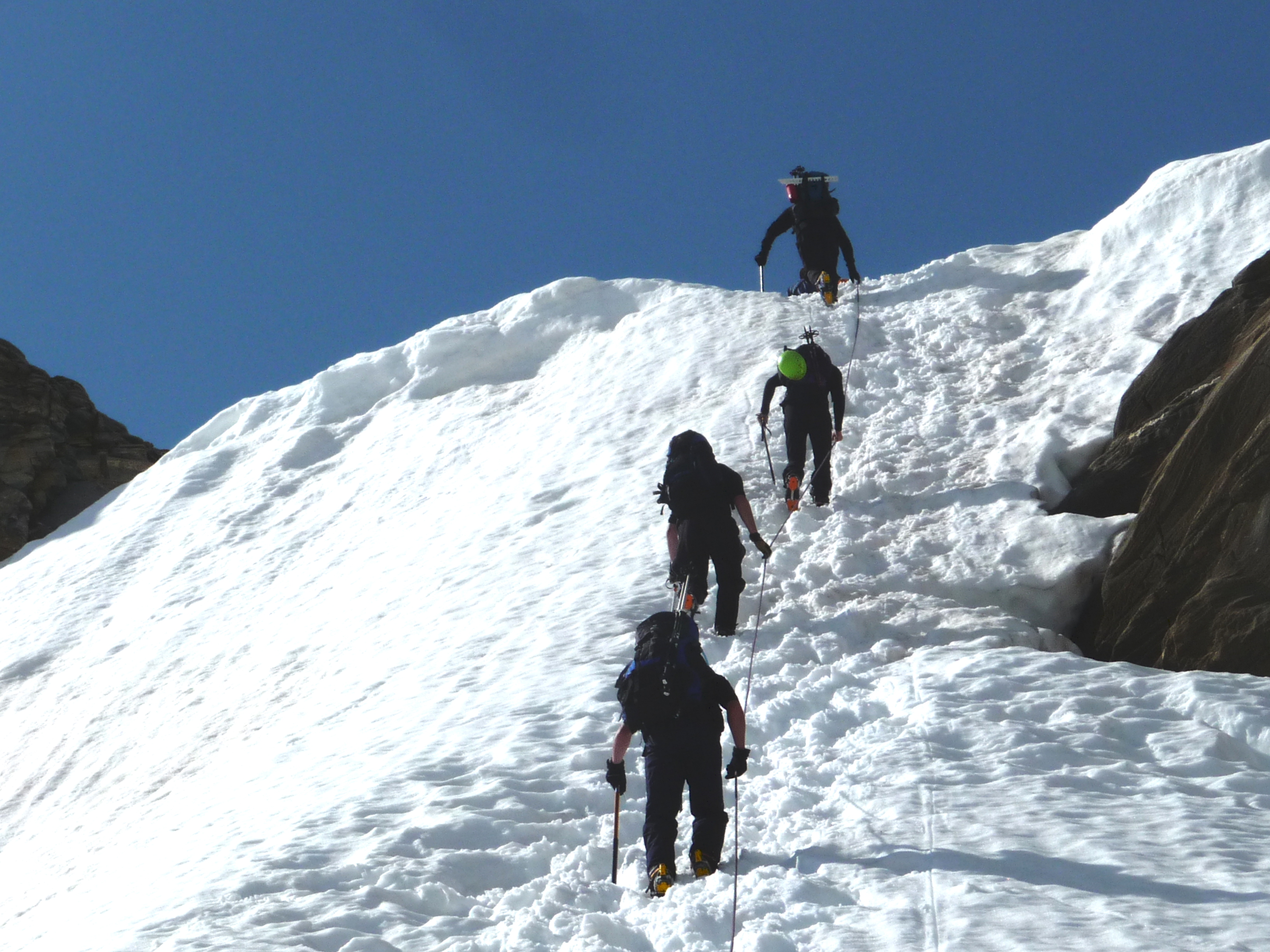
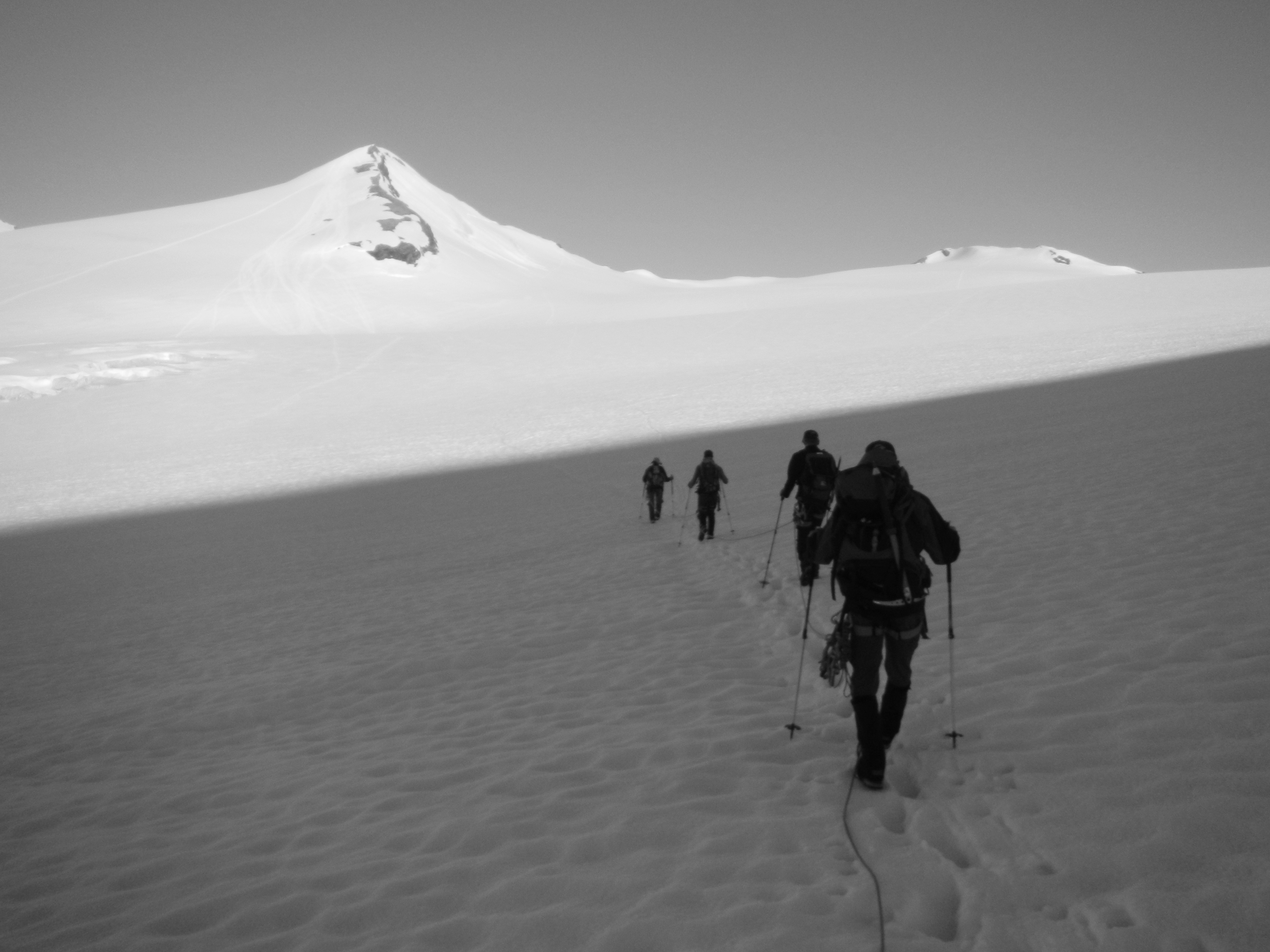
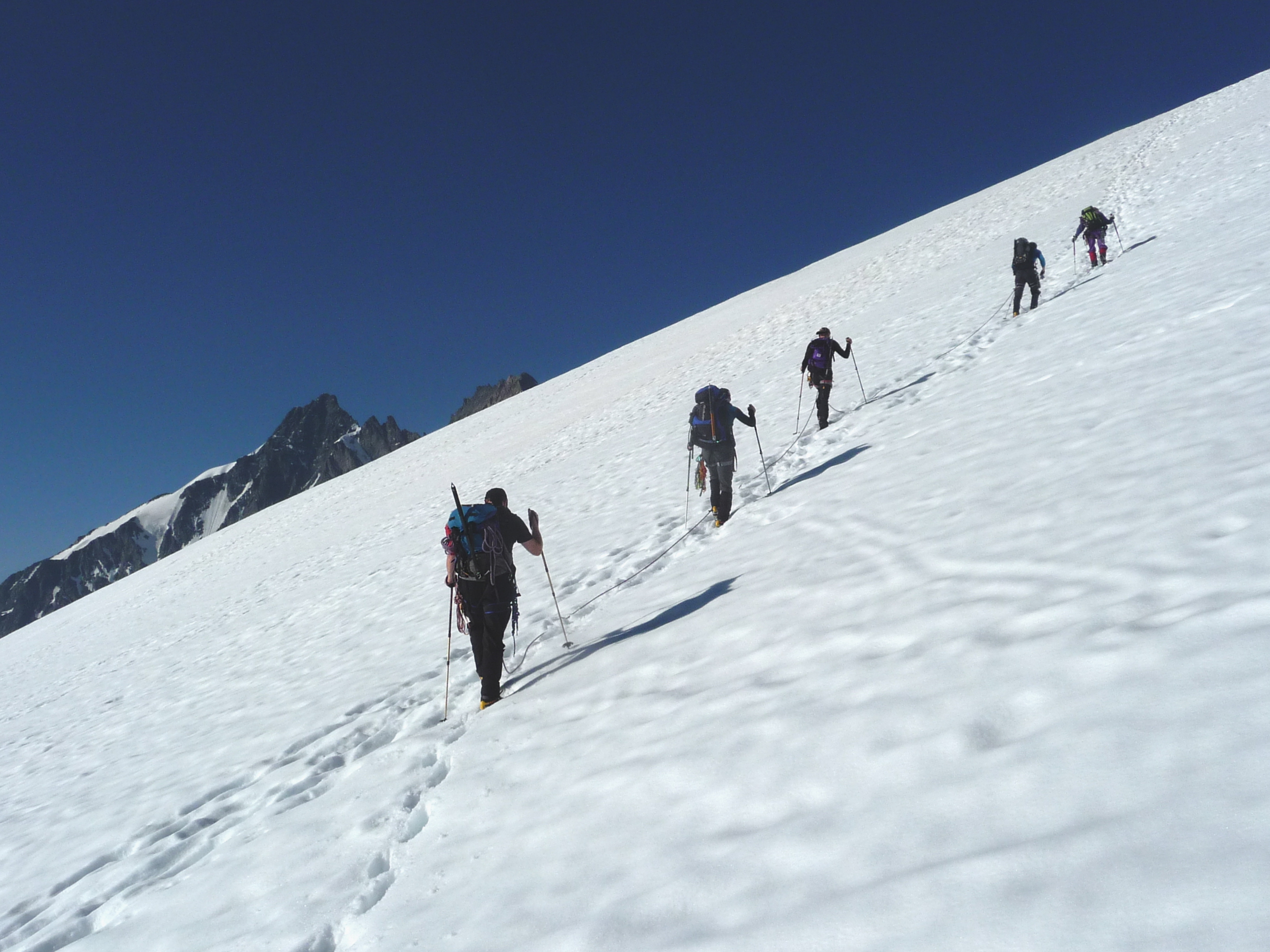
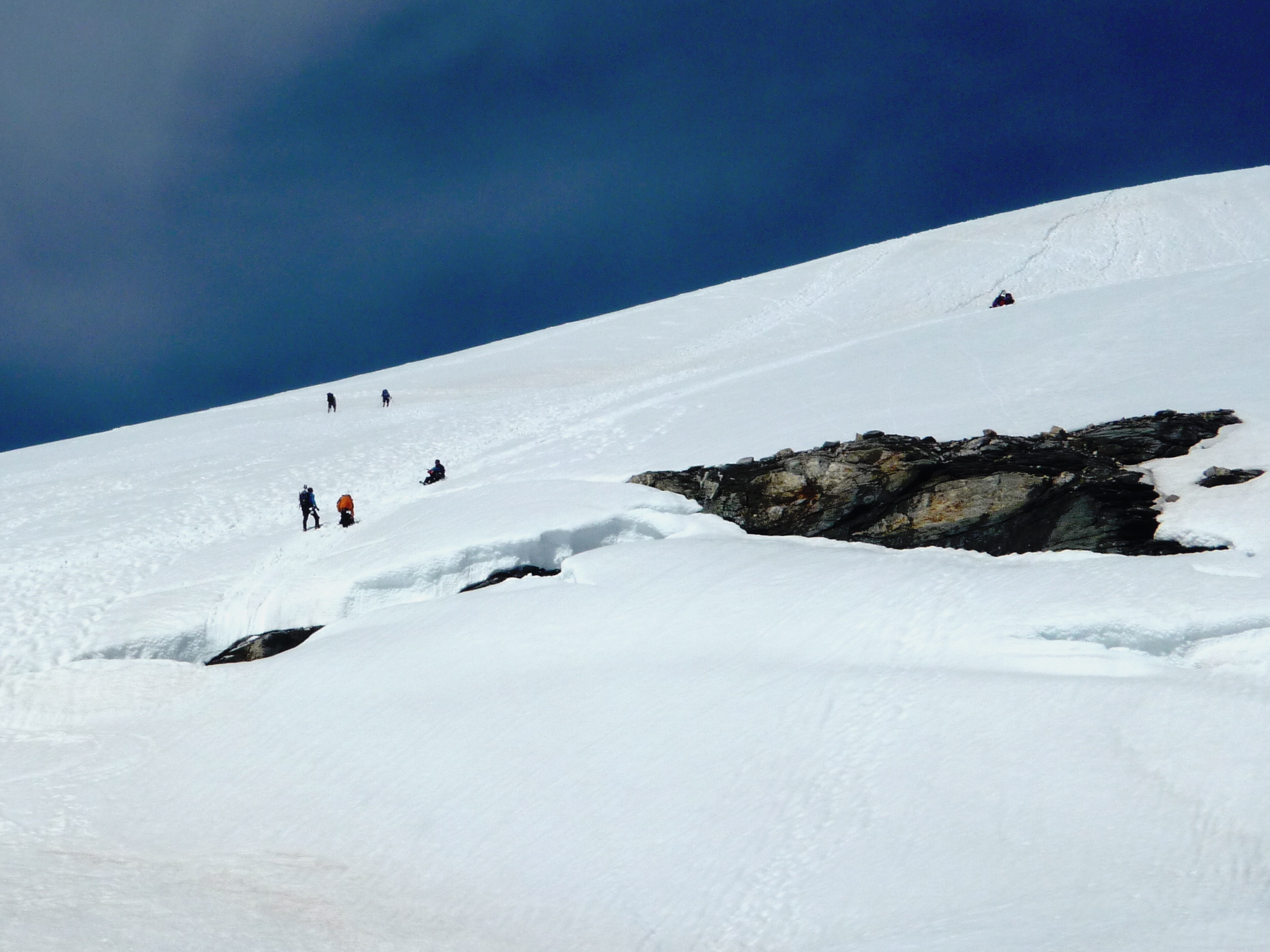
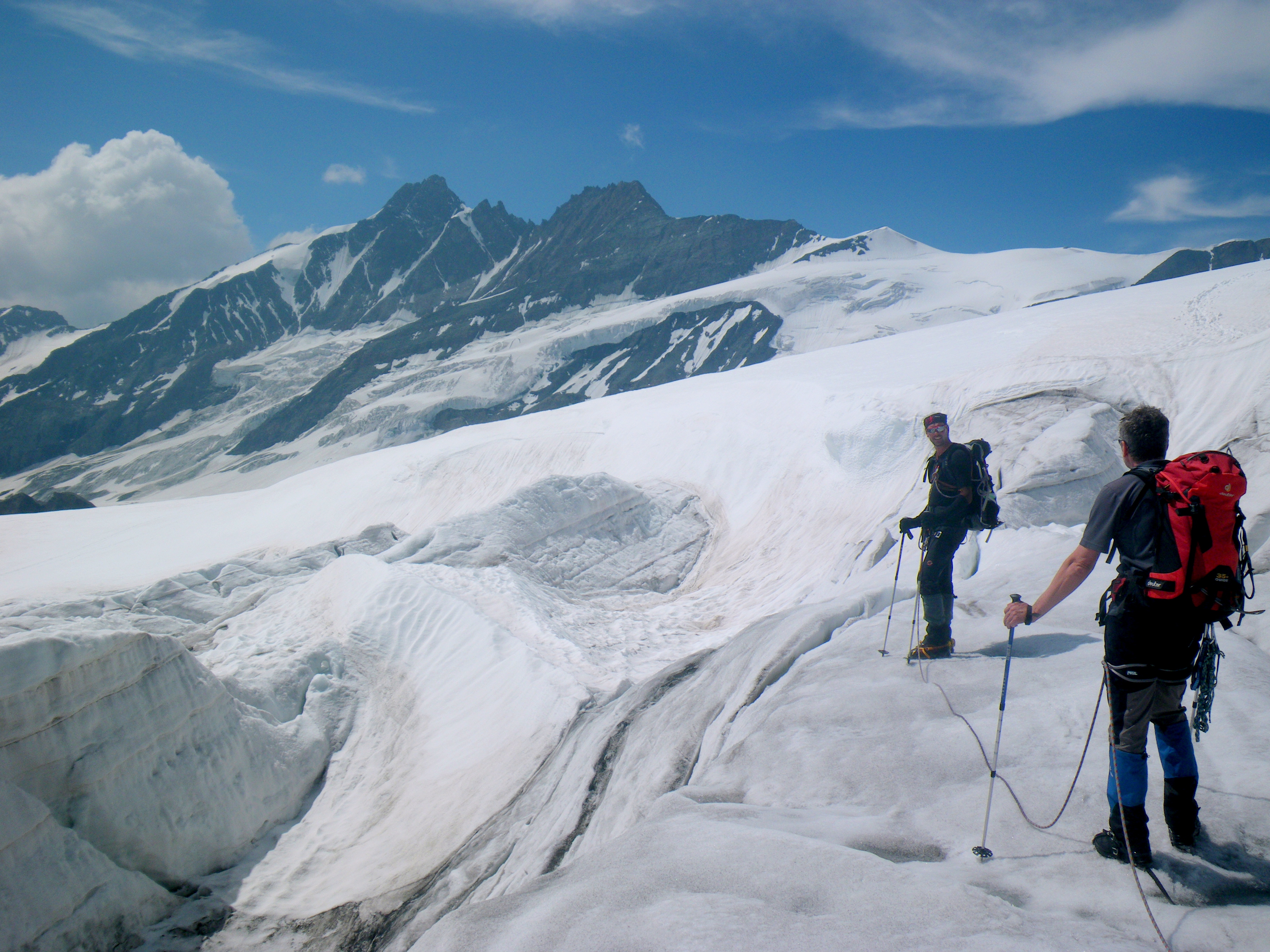
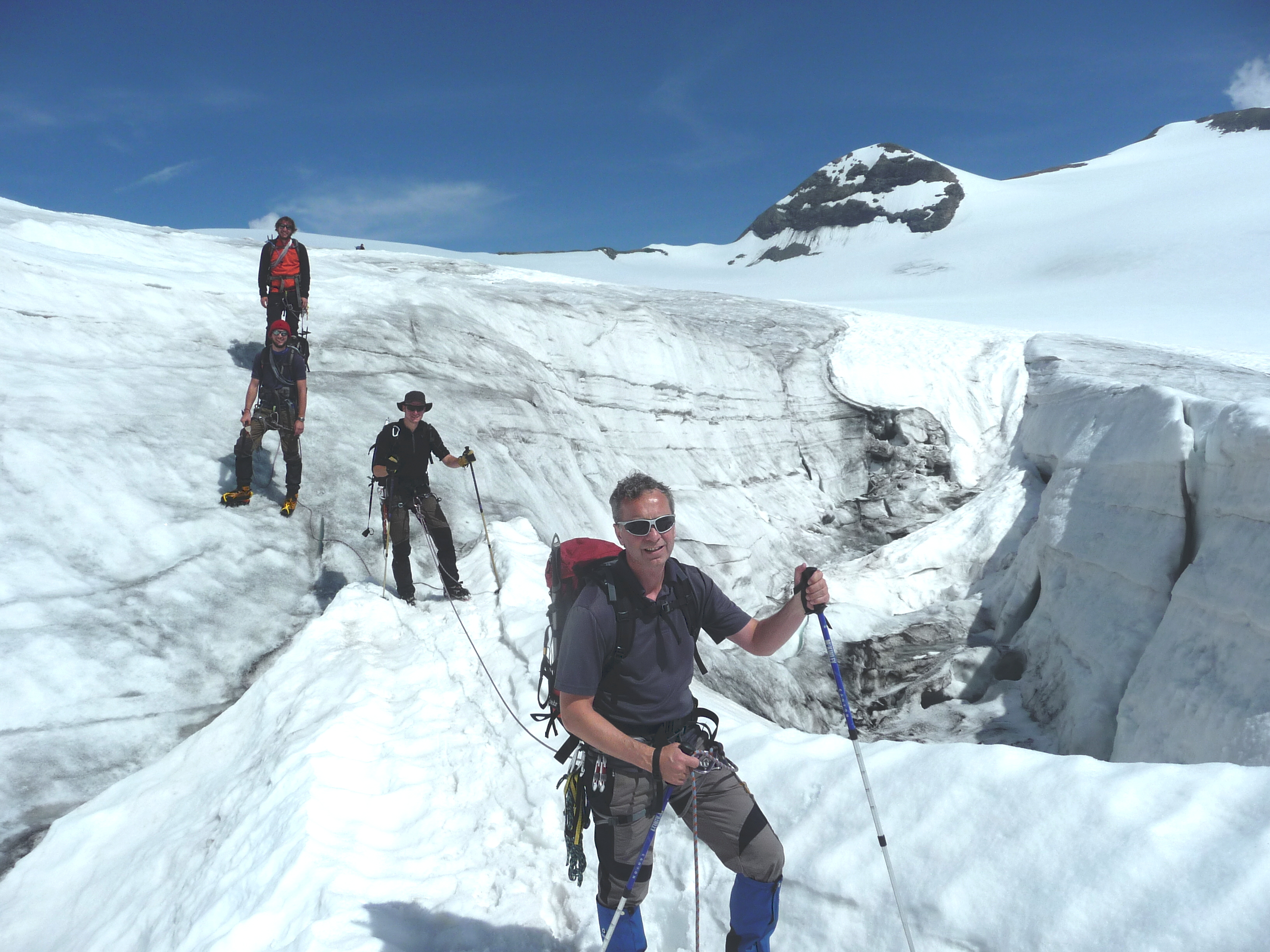
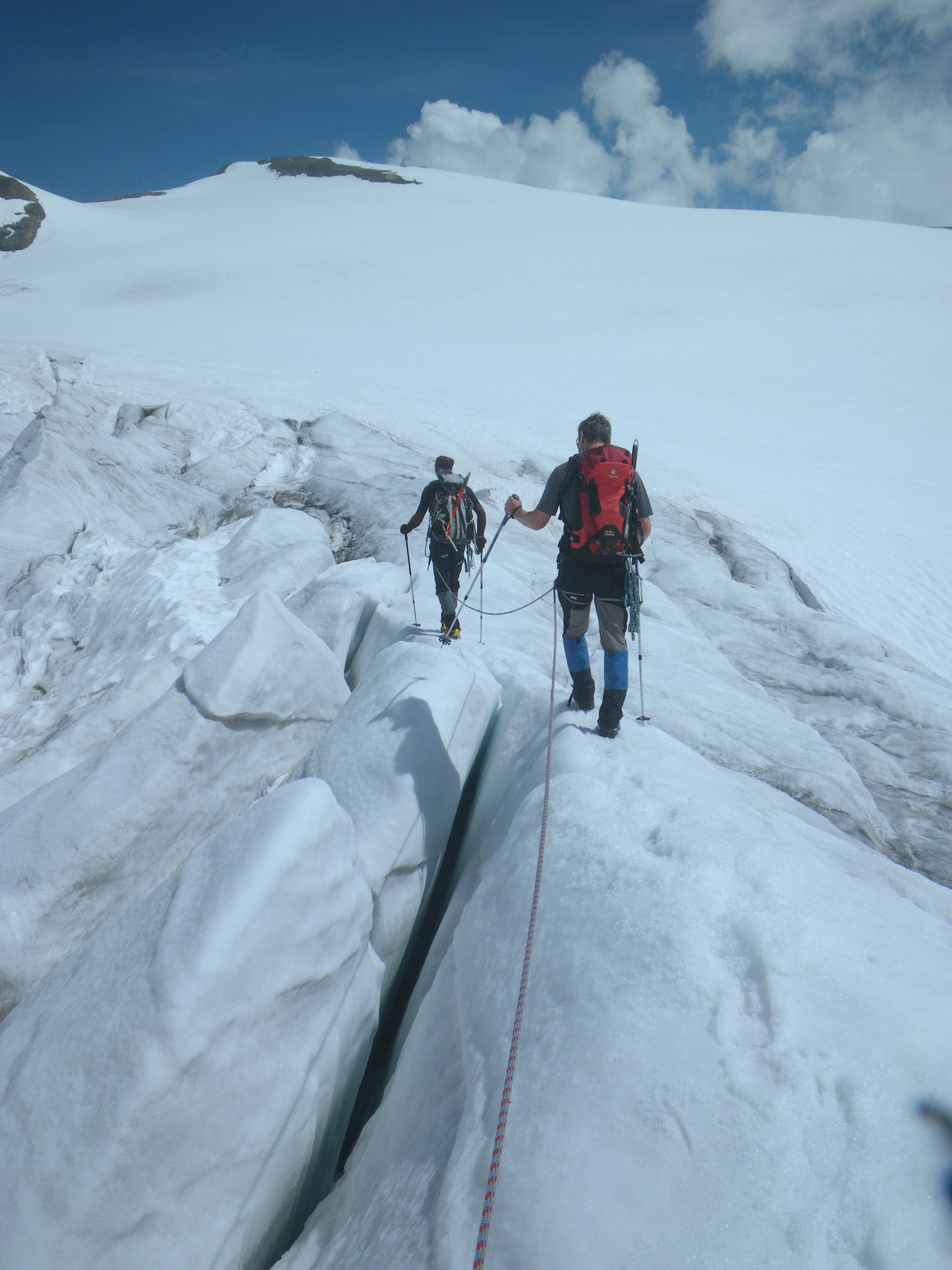
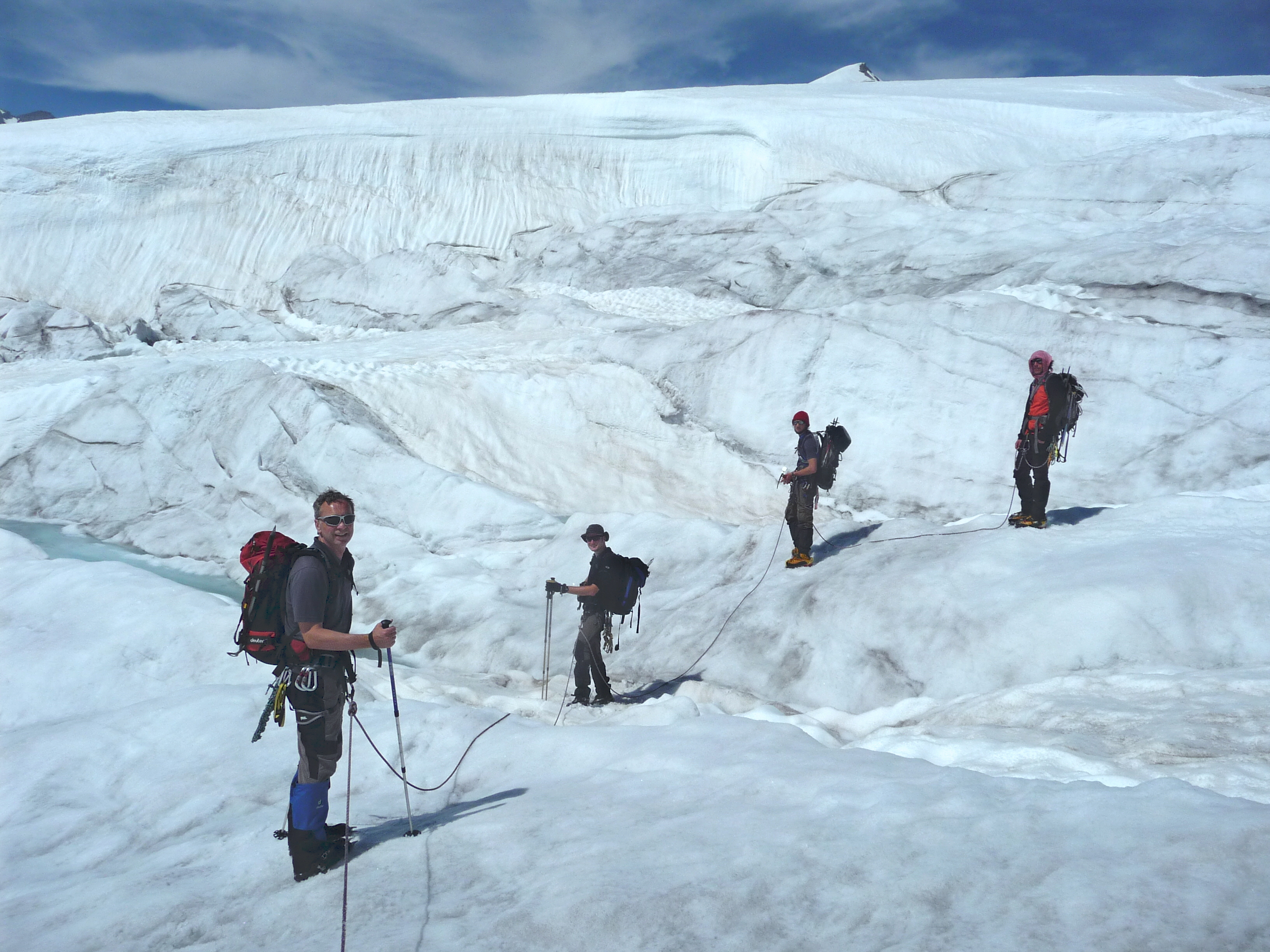
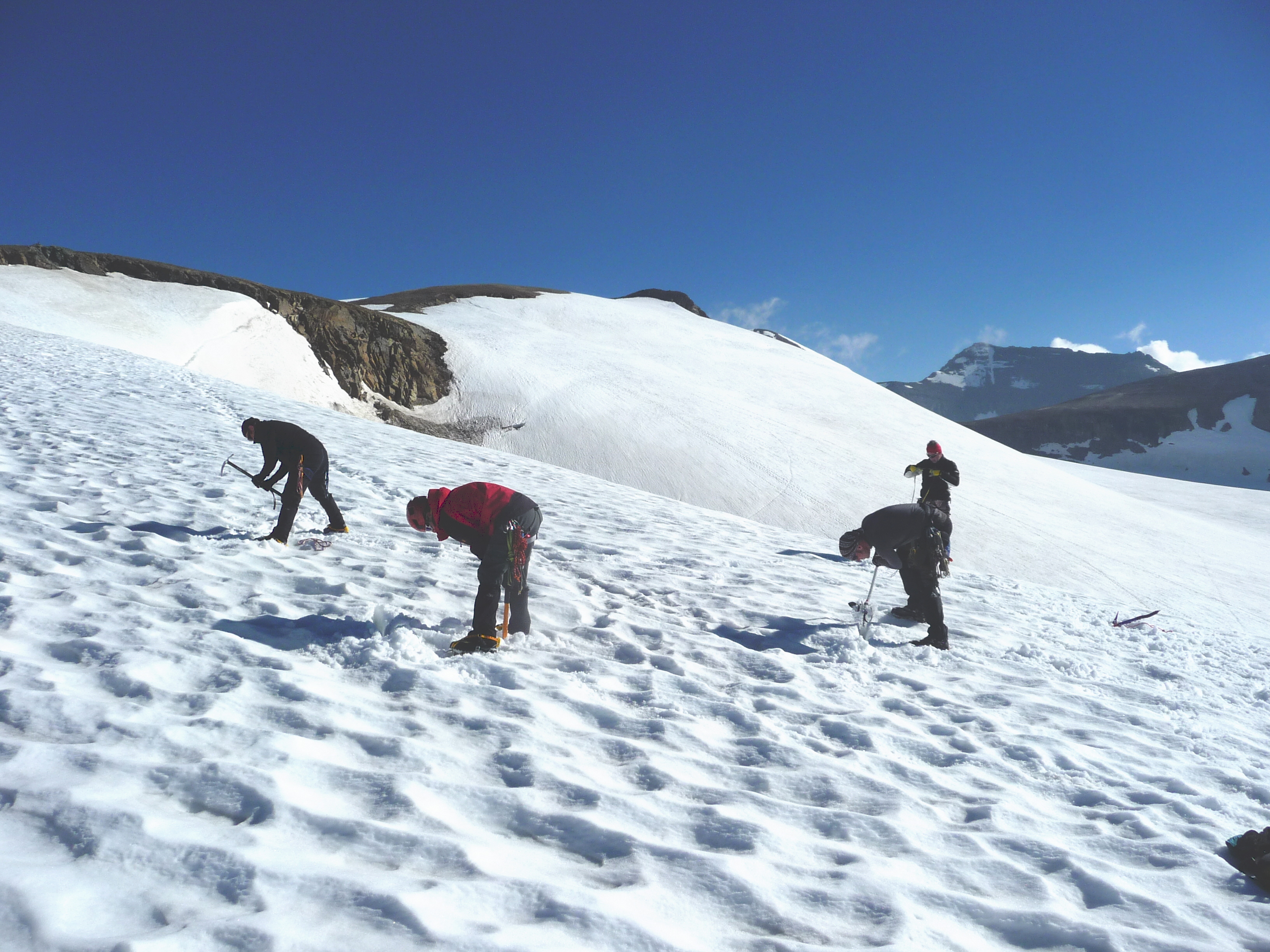
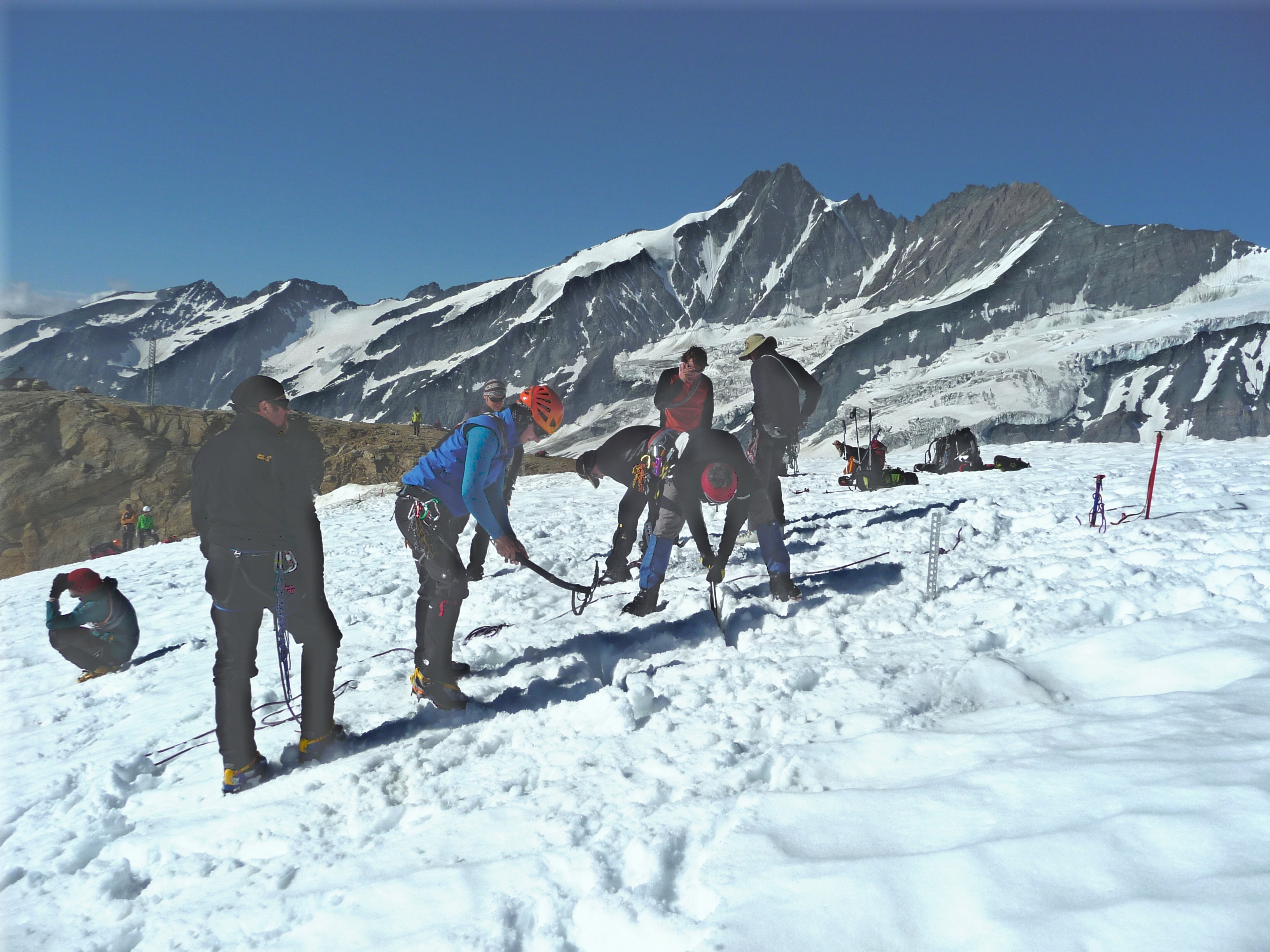
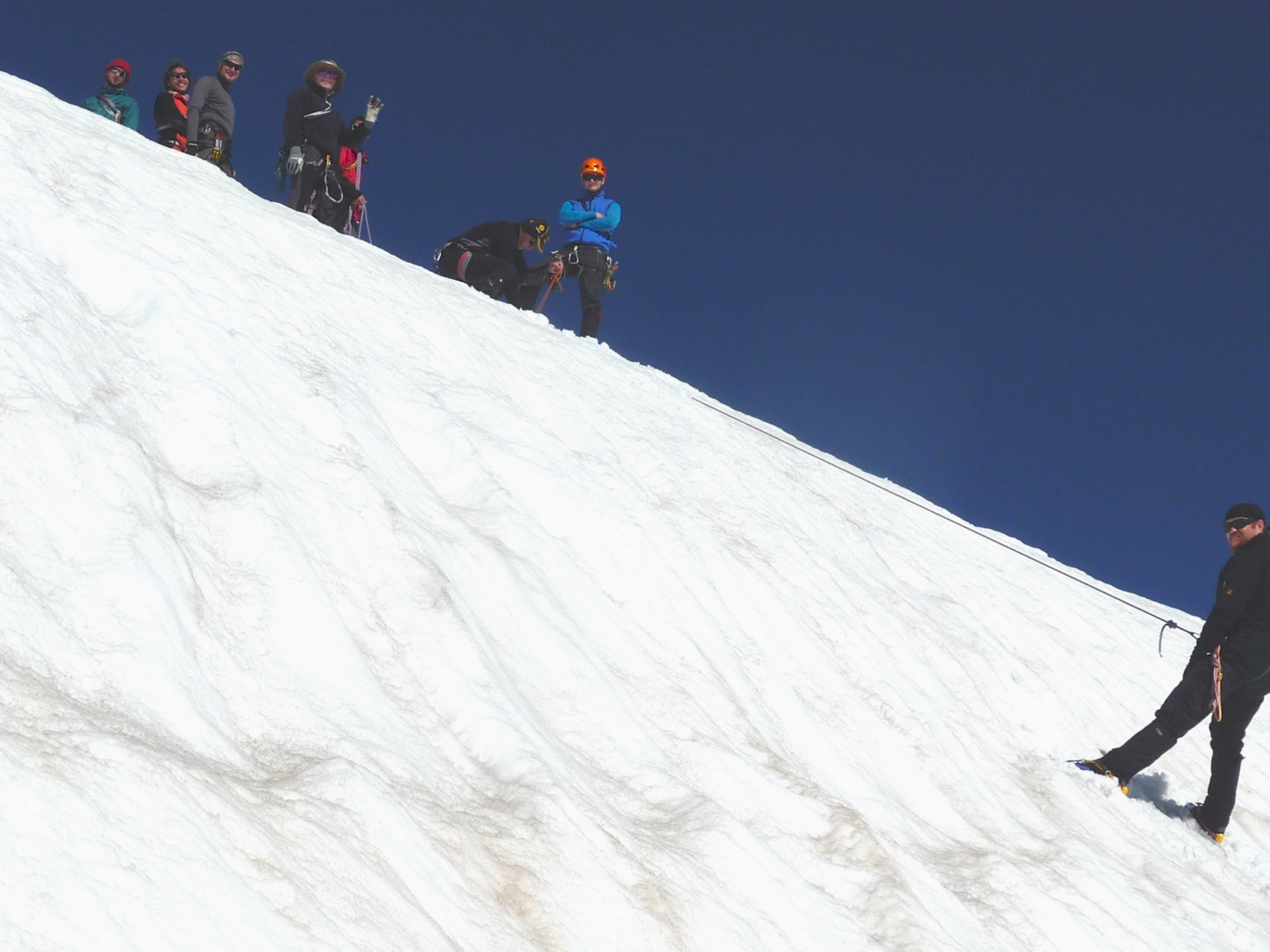
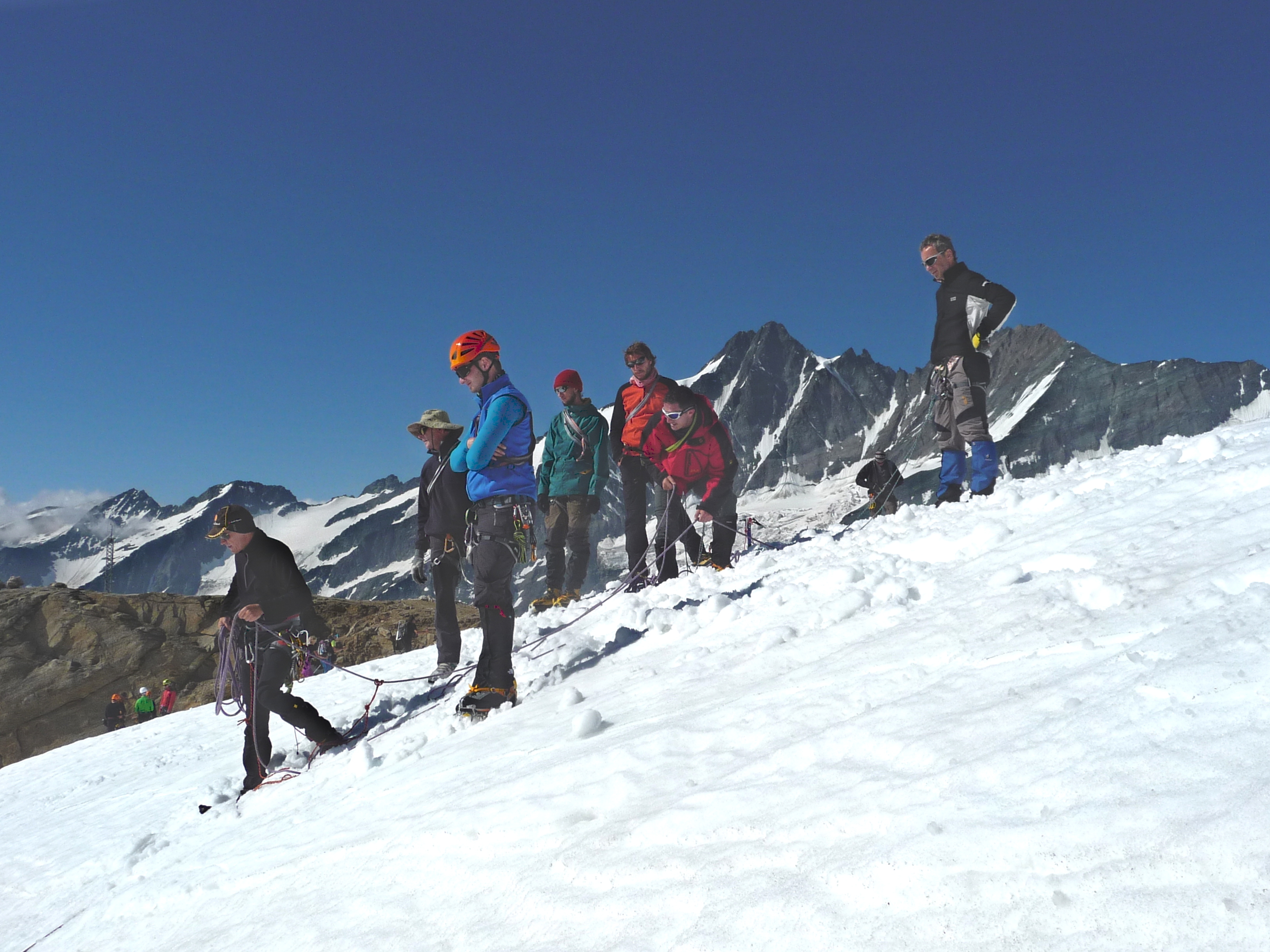
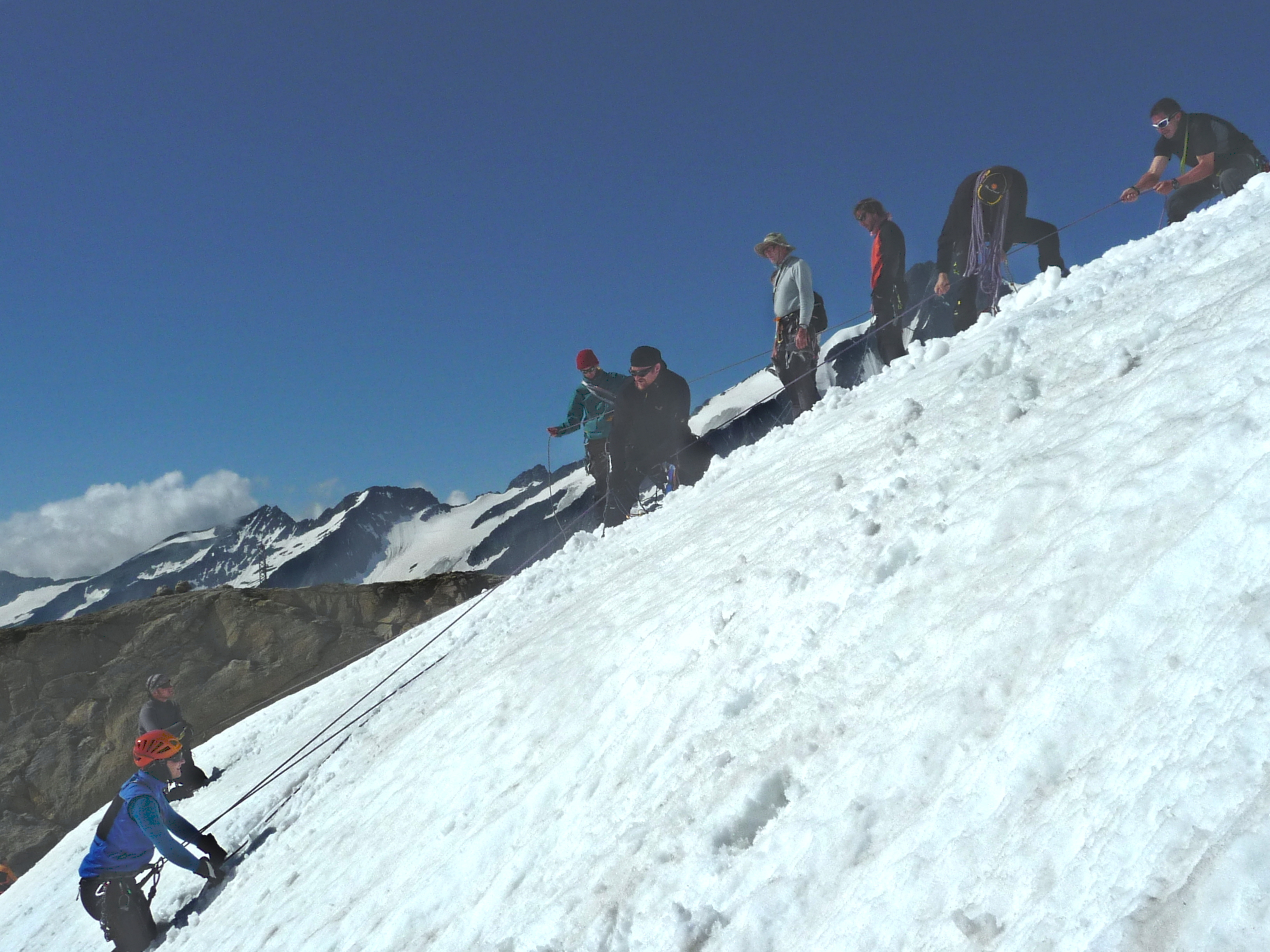
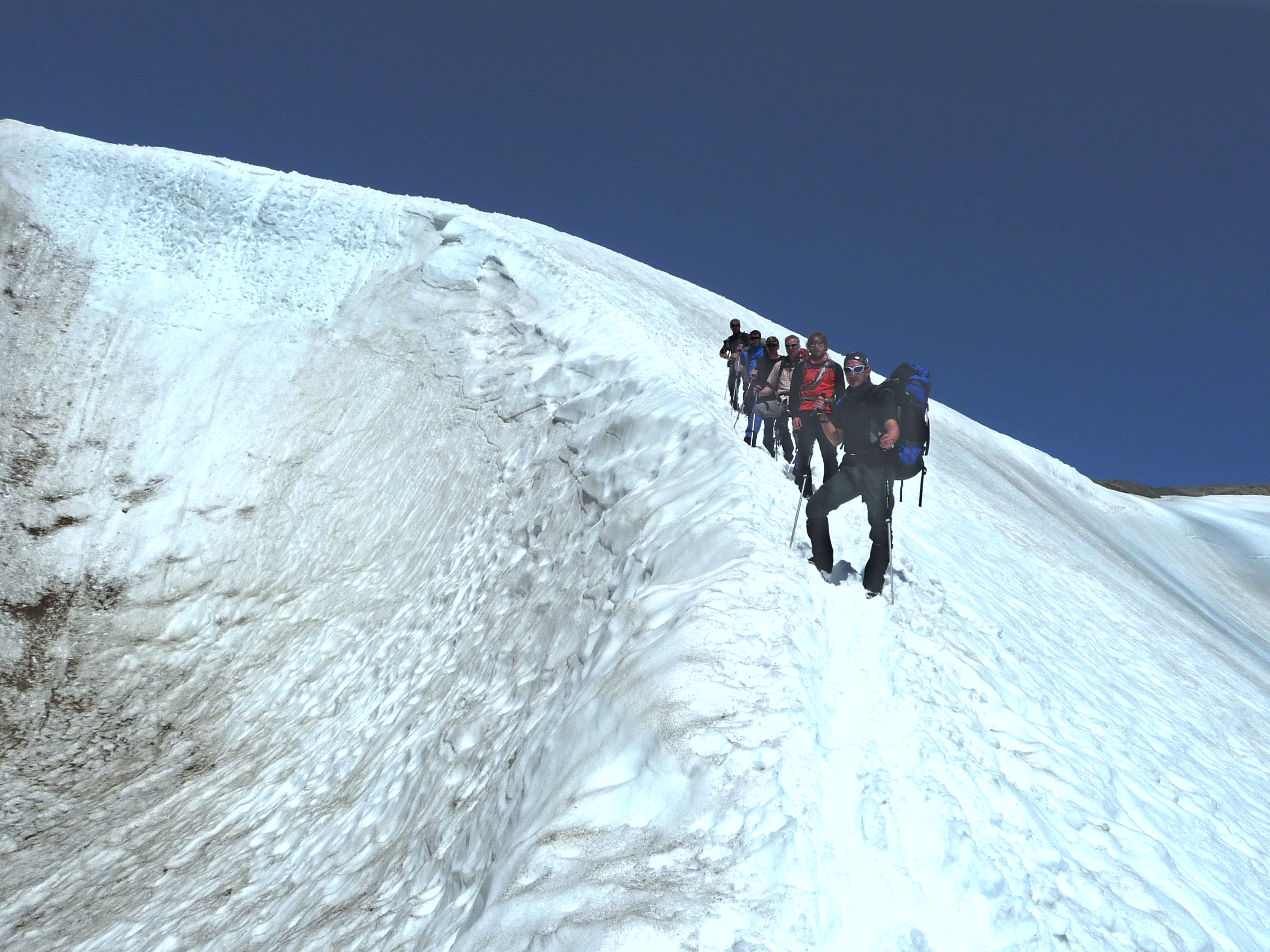
On Friday morning, things got underway. Two rope teams were formed and marched across the glacier to a suitable training area. Upon arrival, a belay station with snow anchors was built, and the group rappelled about one and a half rope lengths down to a lower area. Throughout the morning, all walking techniques with crampons and ice axes were practiced on a steep slope, and belay stations with ice screws were constructed. After a lunch break, crevasse fall rescue with team hauling was practiced, along with various falling and braking exercises — which all participants visibly enjoyed. Special respect was paid to tour leader Binder who, despite being the oldest in the group at 65, had no trouble demonstrating techniques like backward falls with a roll to the younger participants. After ascending via a fixed rope, the group returned to the hut for another theory session.
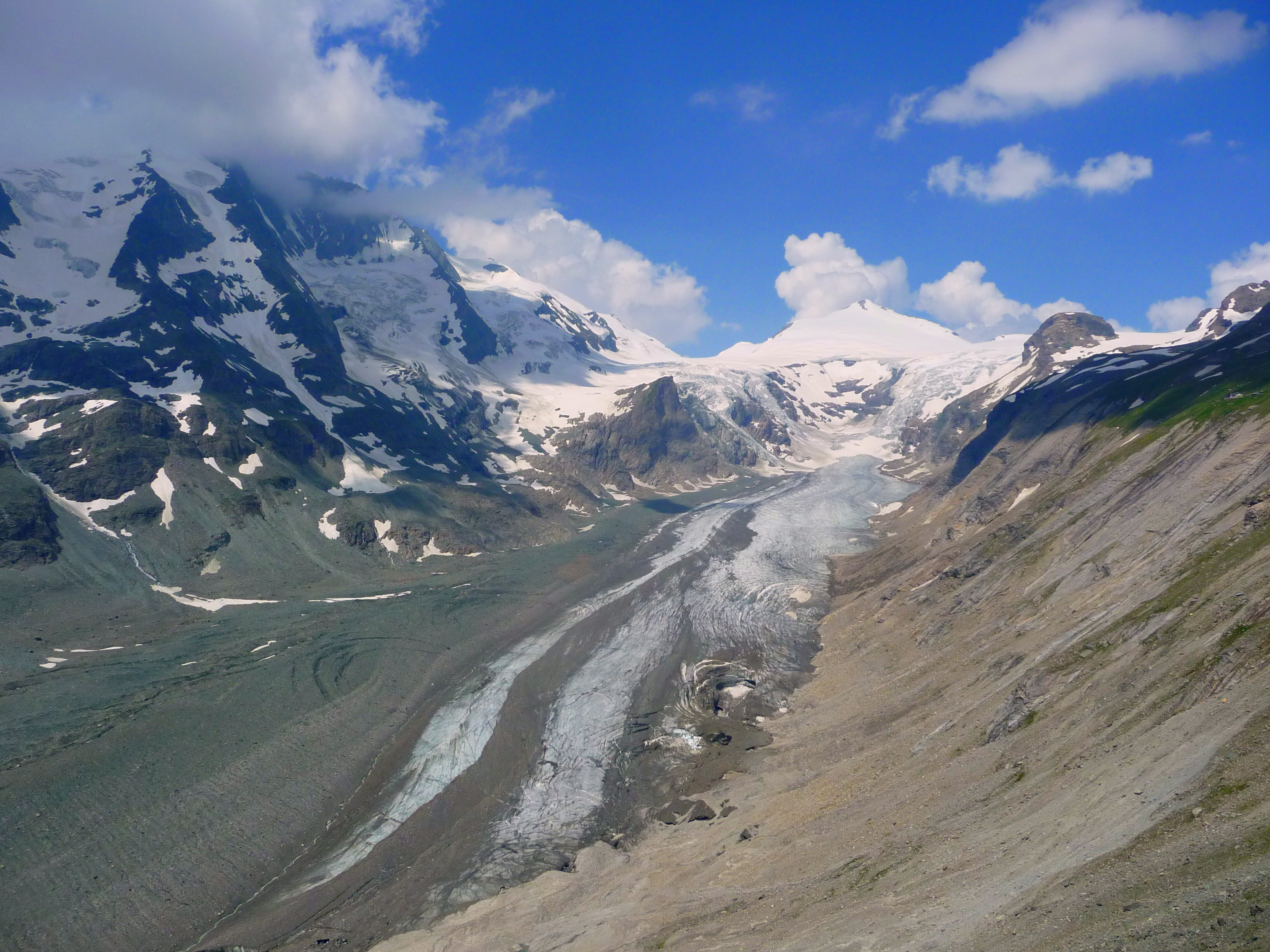
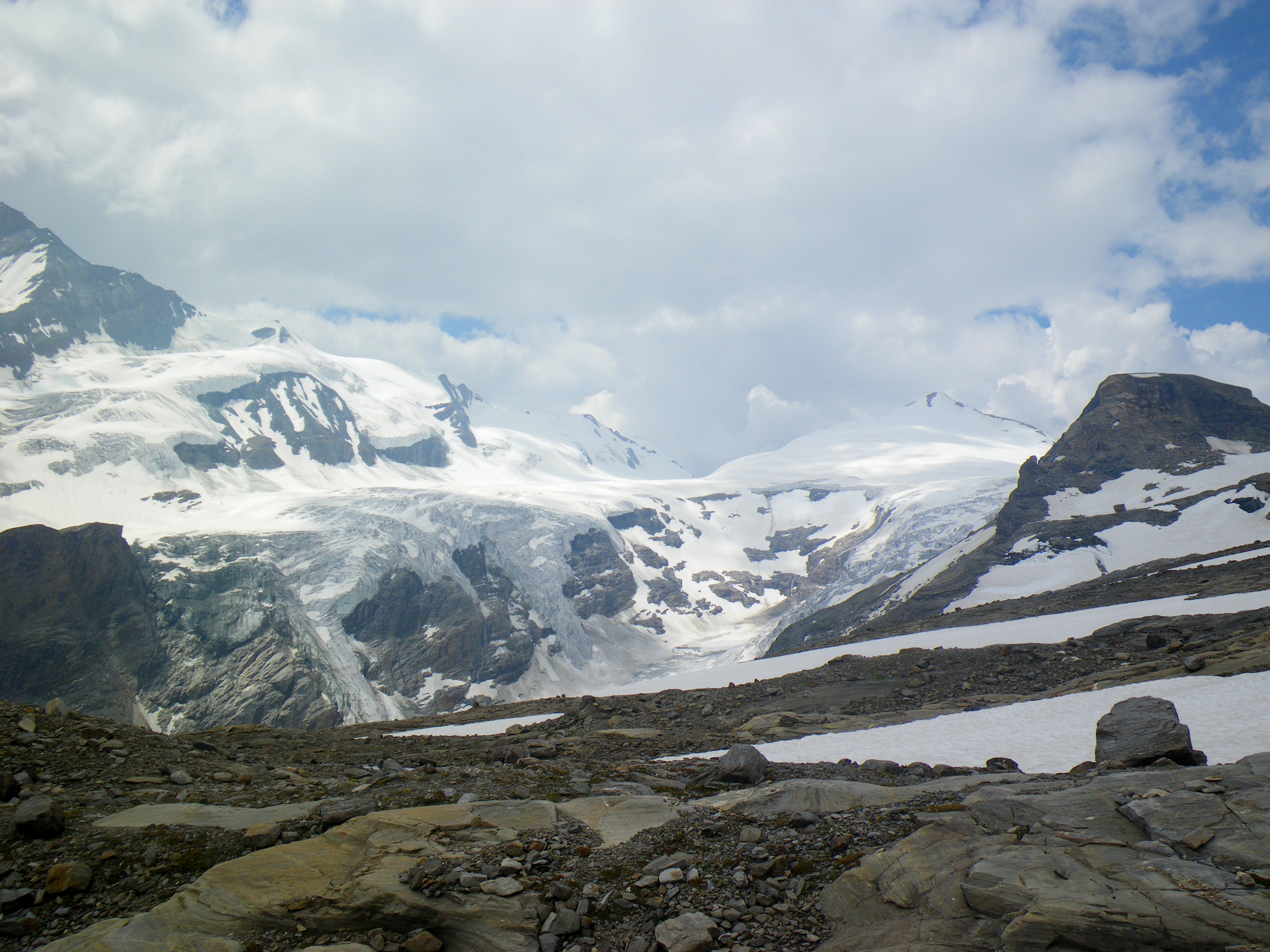
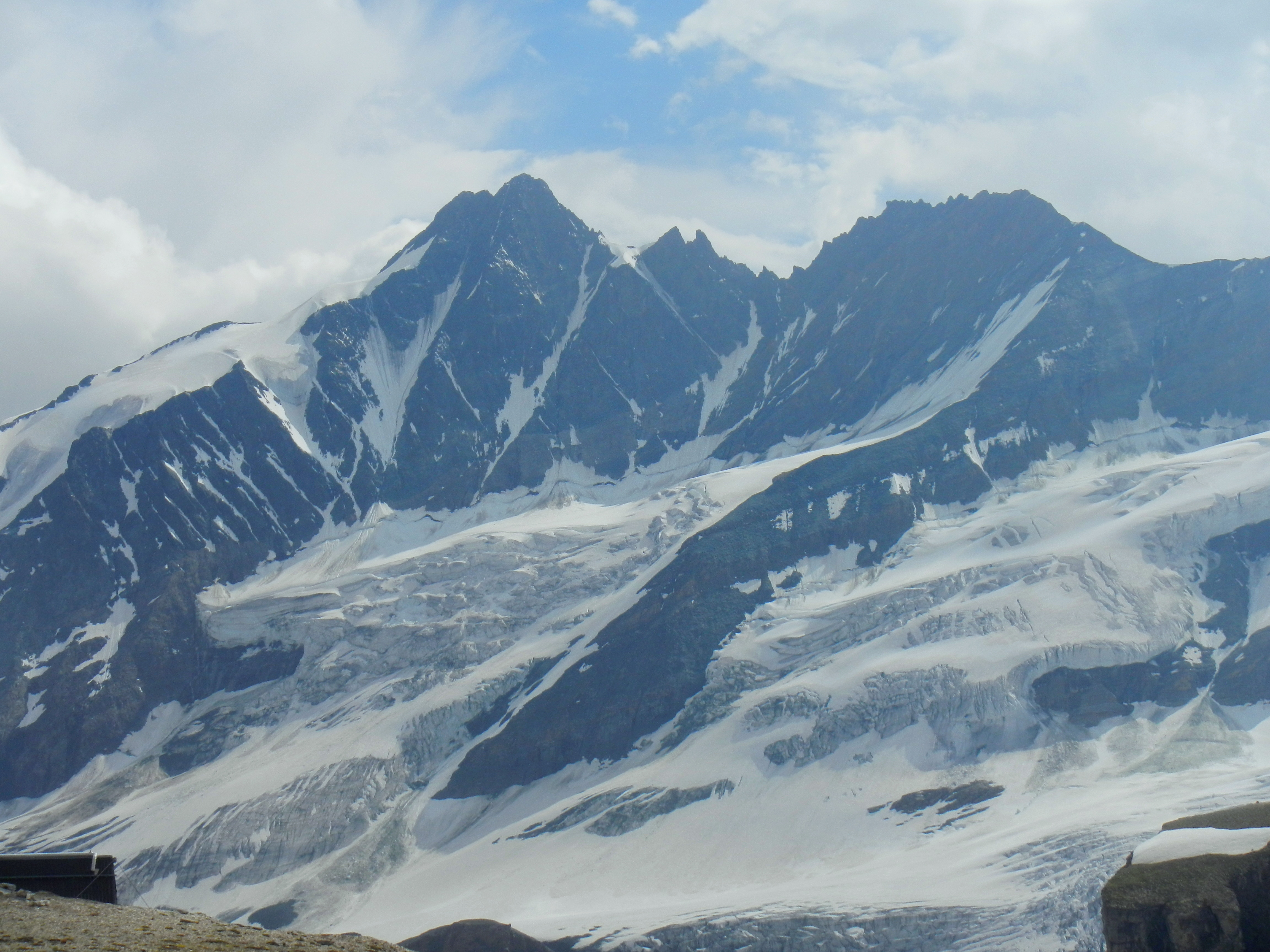
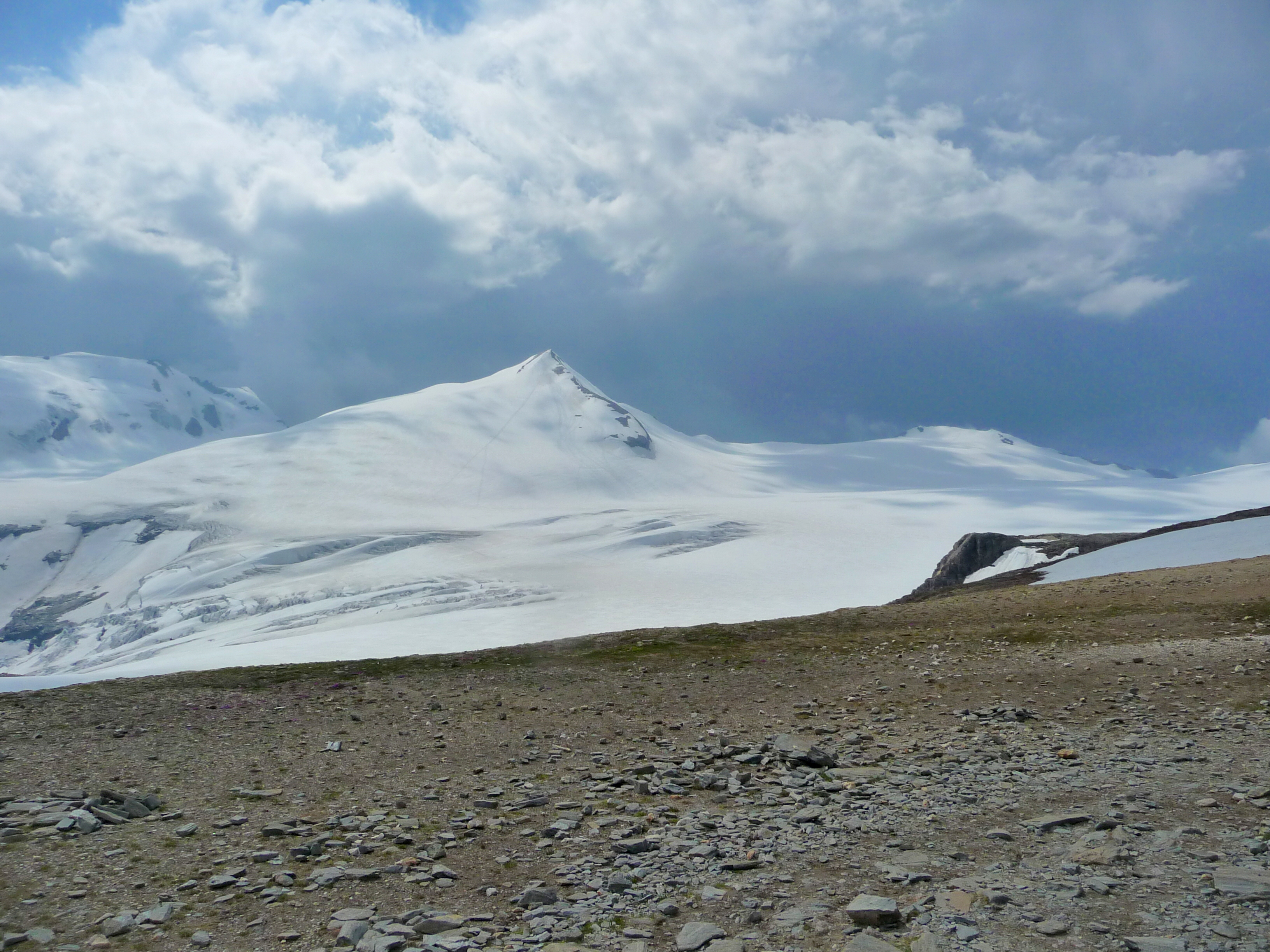
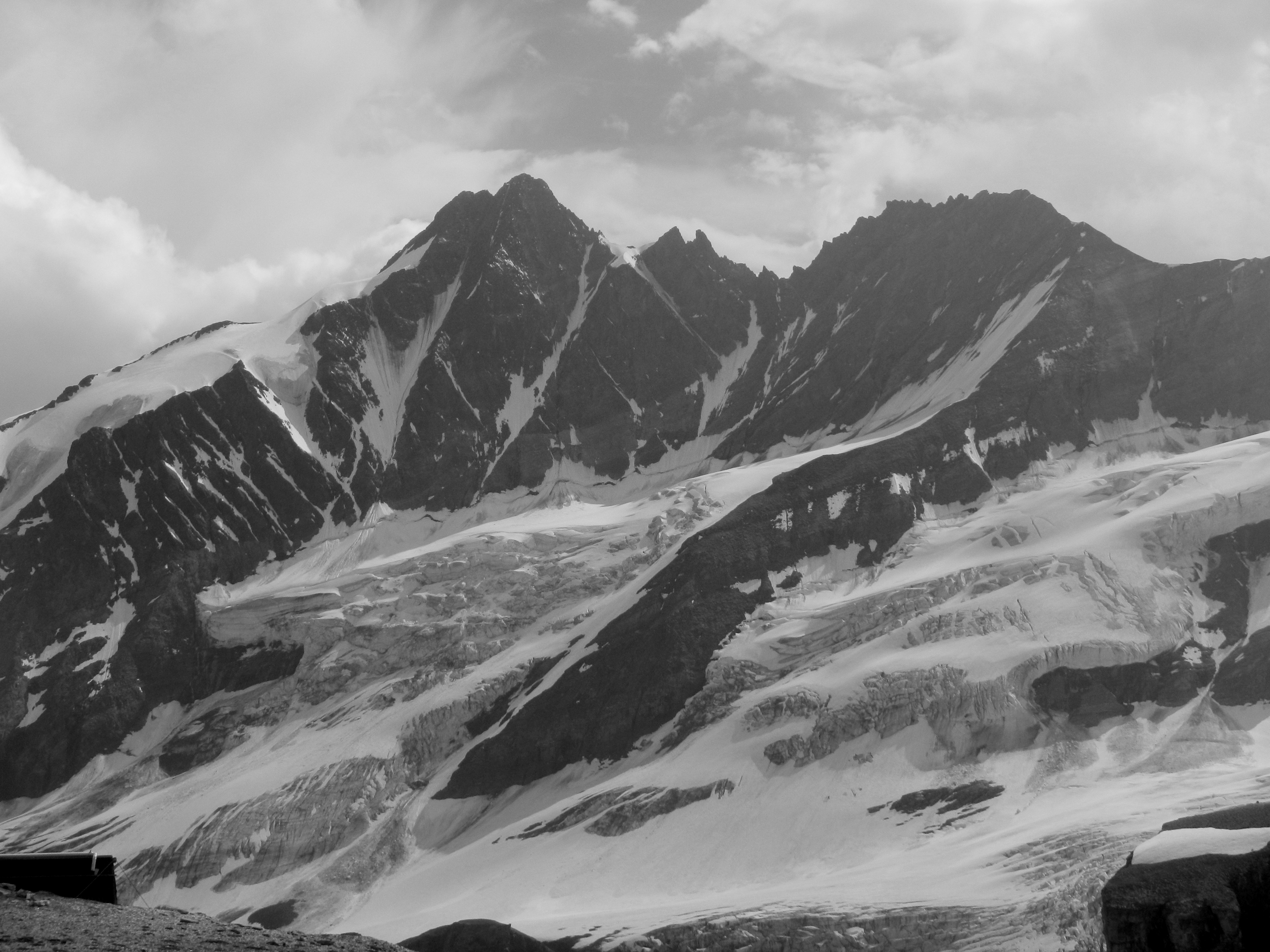
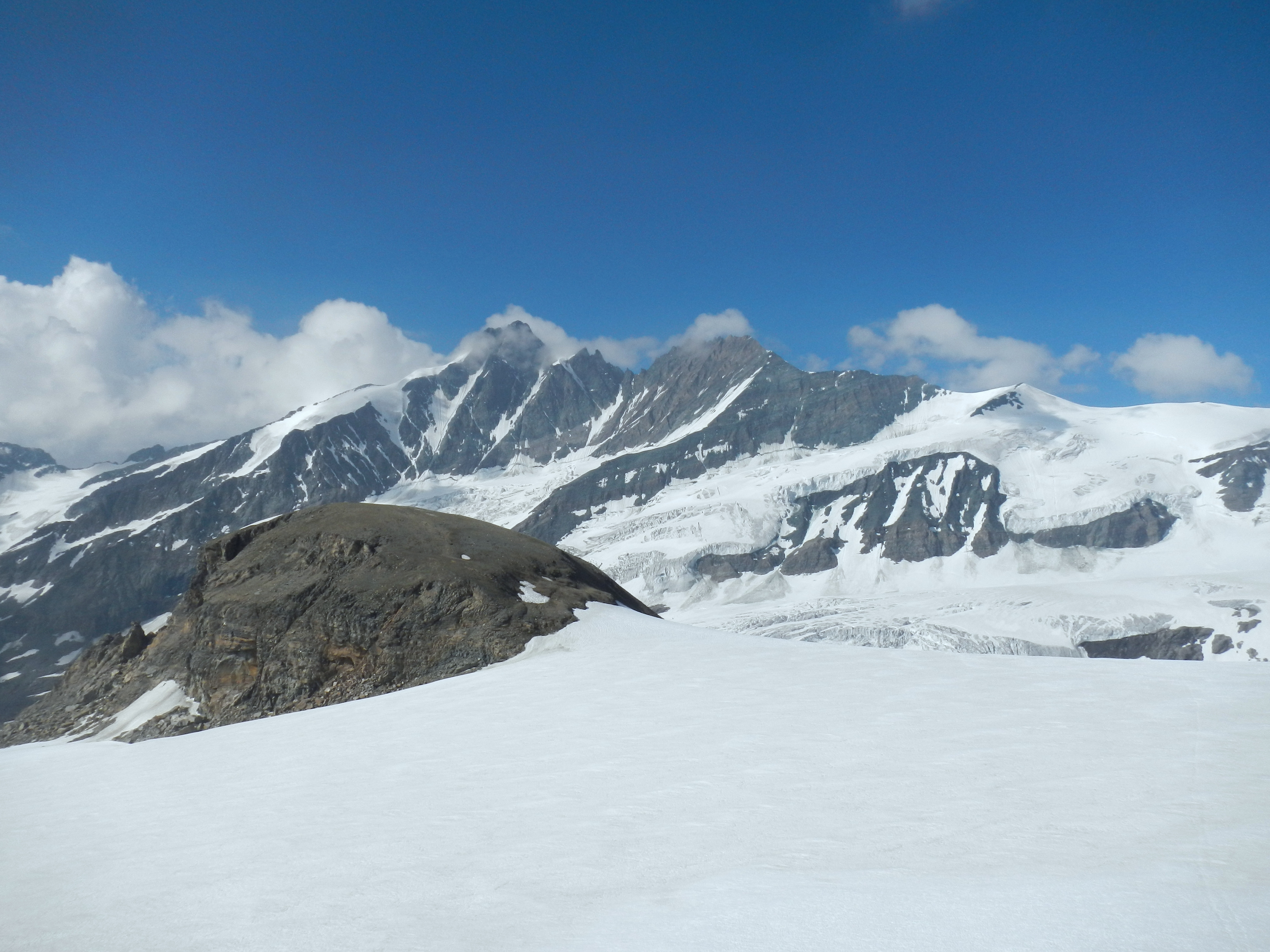
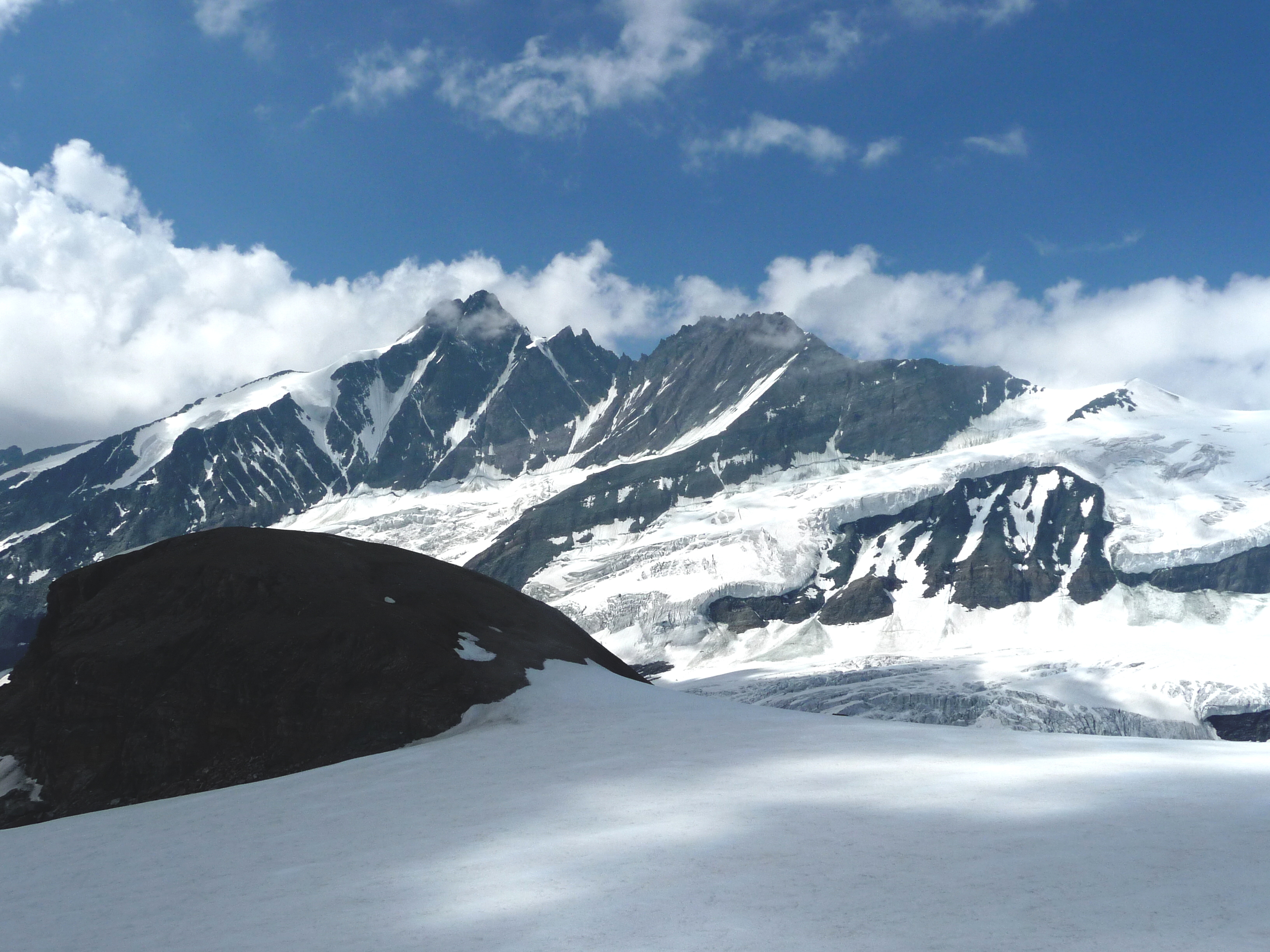
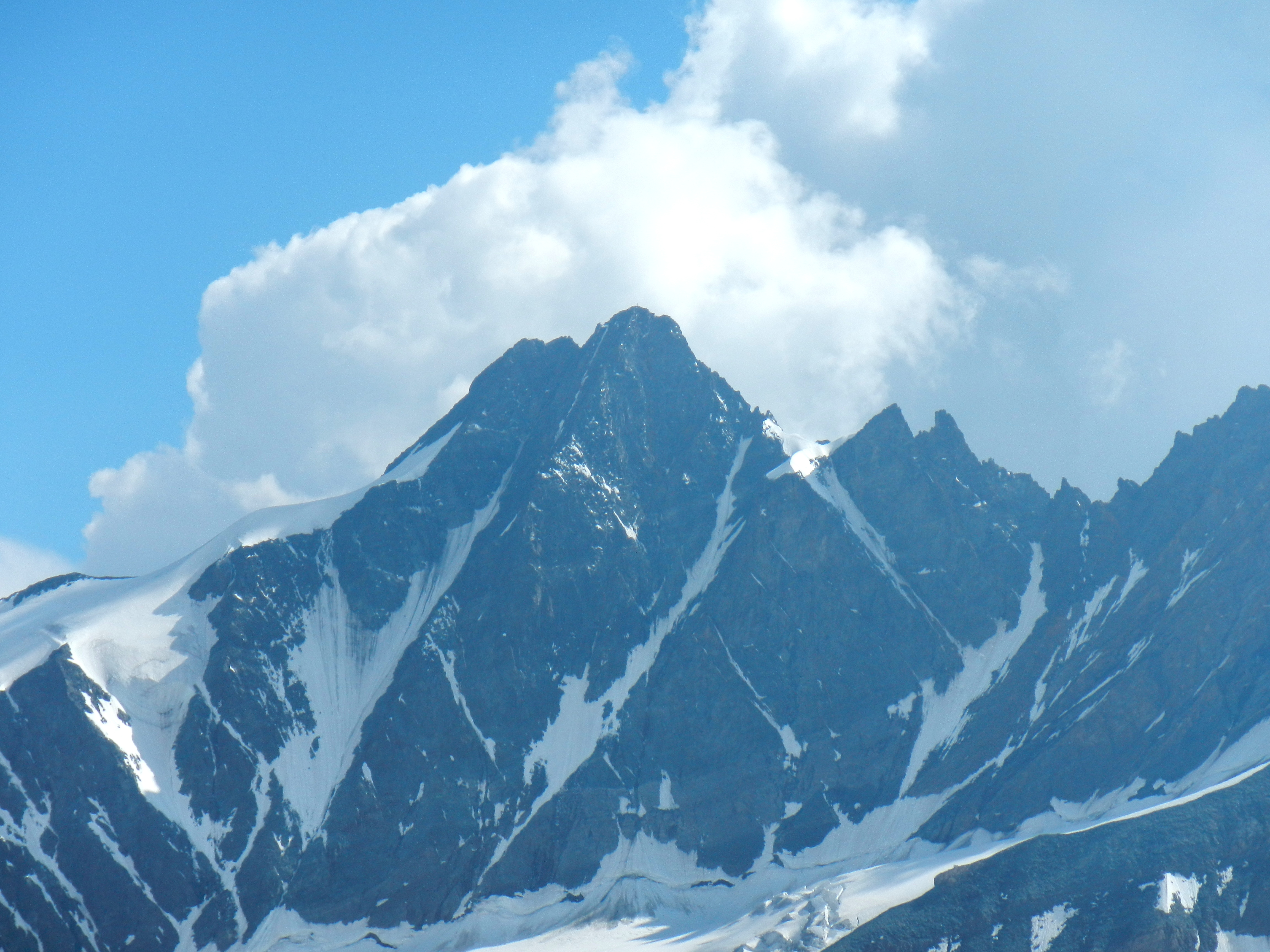
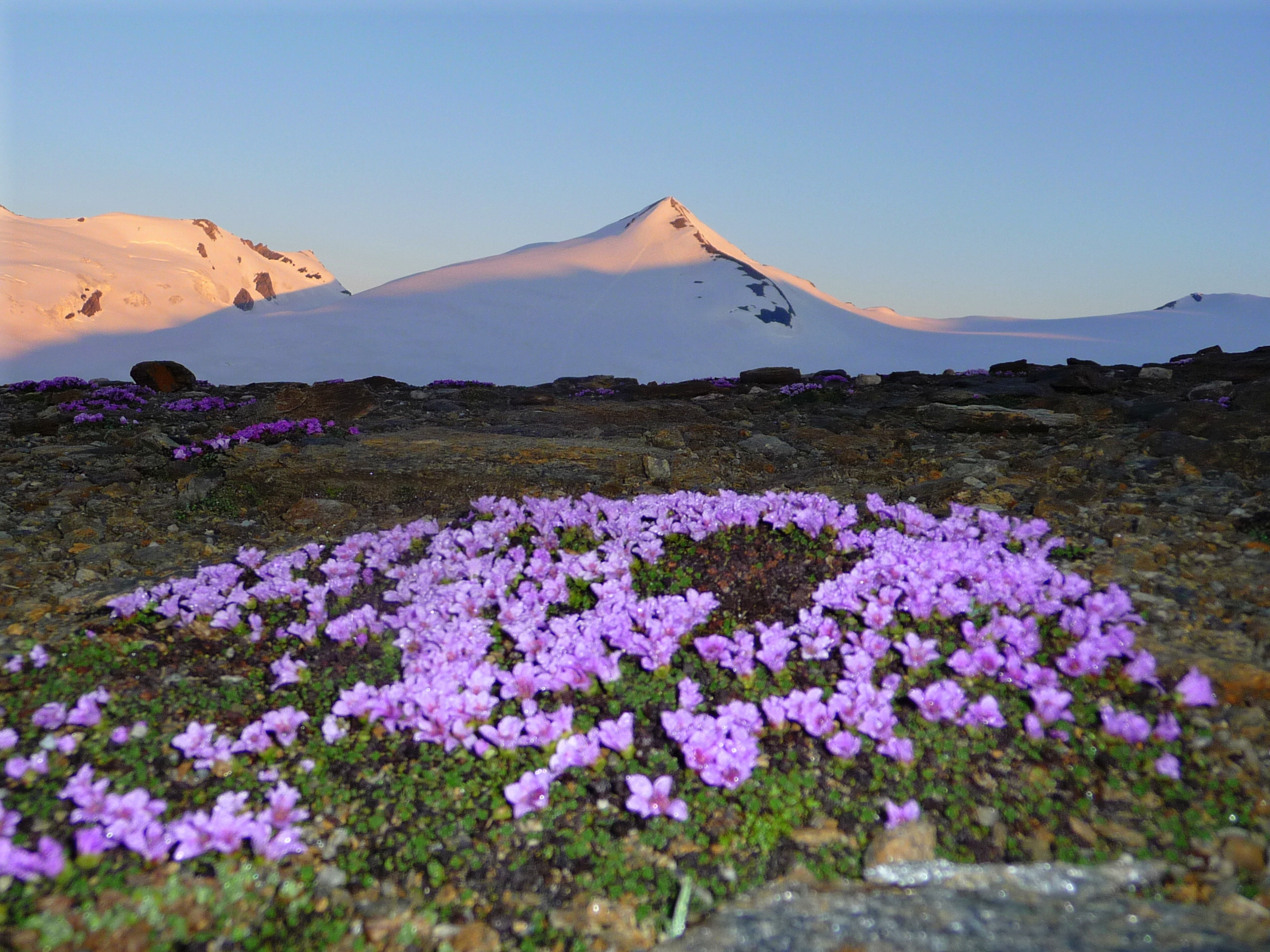
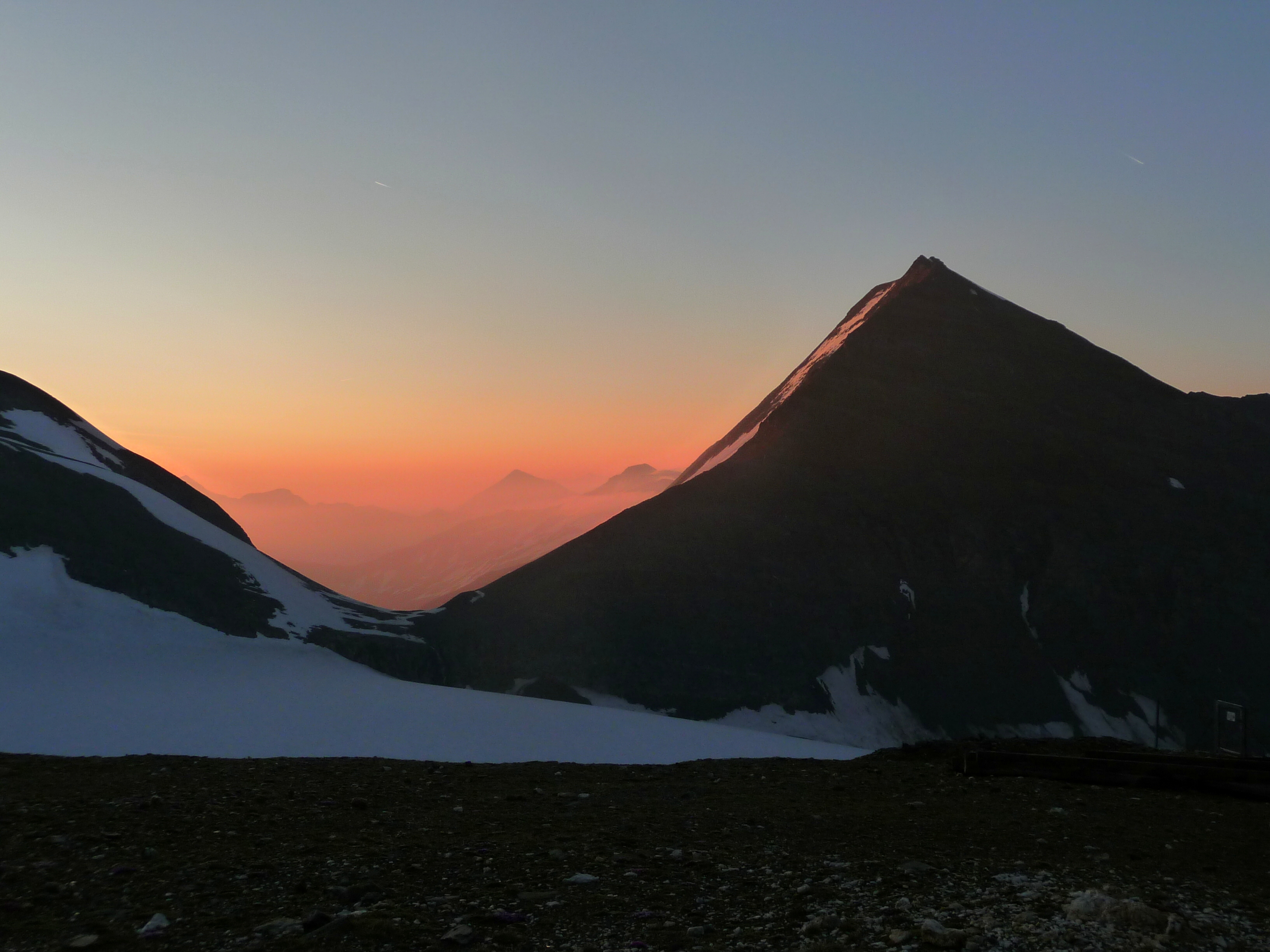
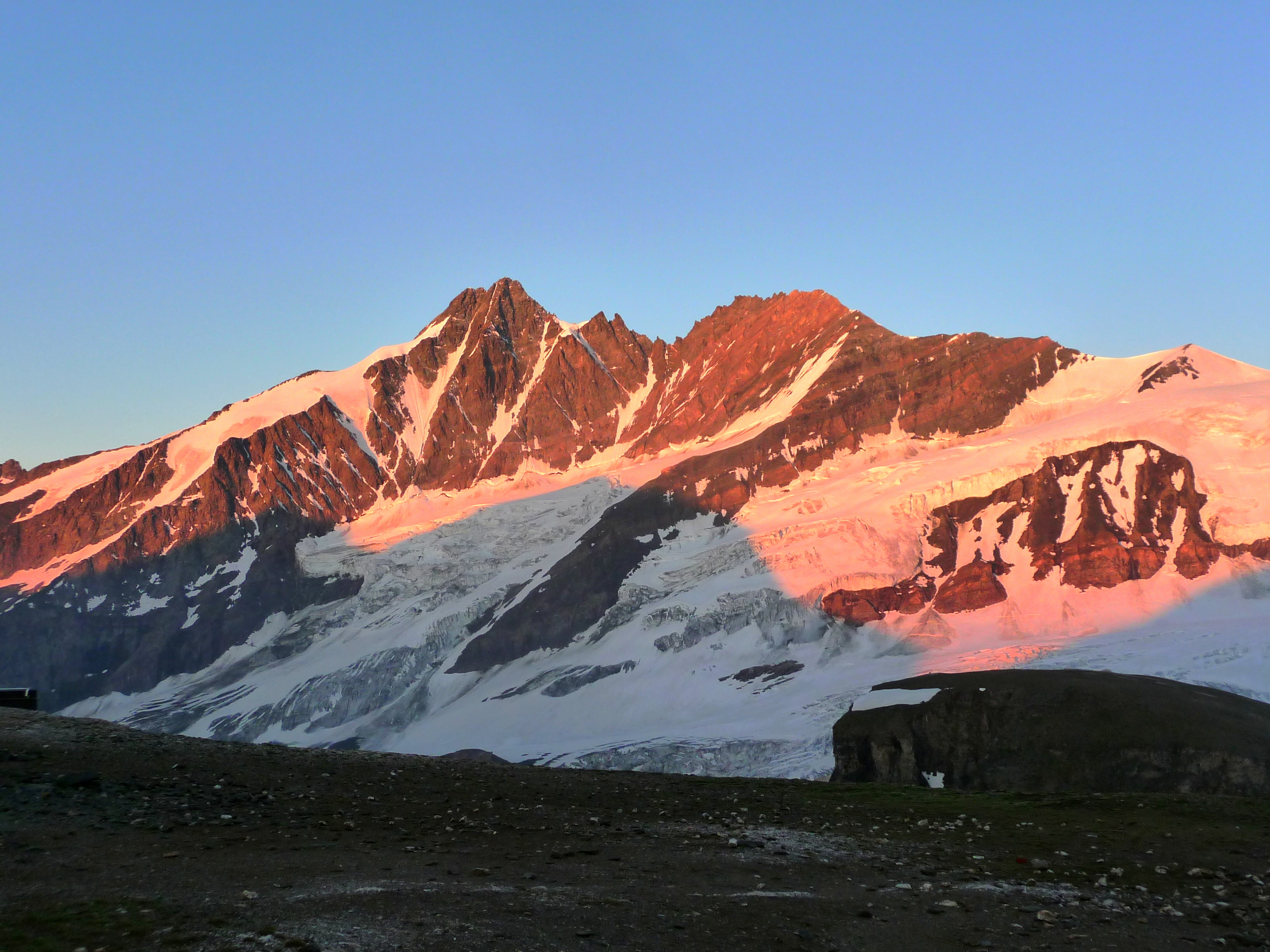
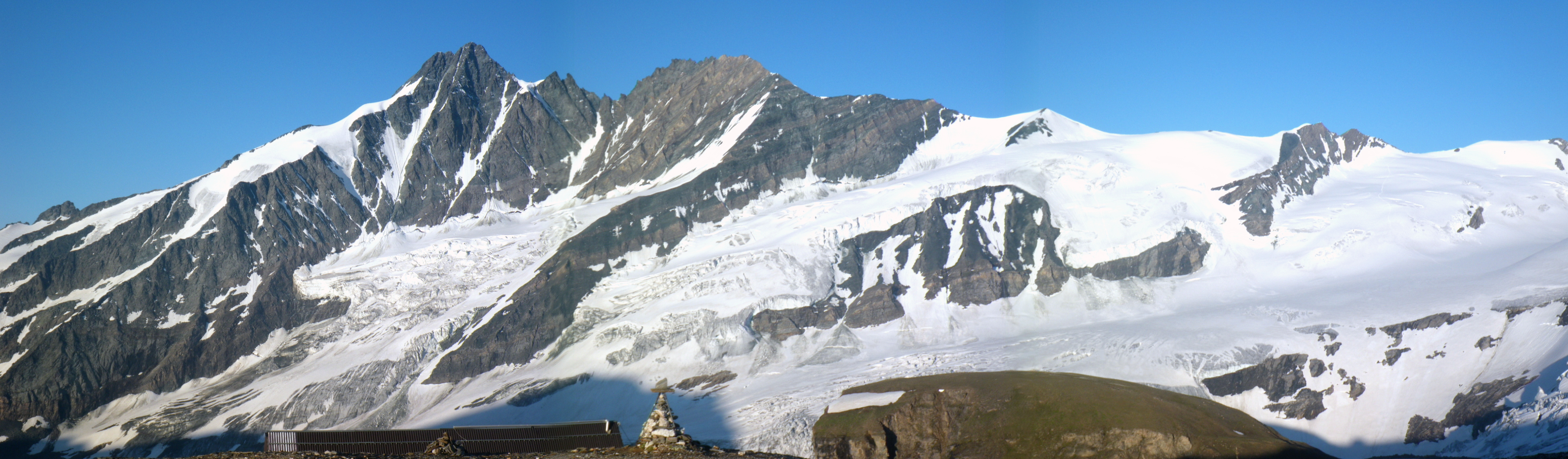
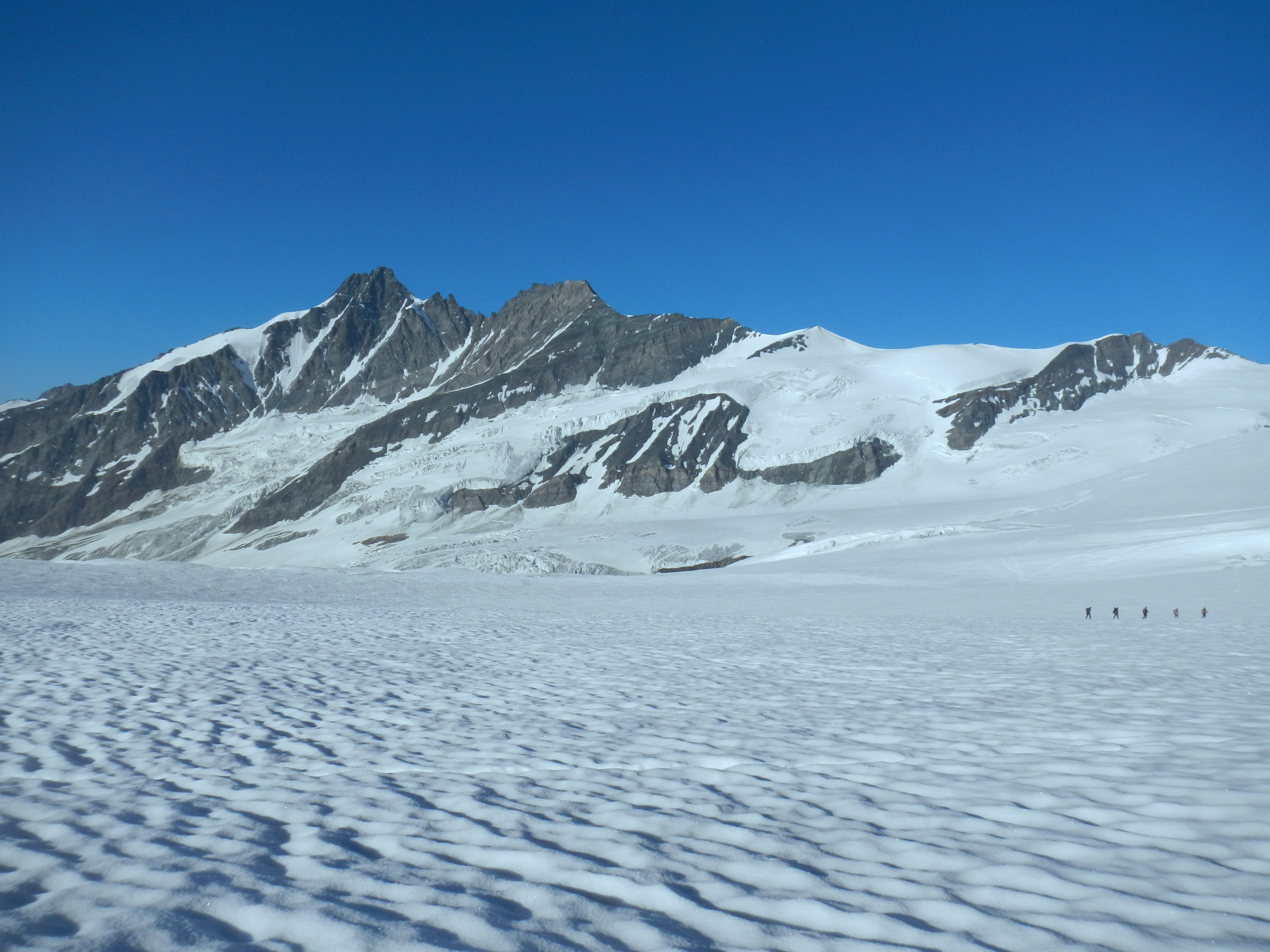
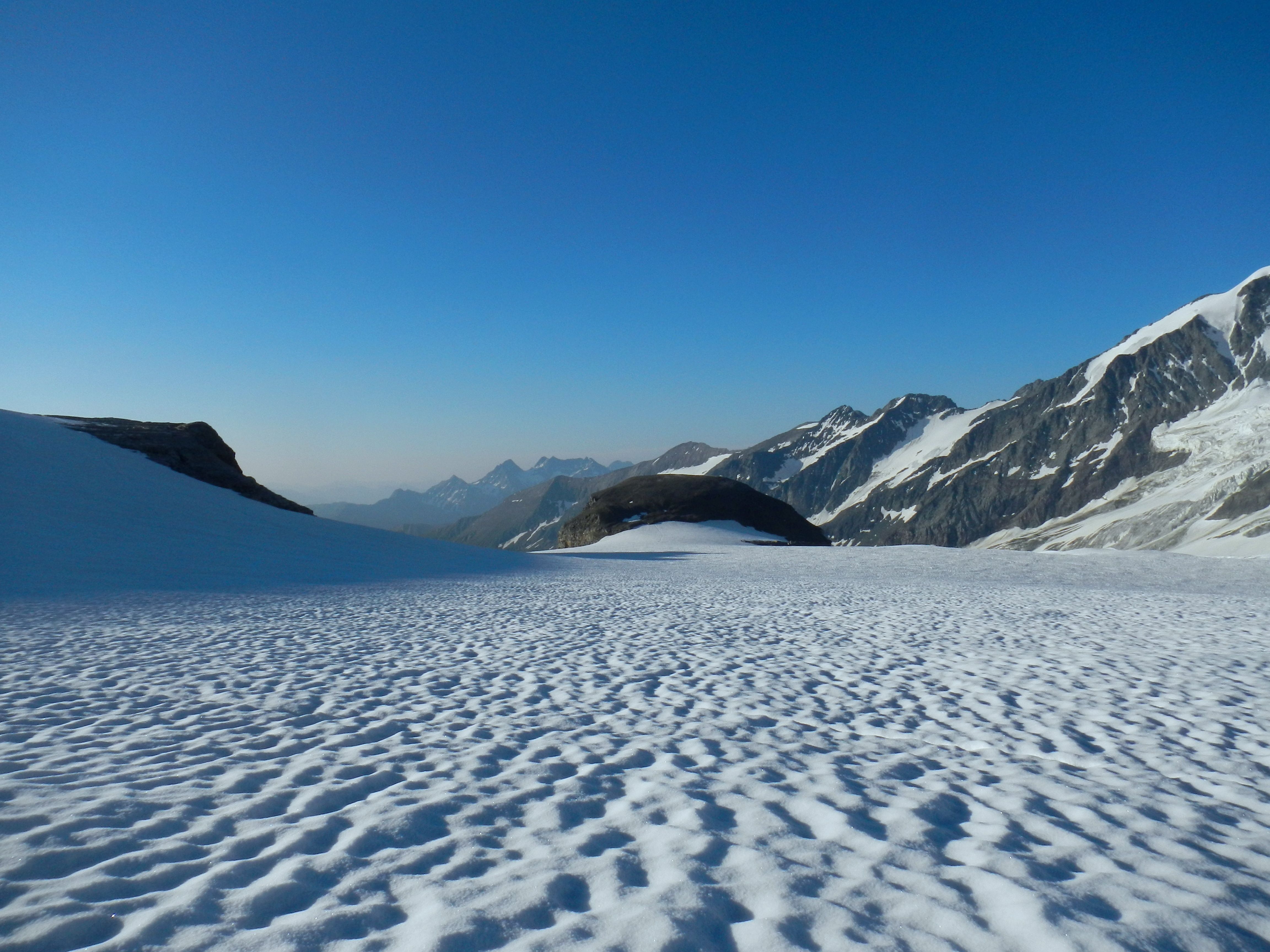
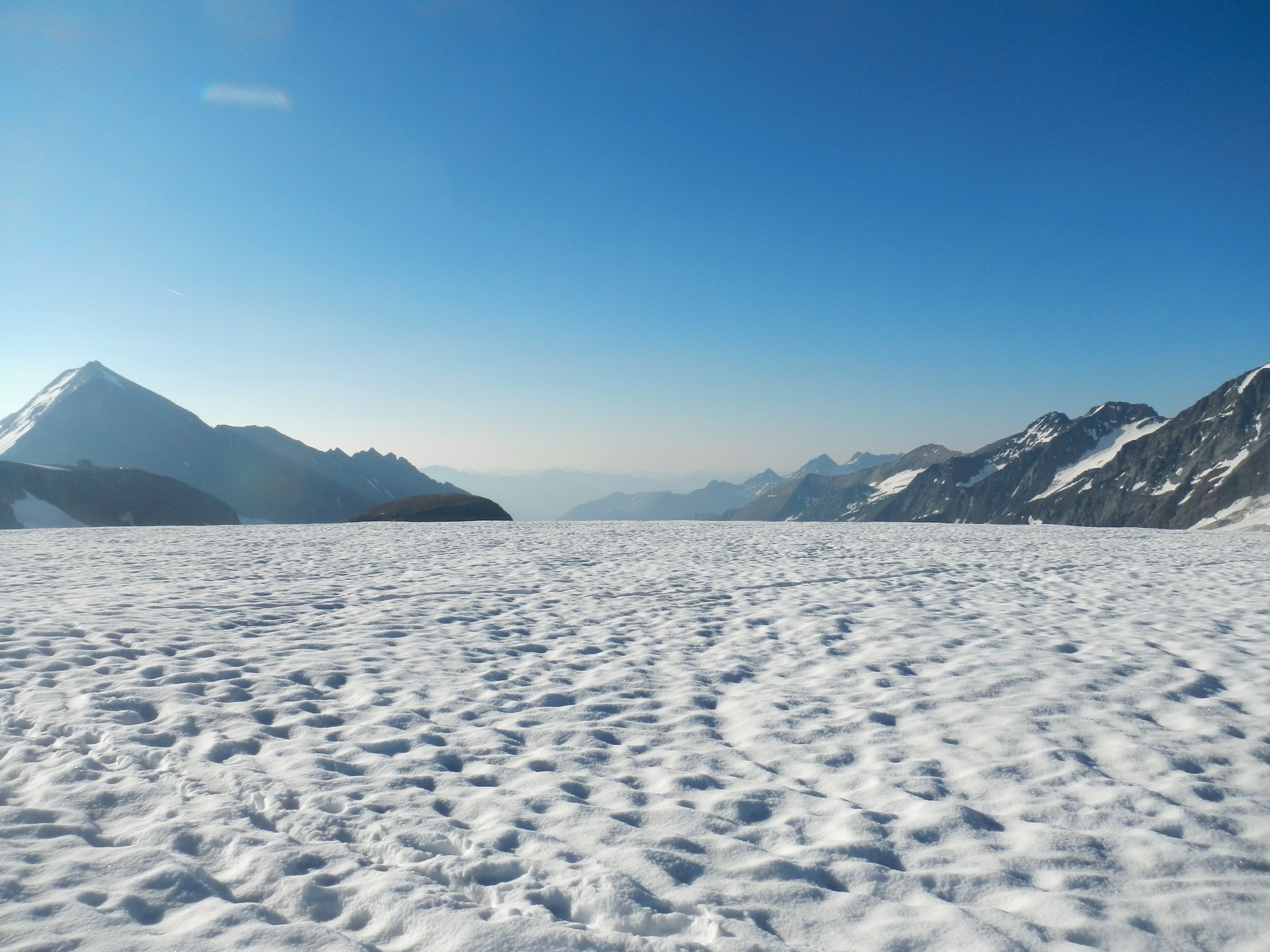
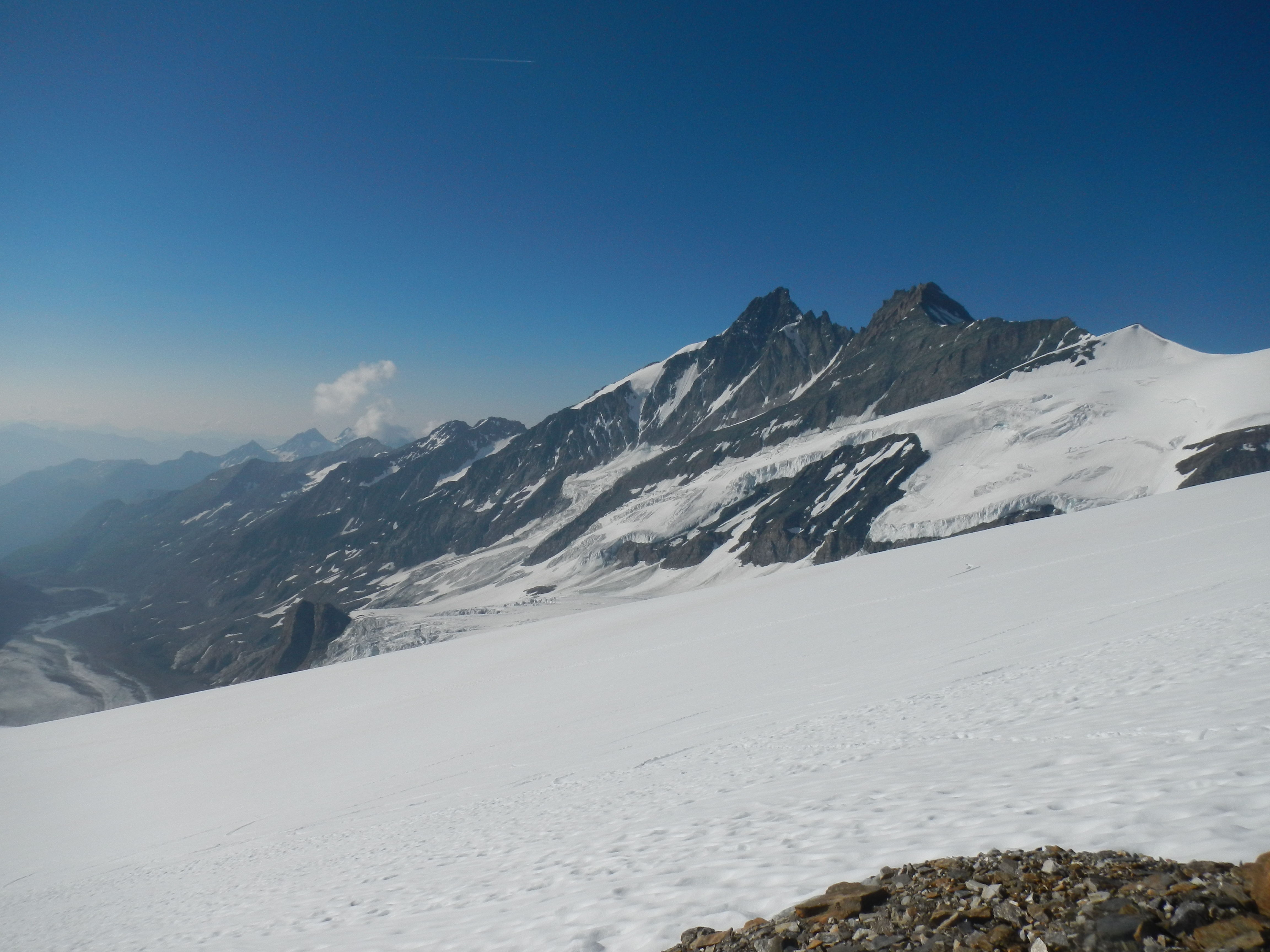
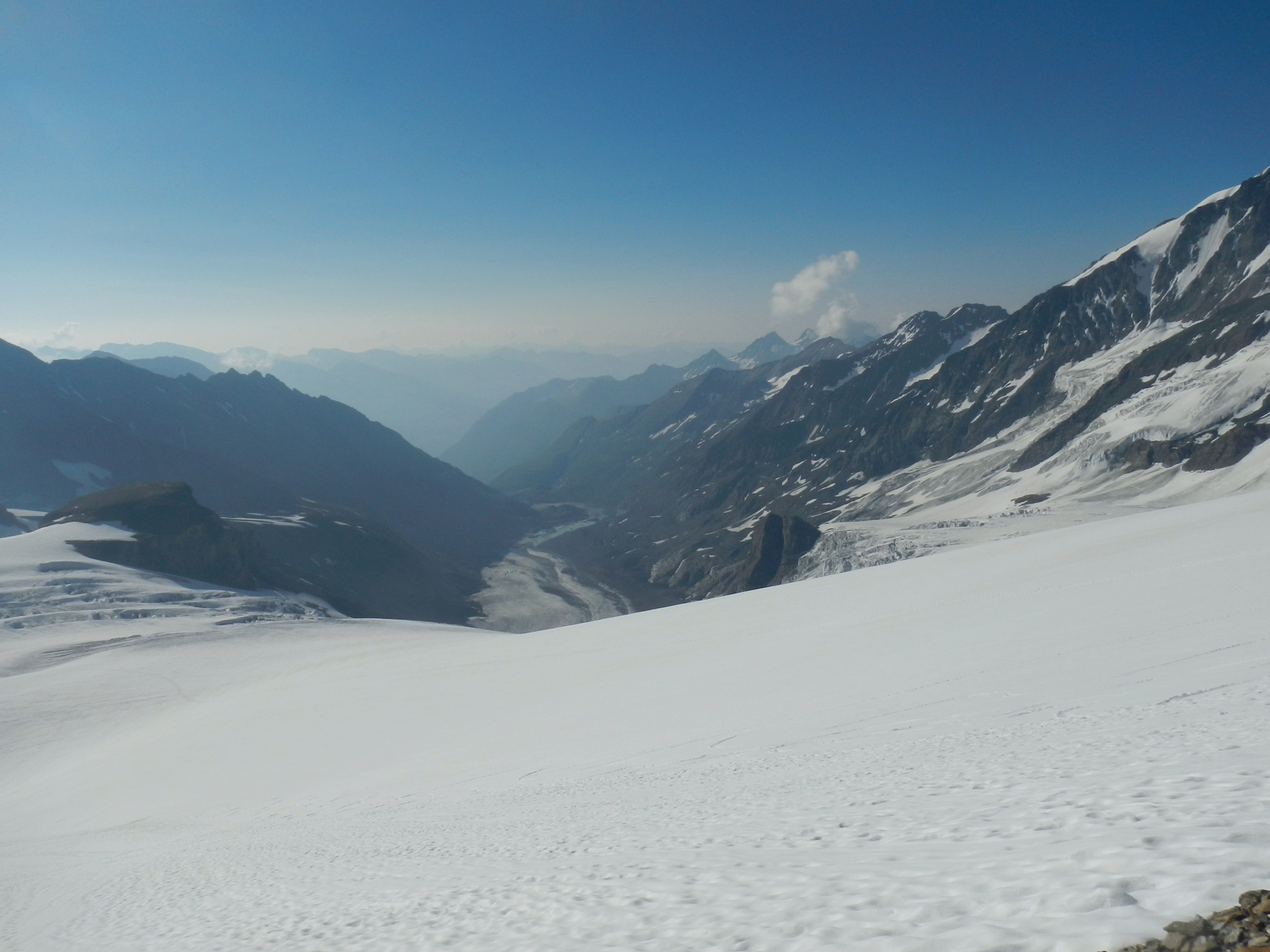
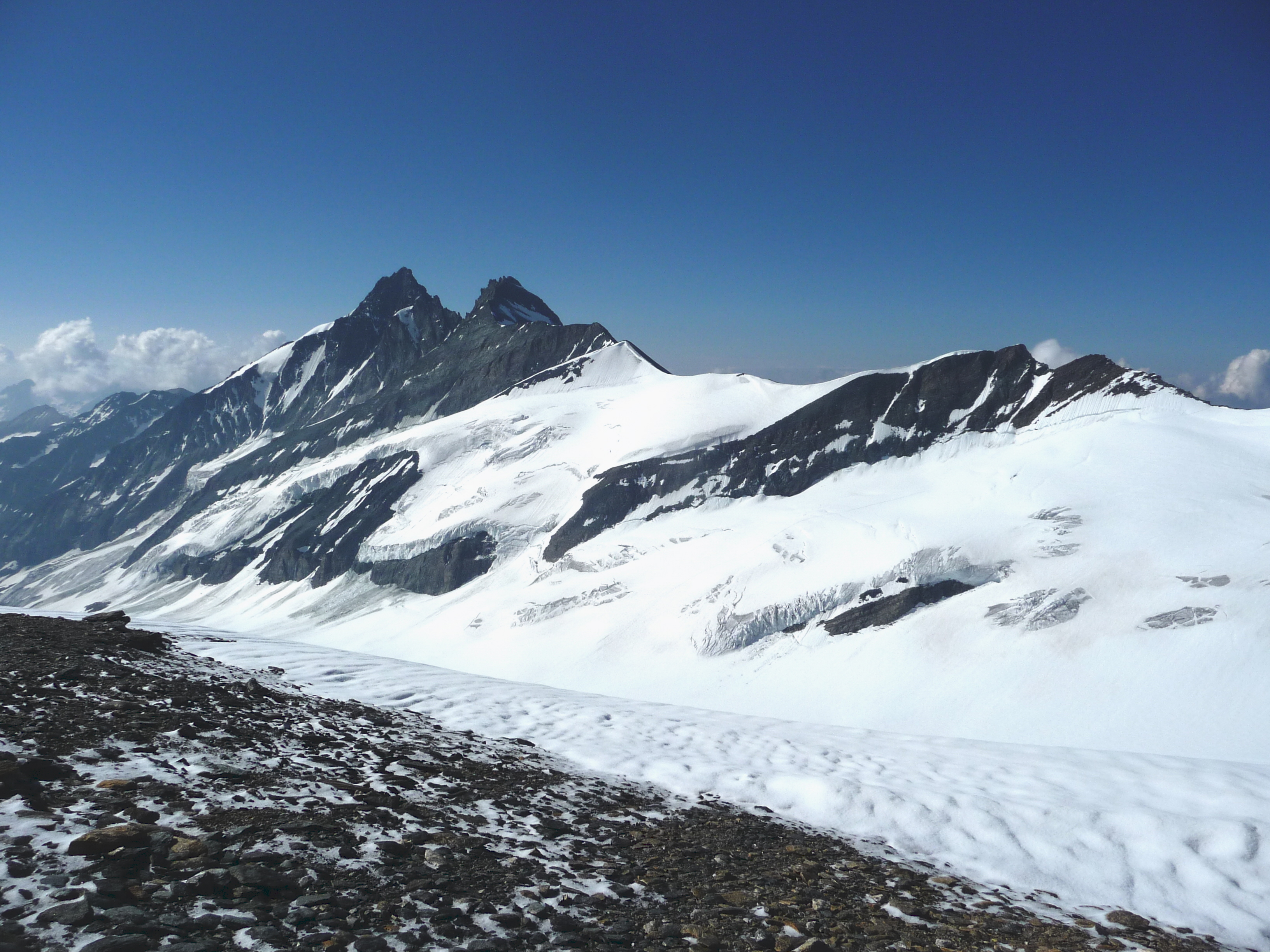
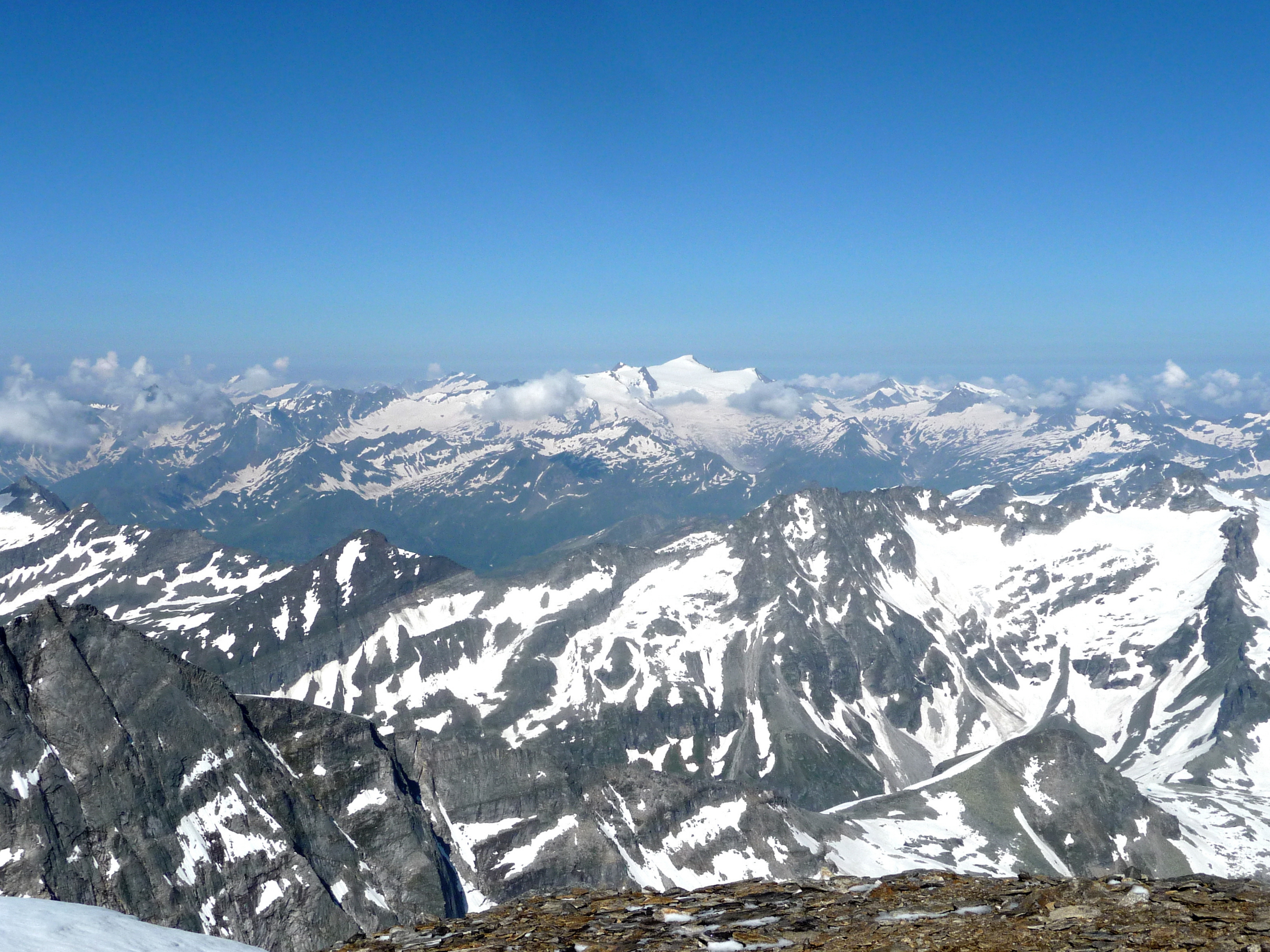
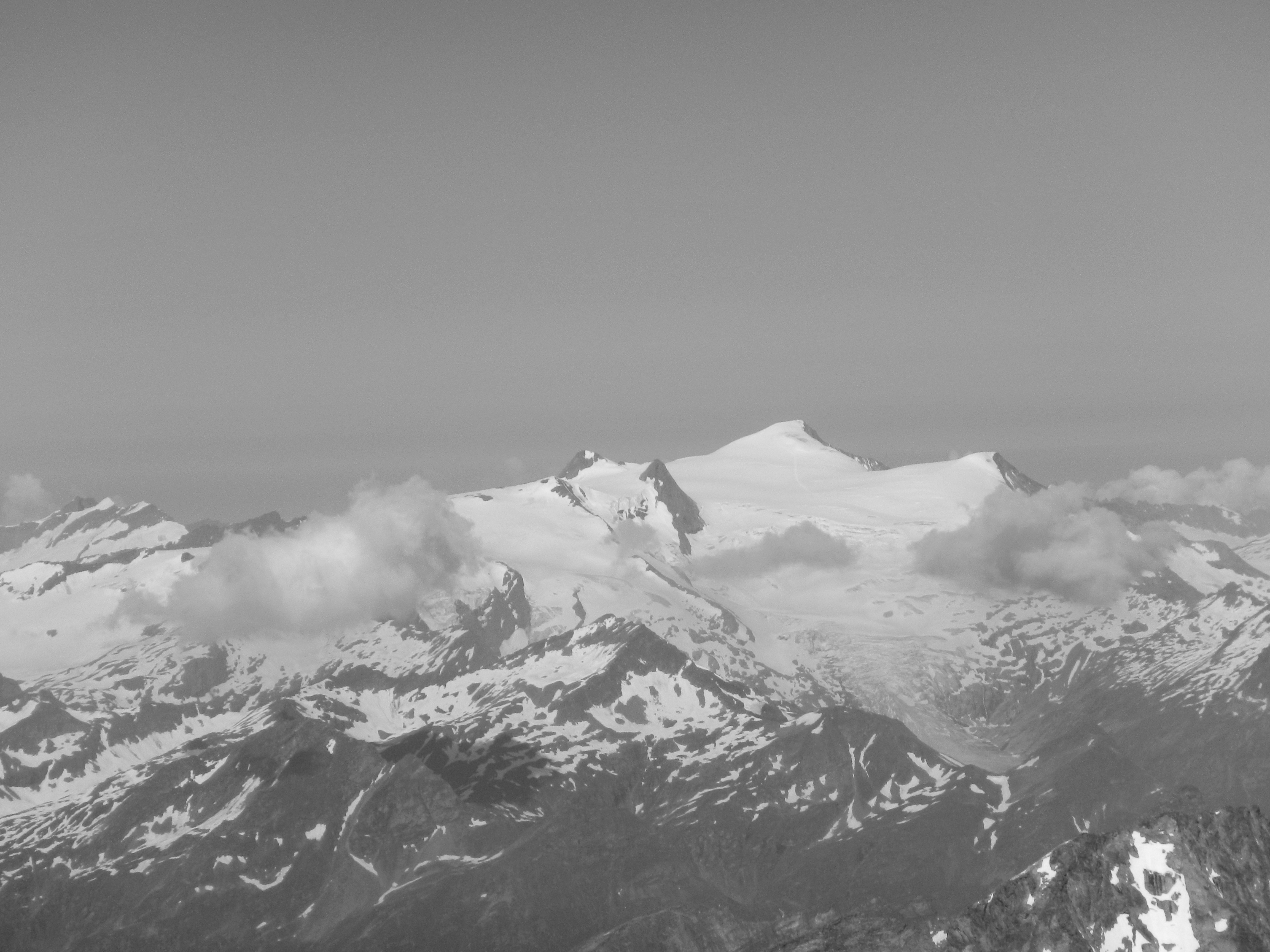
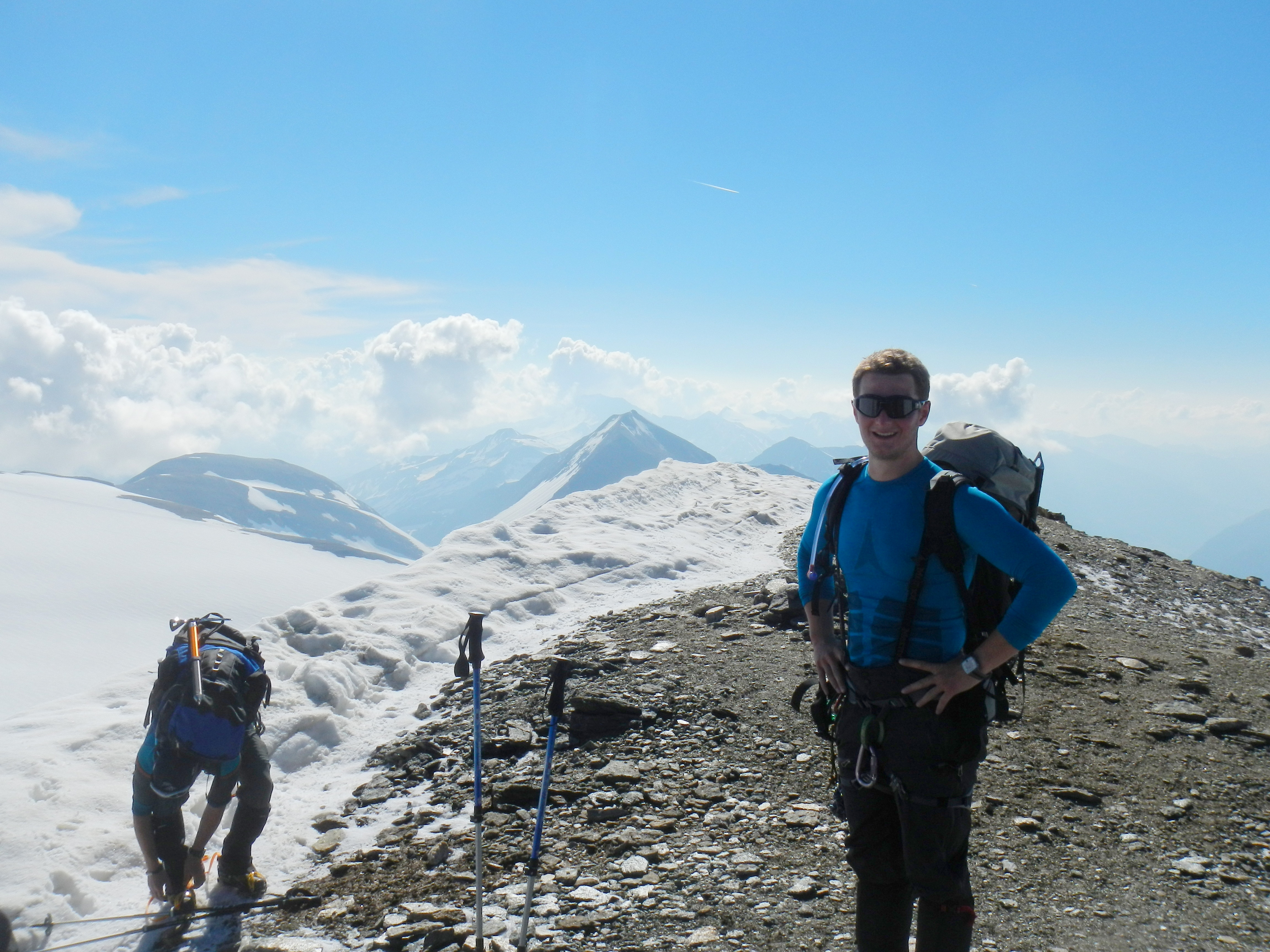
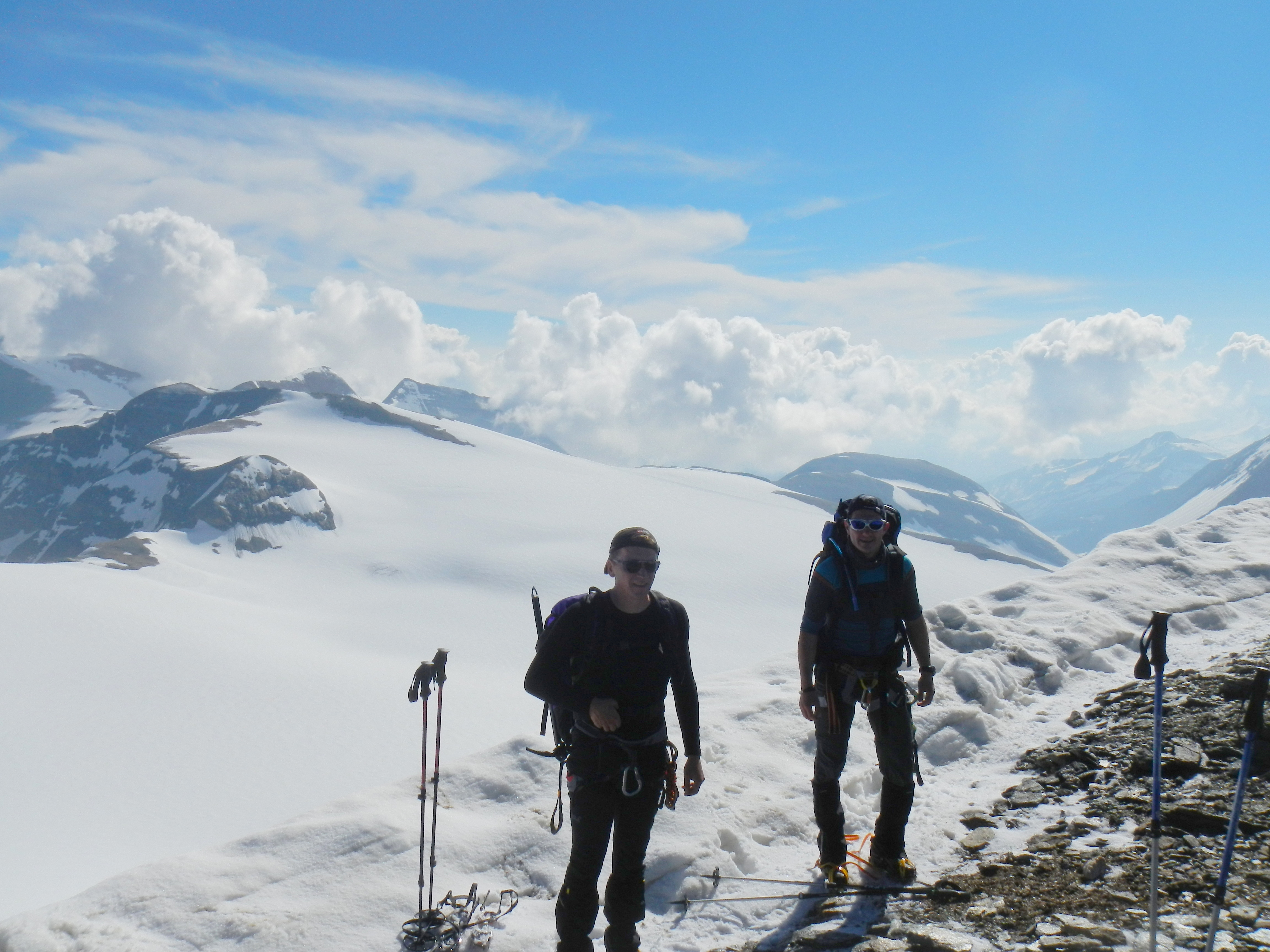
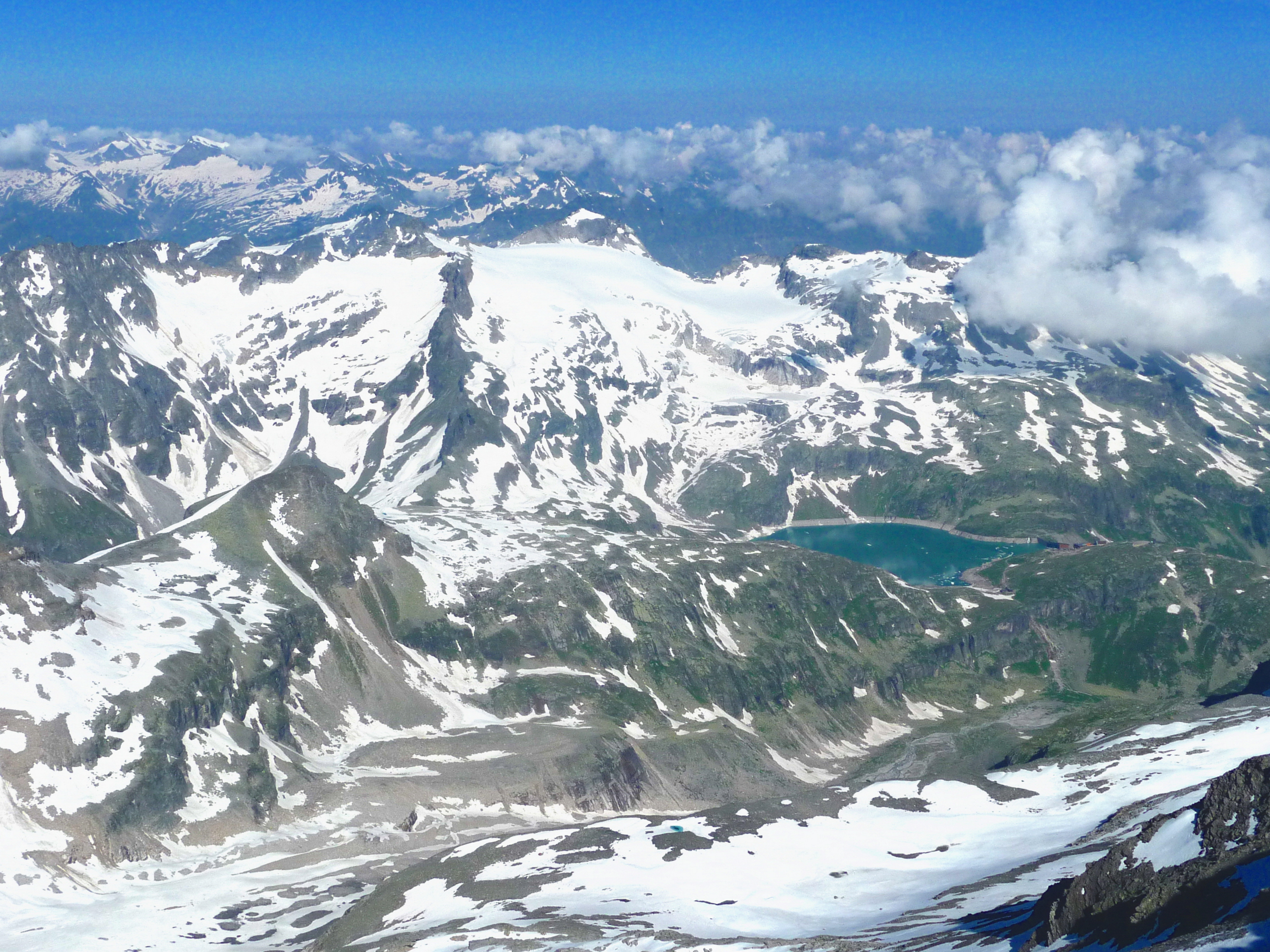
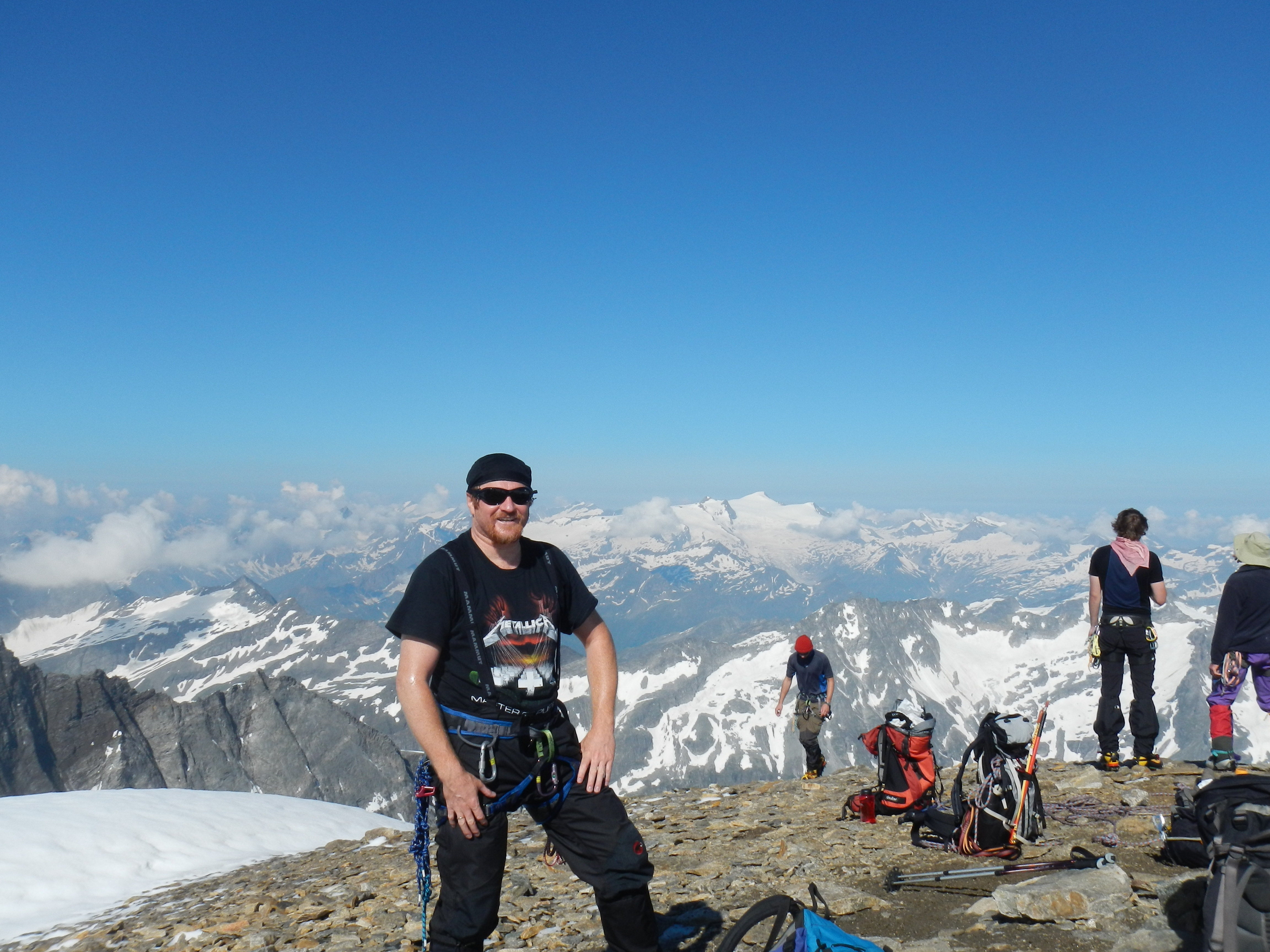
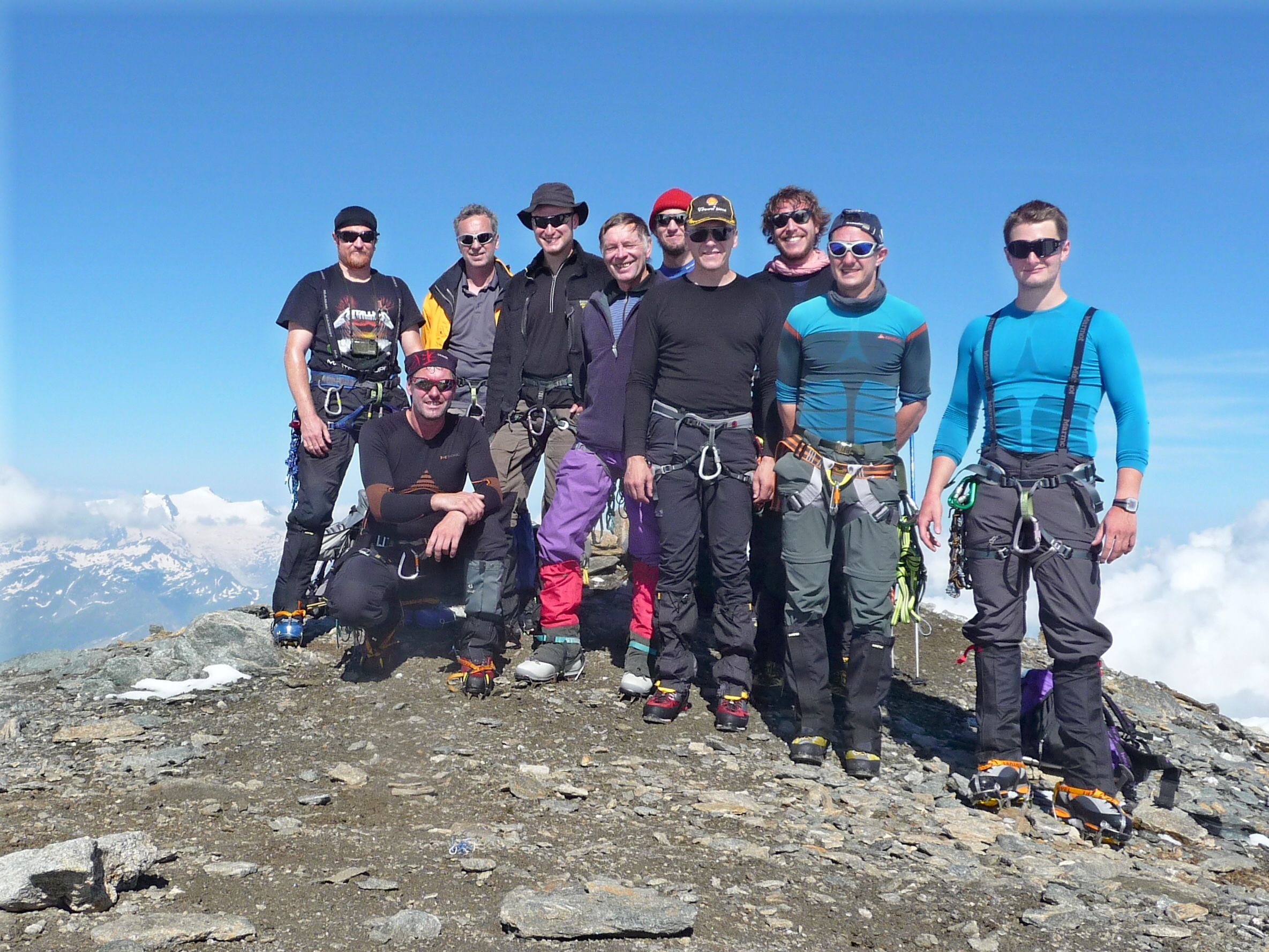
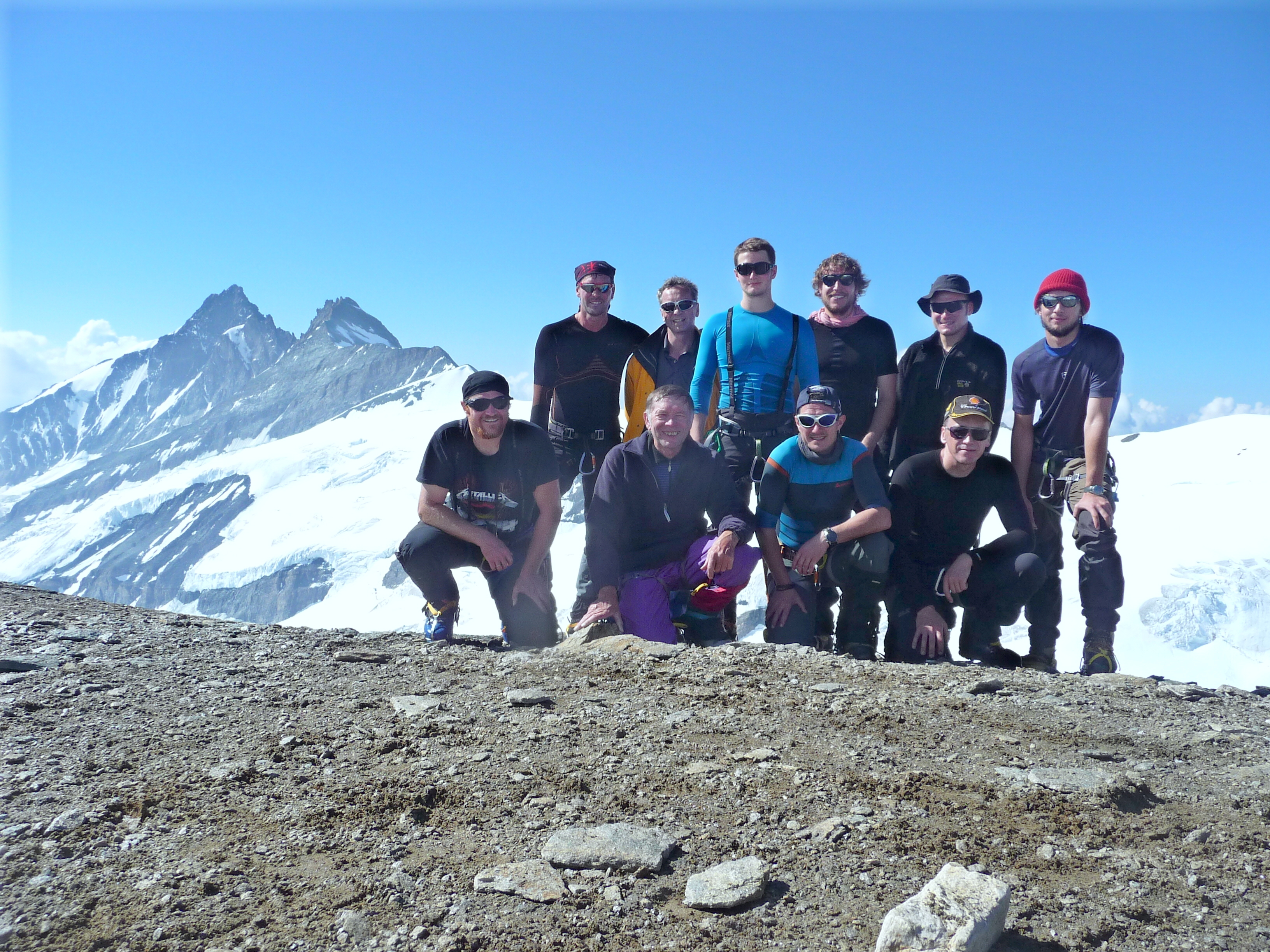
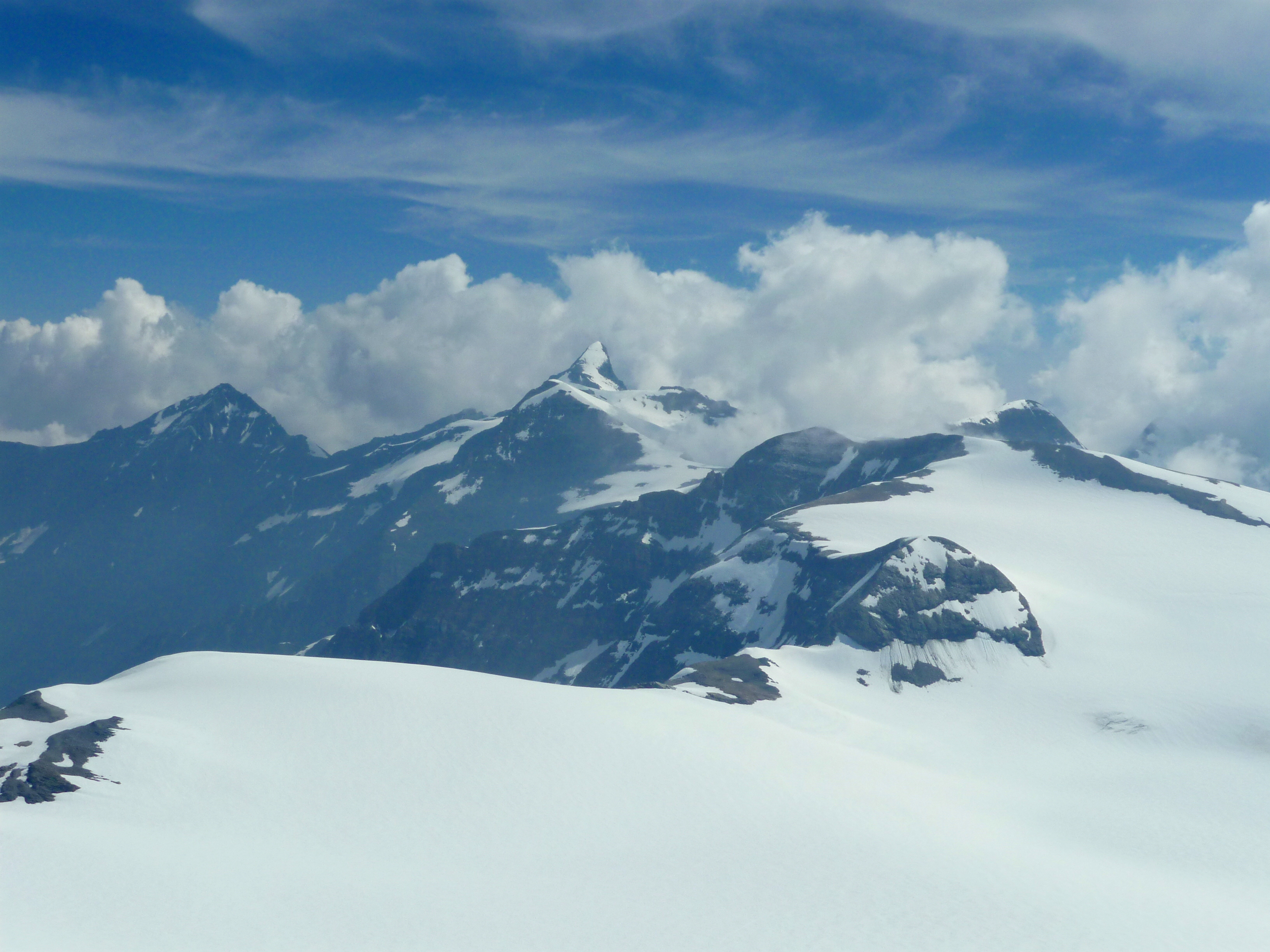
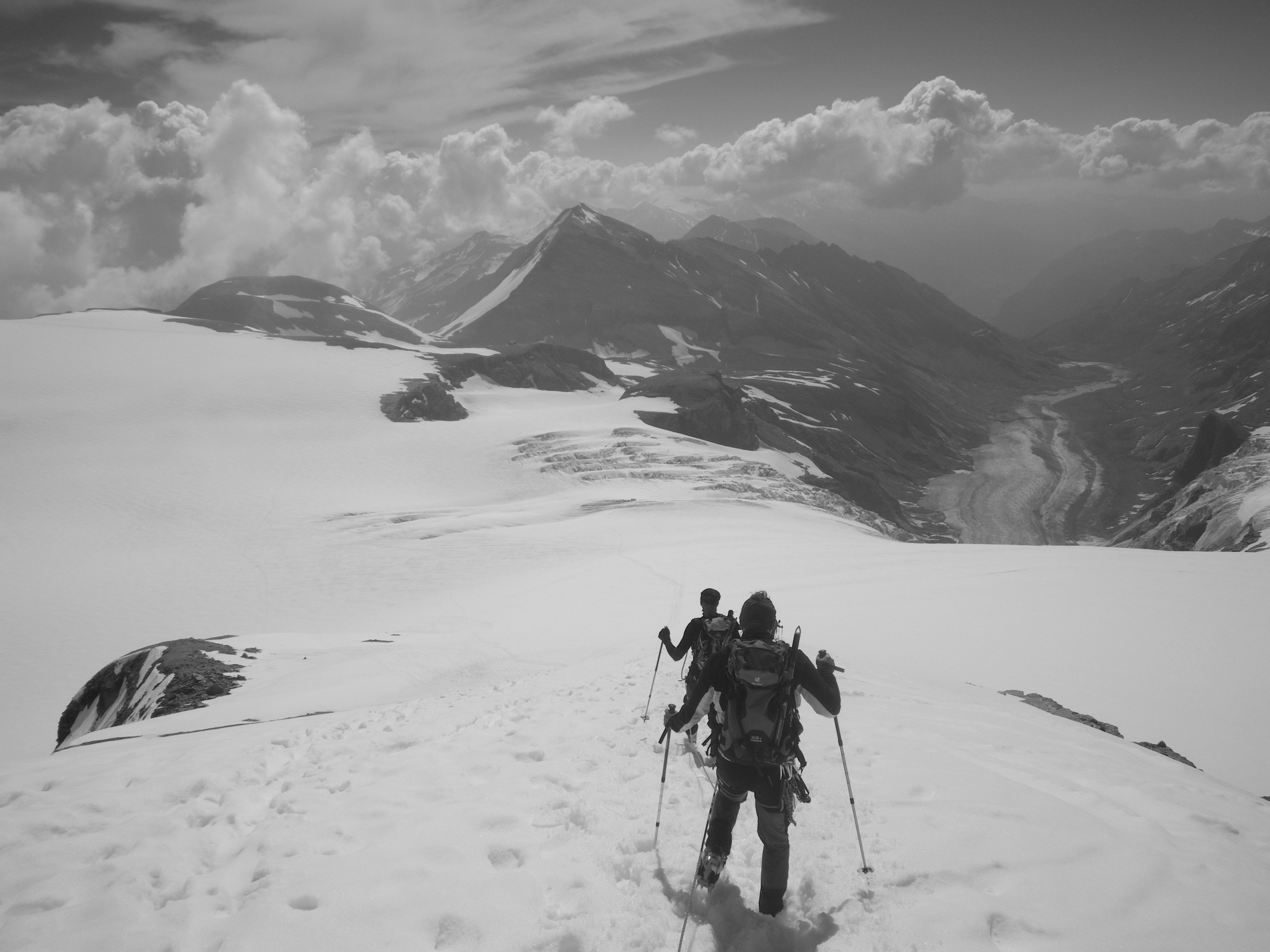
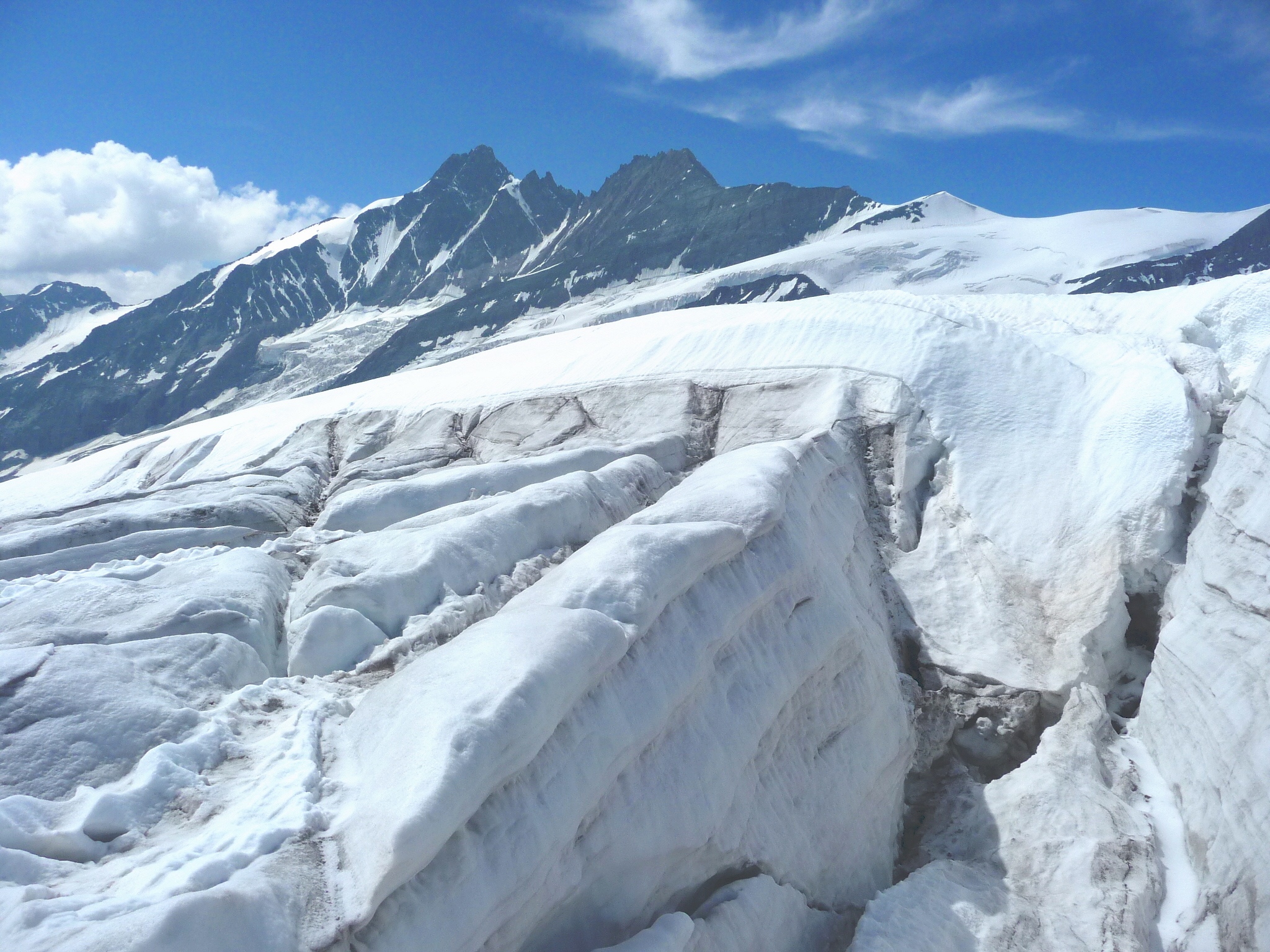
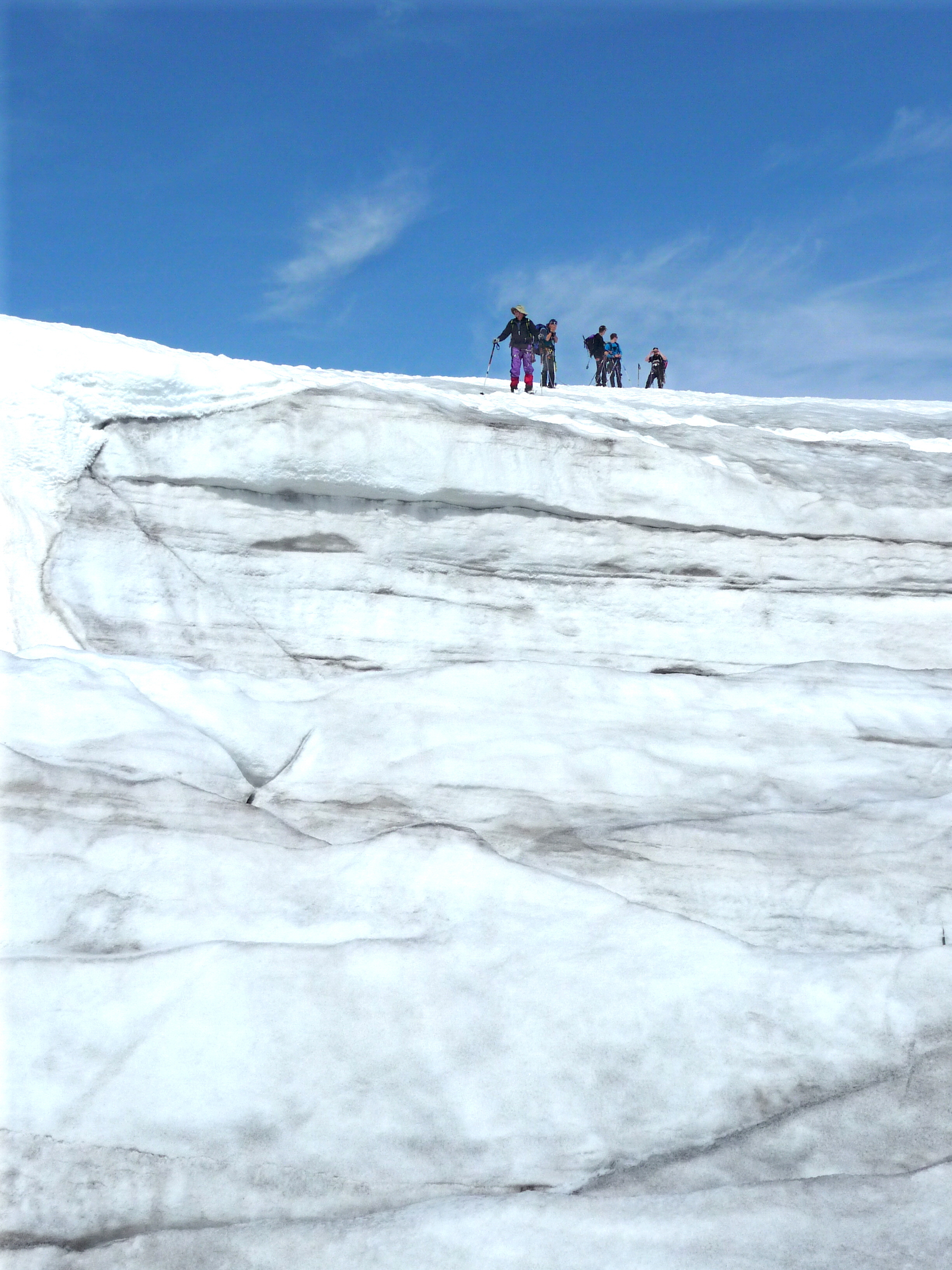
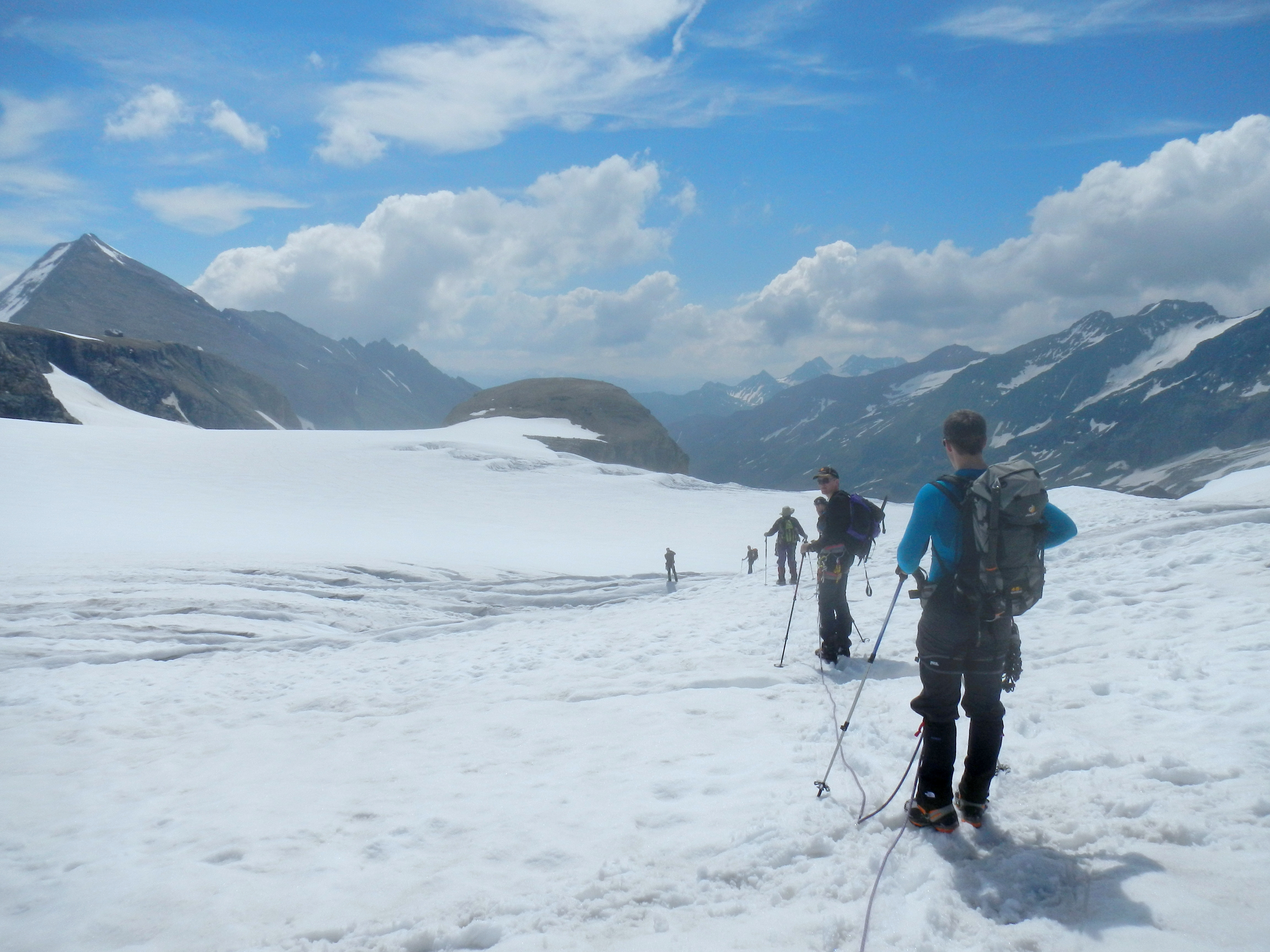
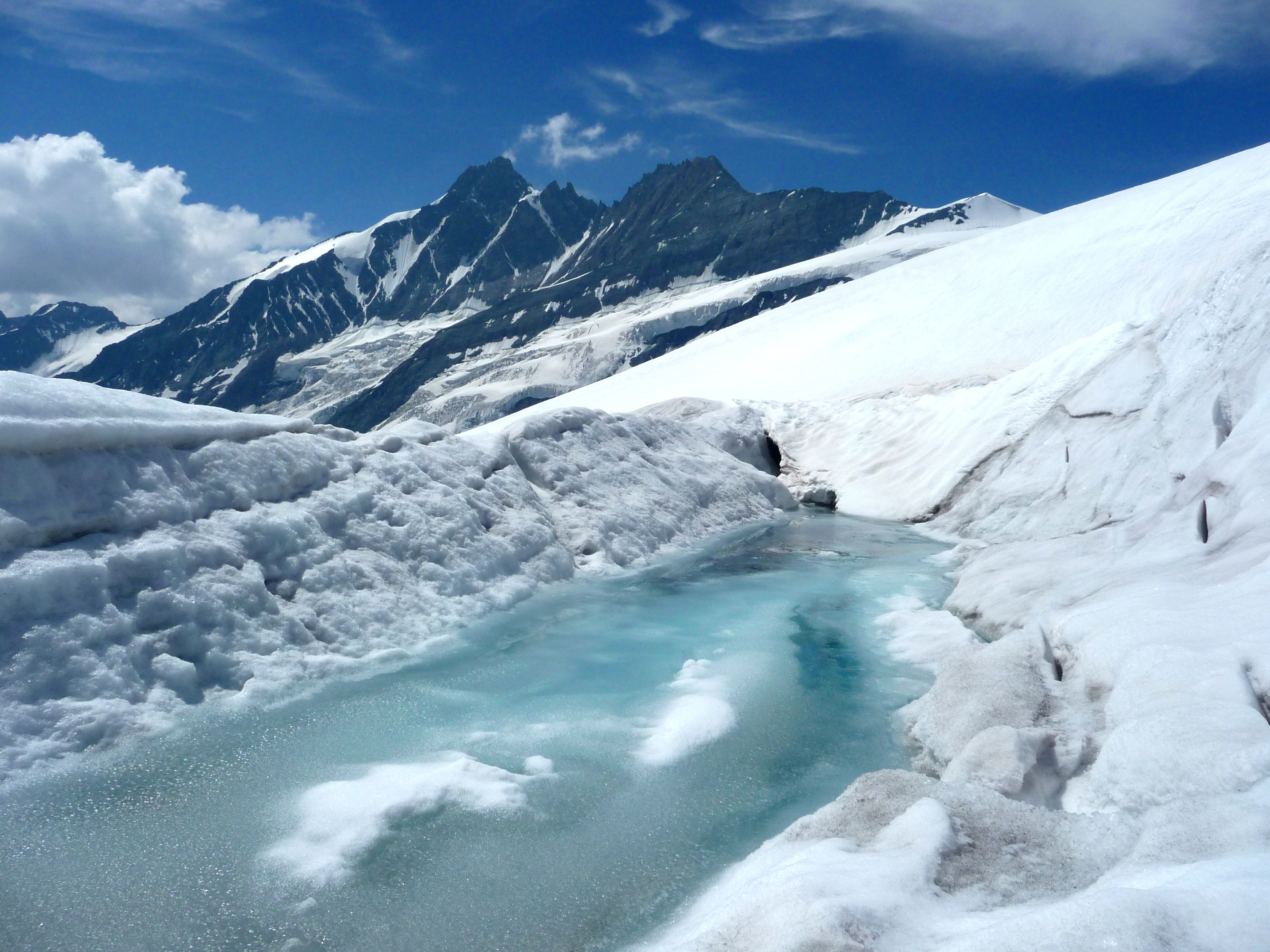
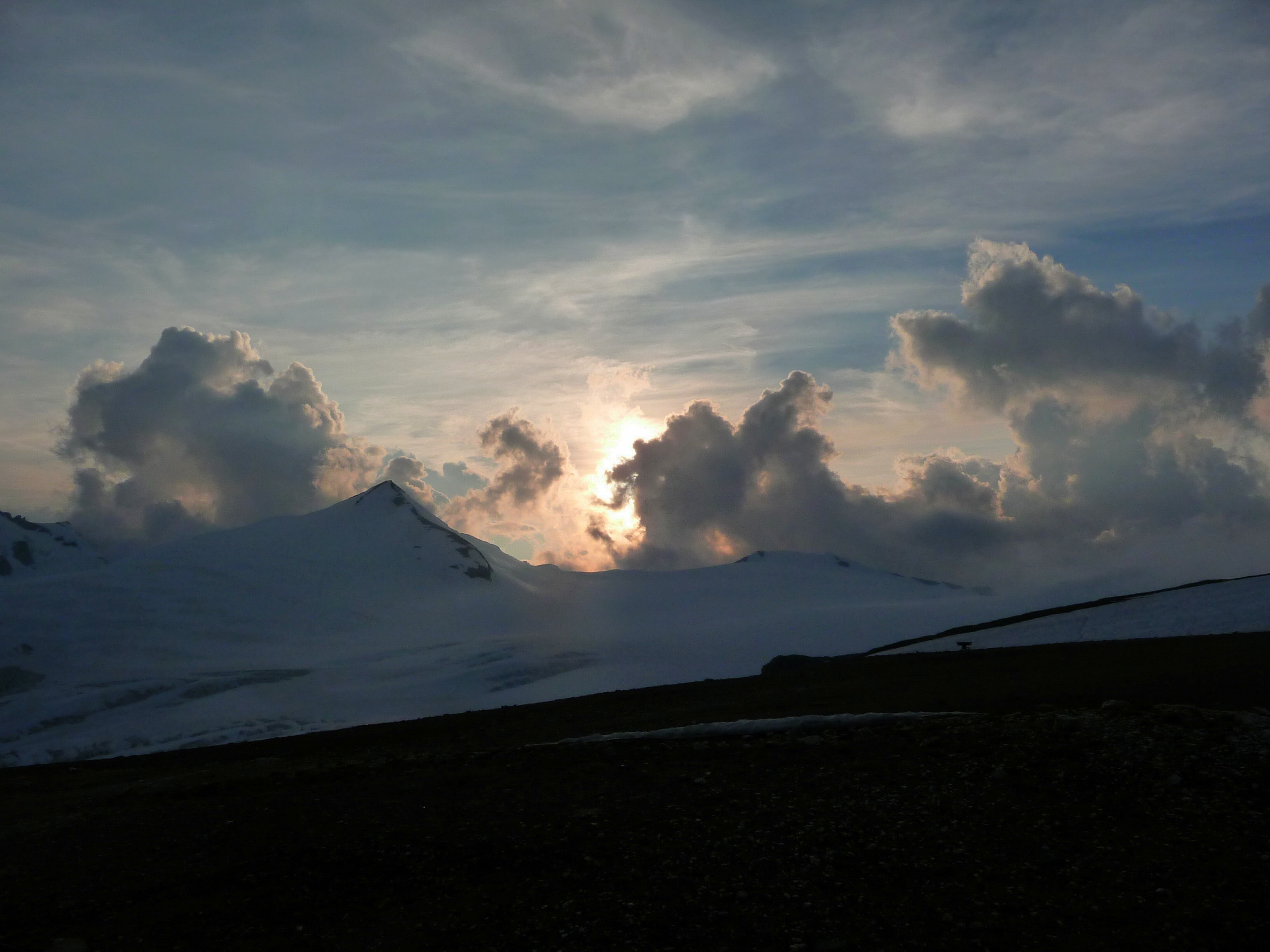
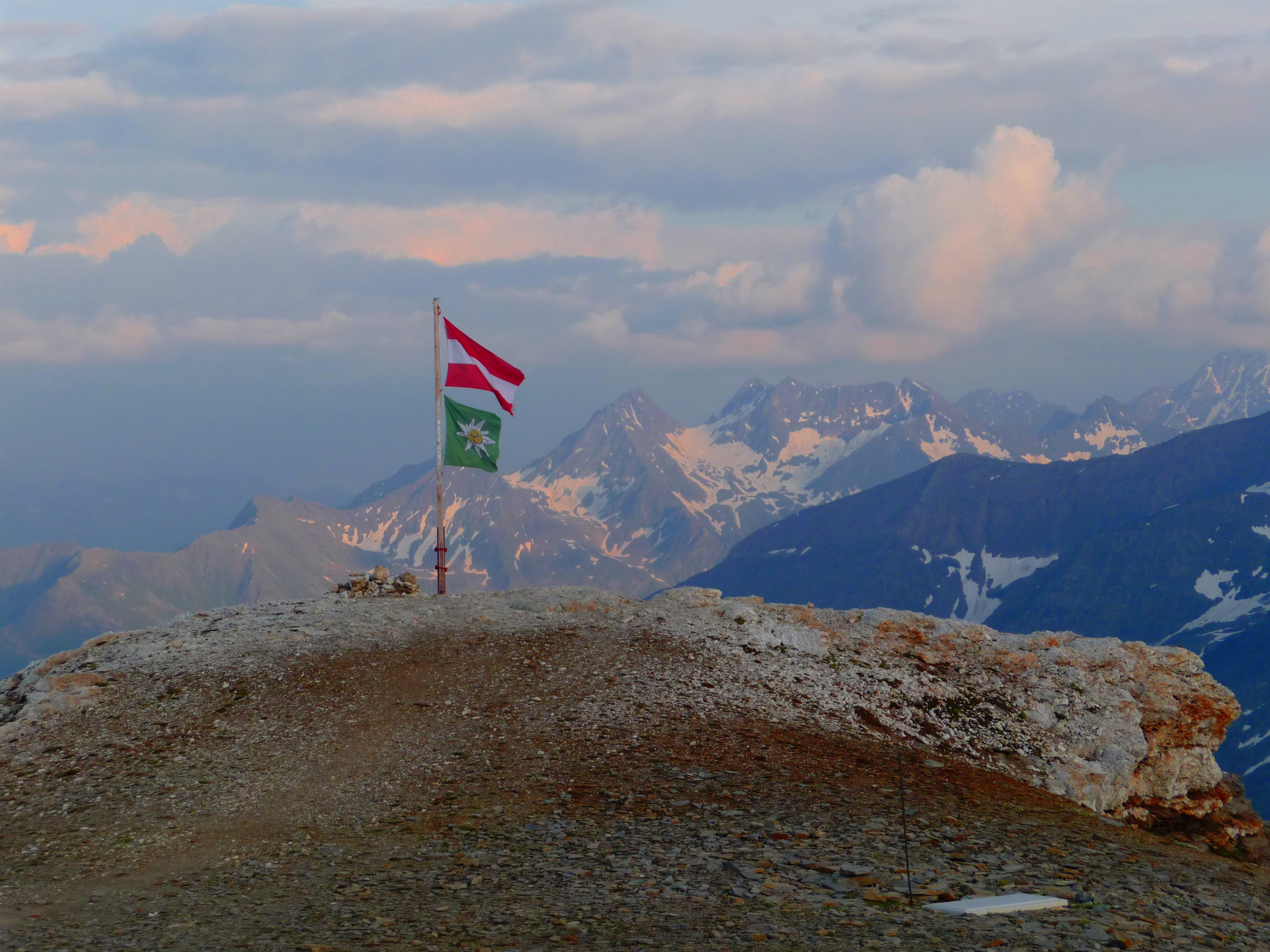
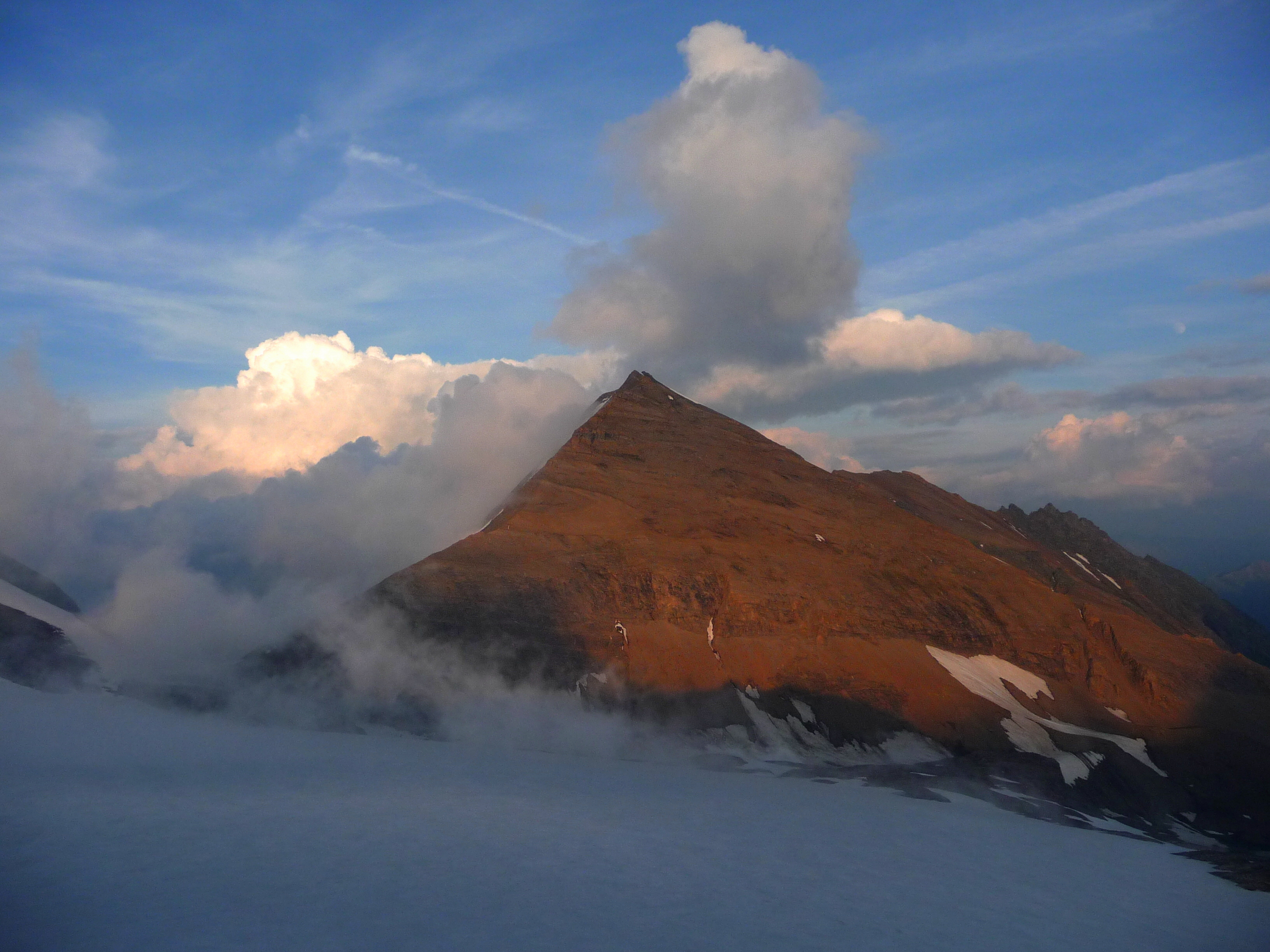
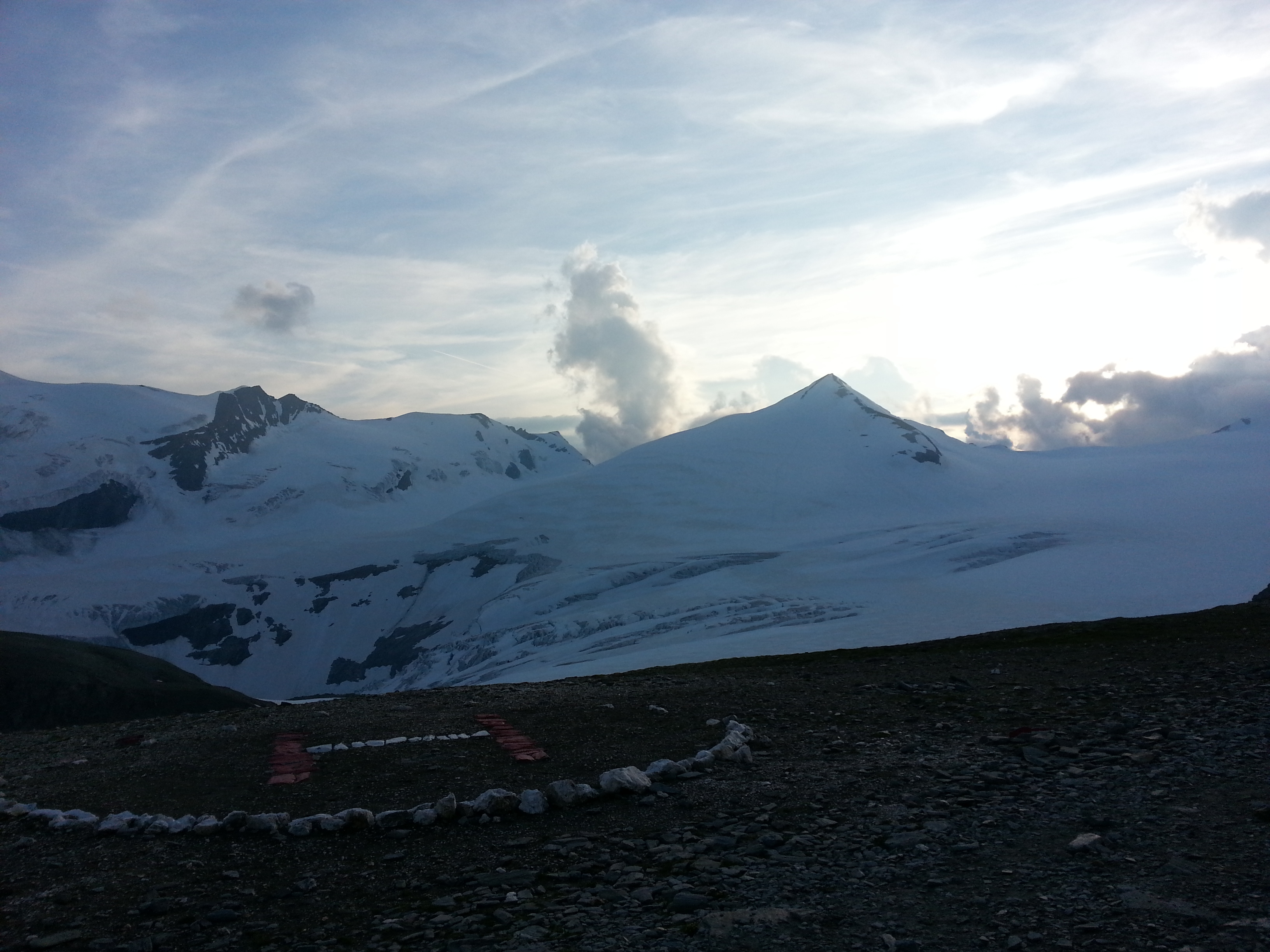
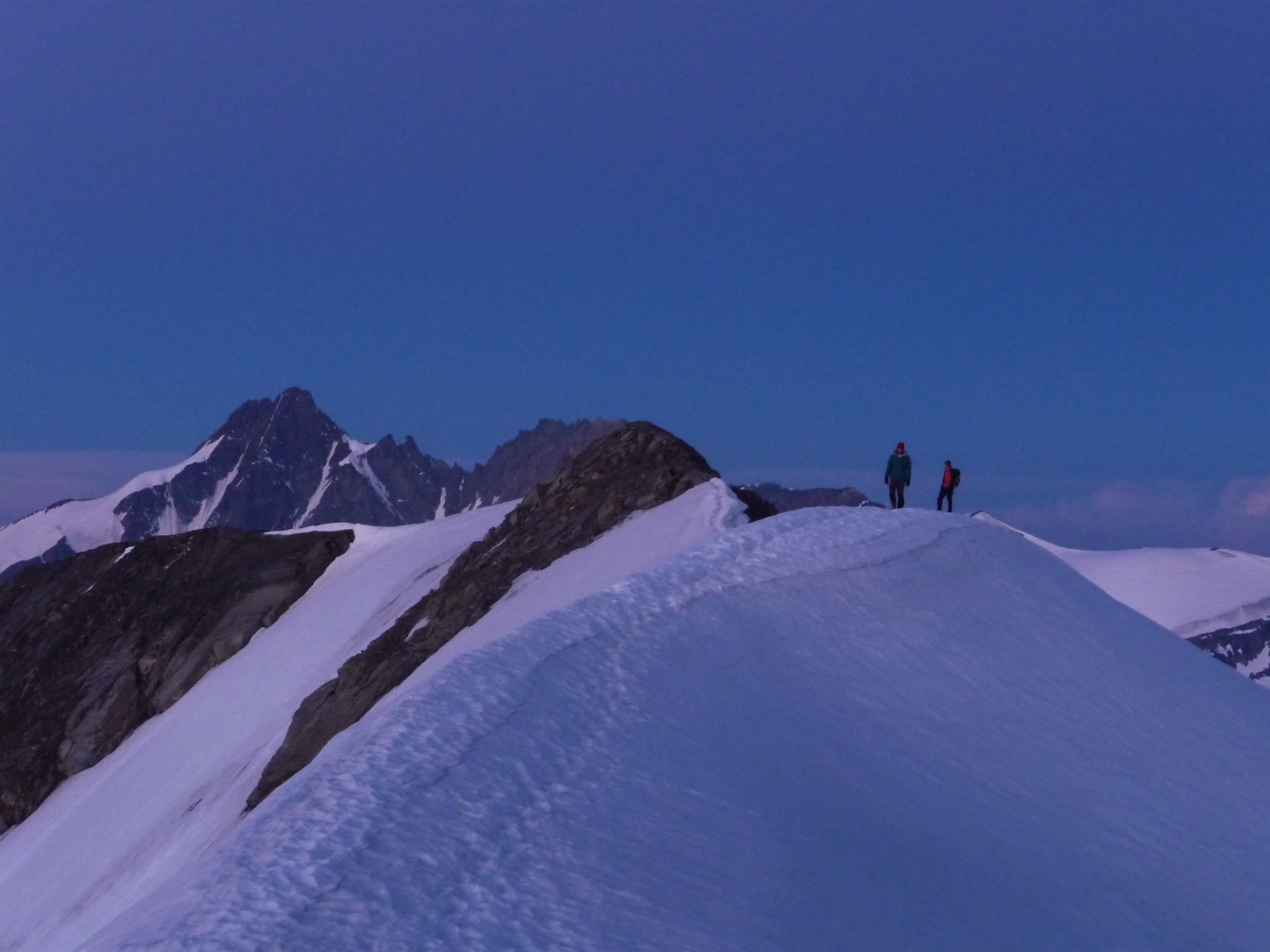
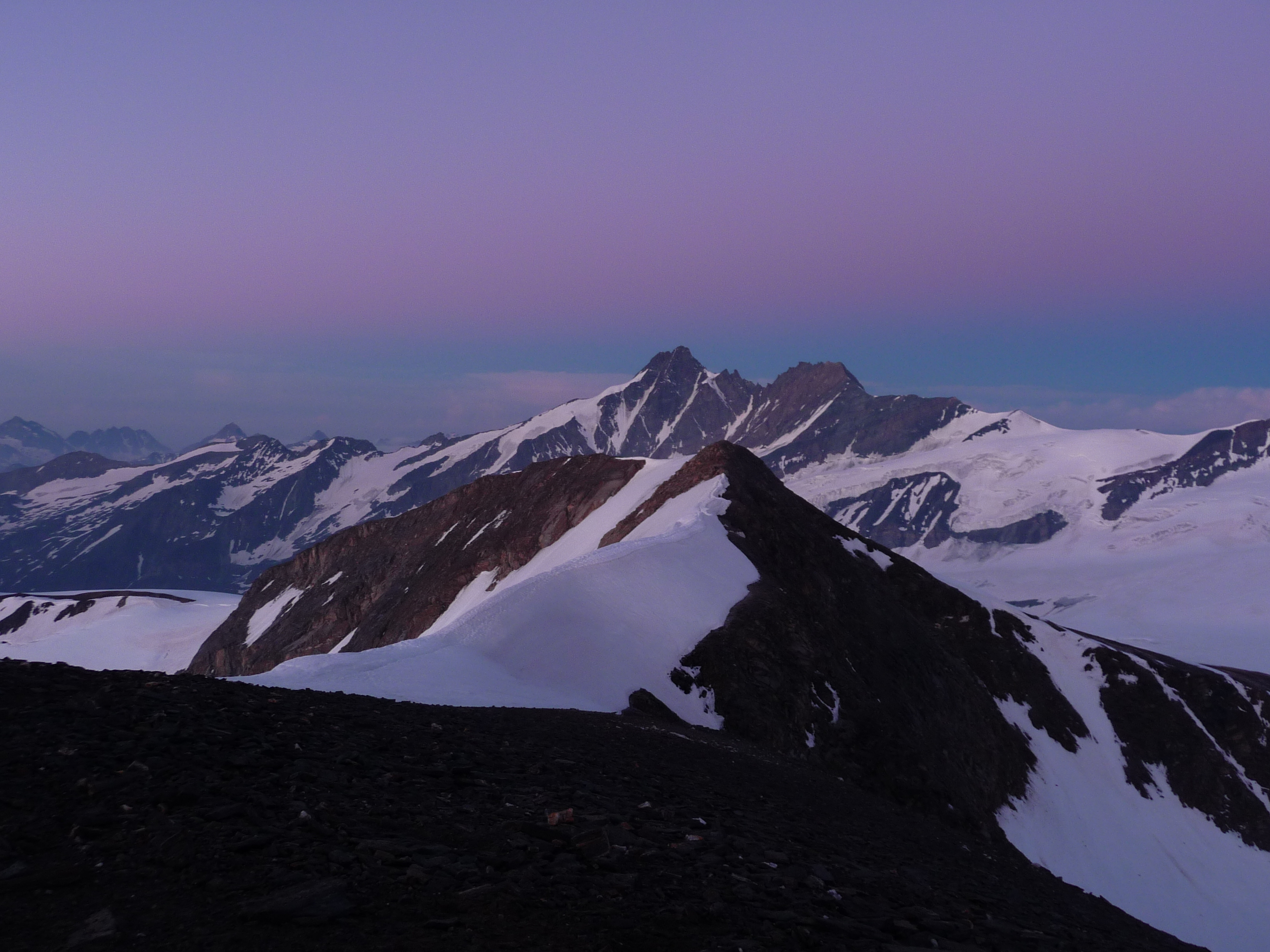
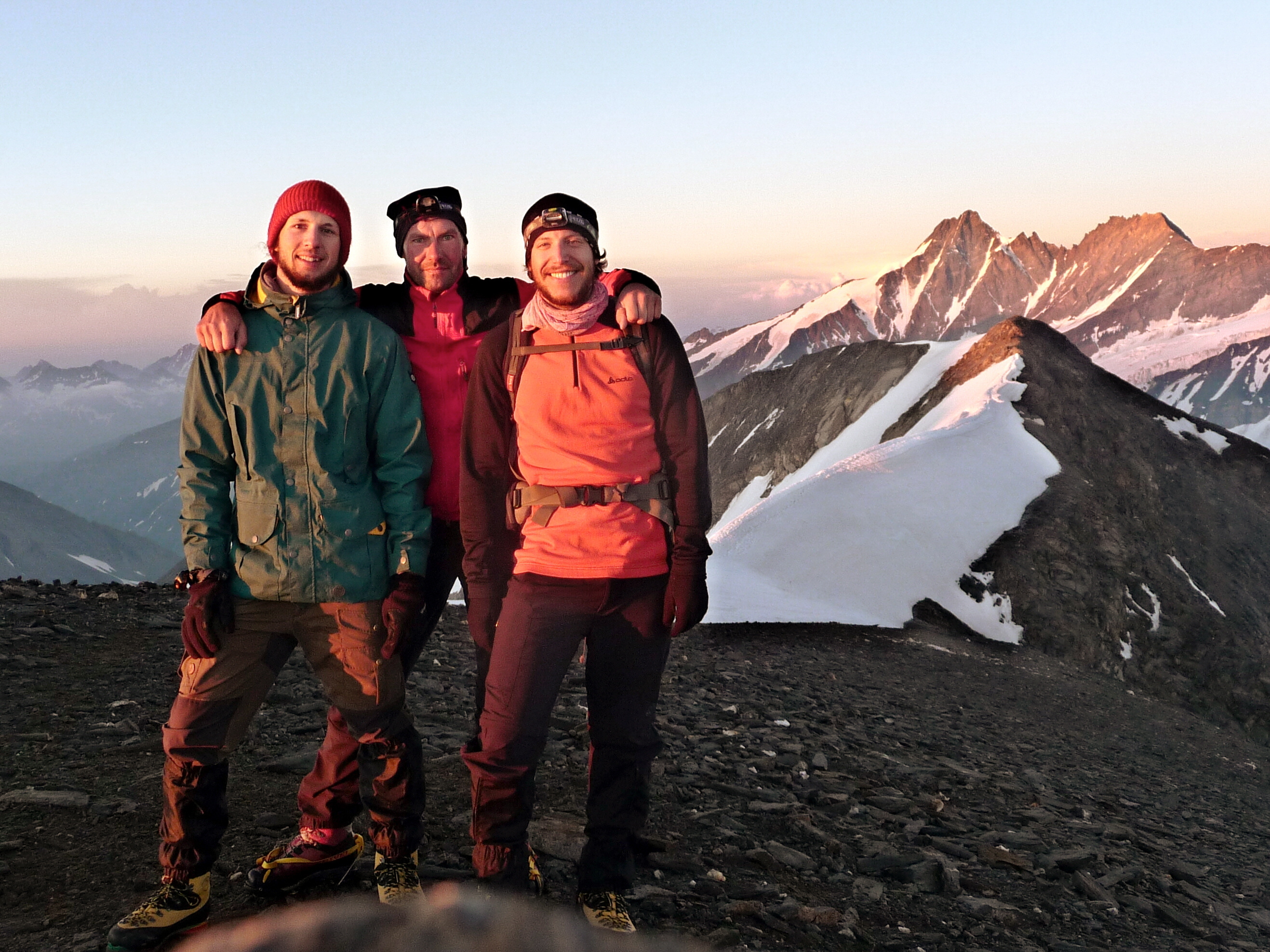
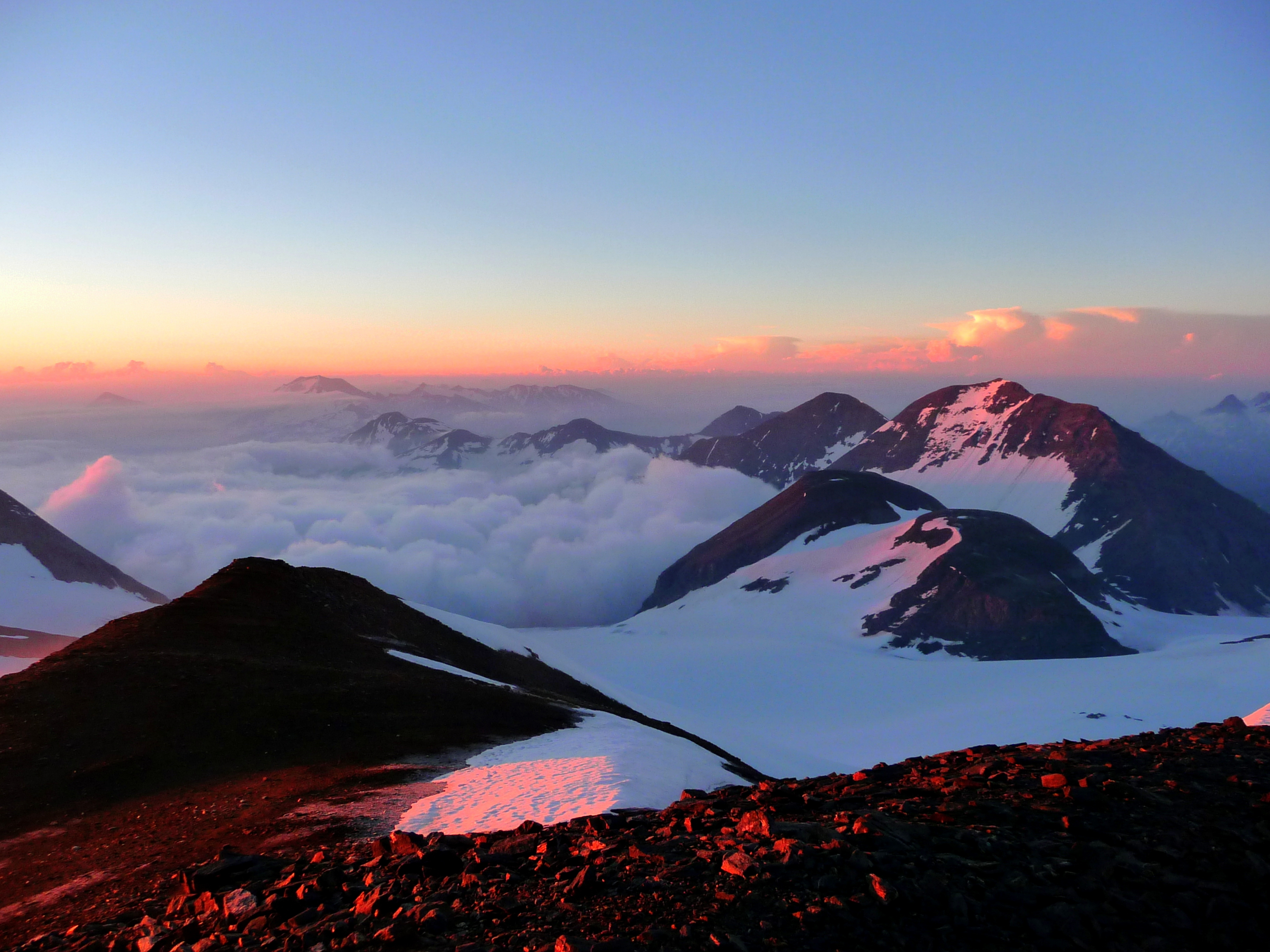
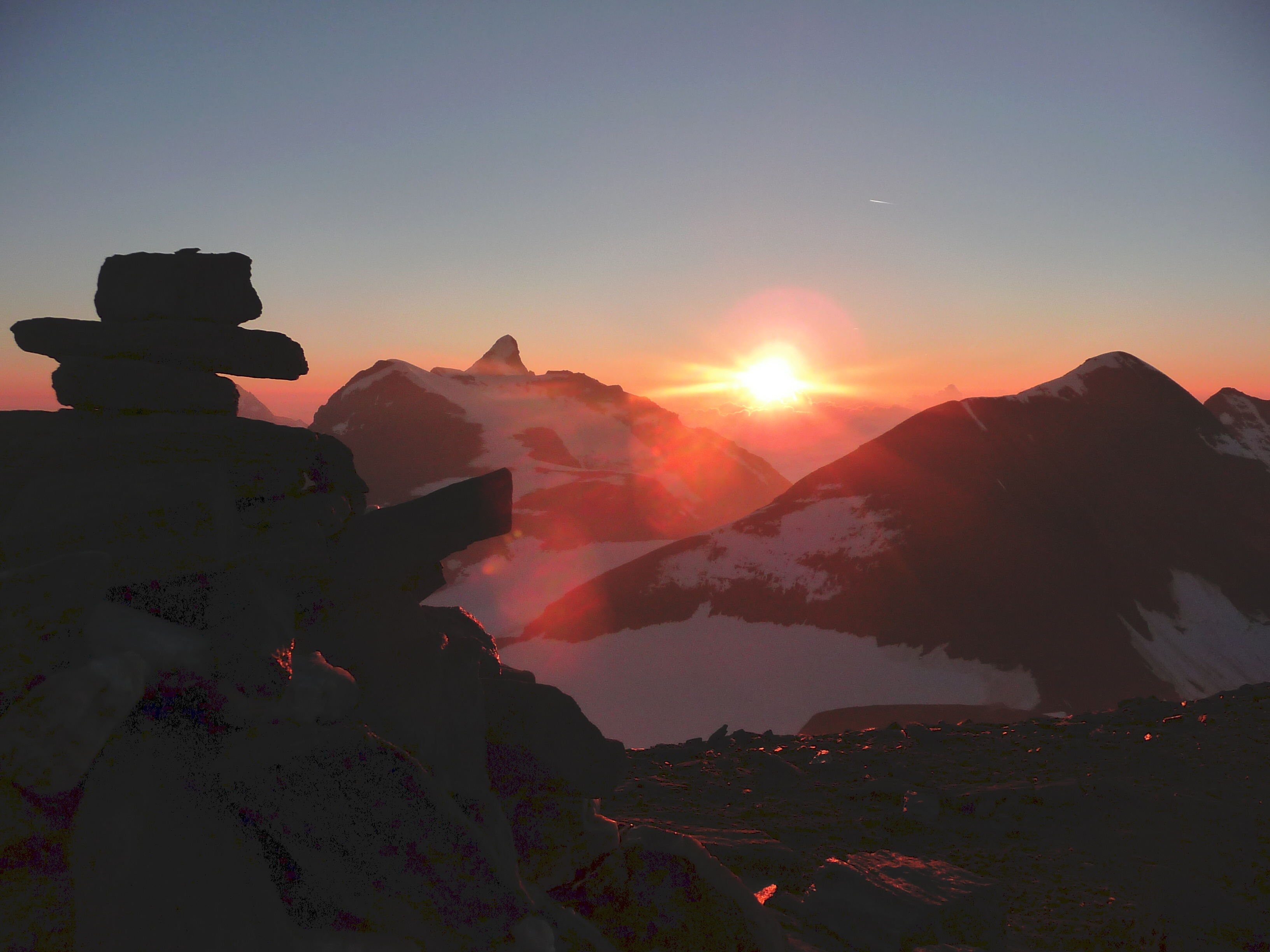
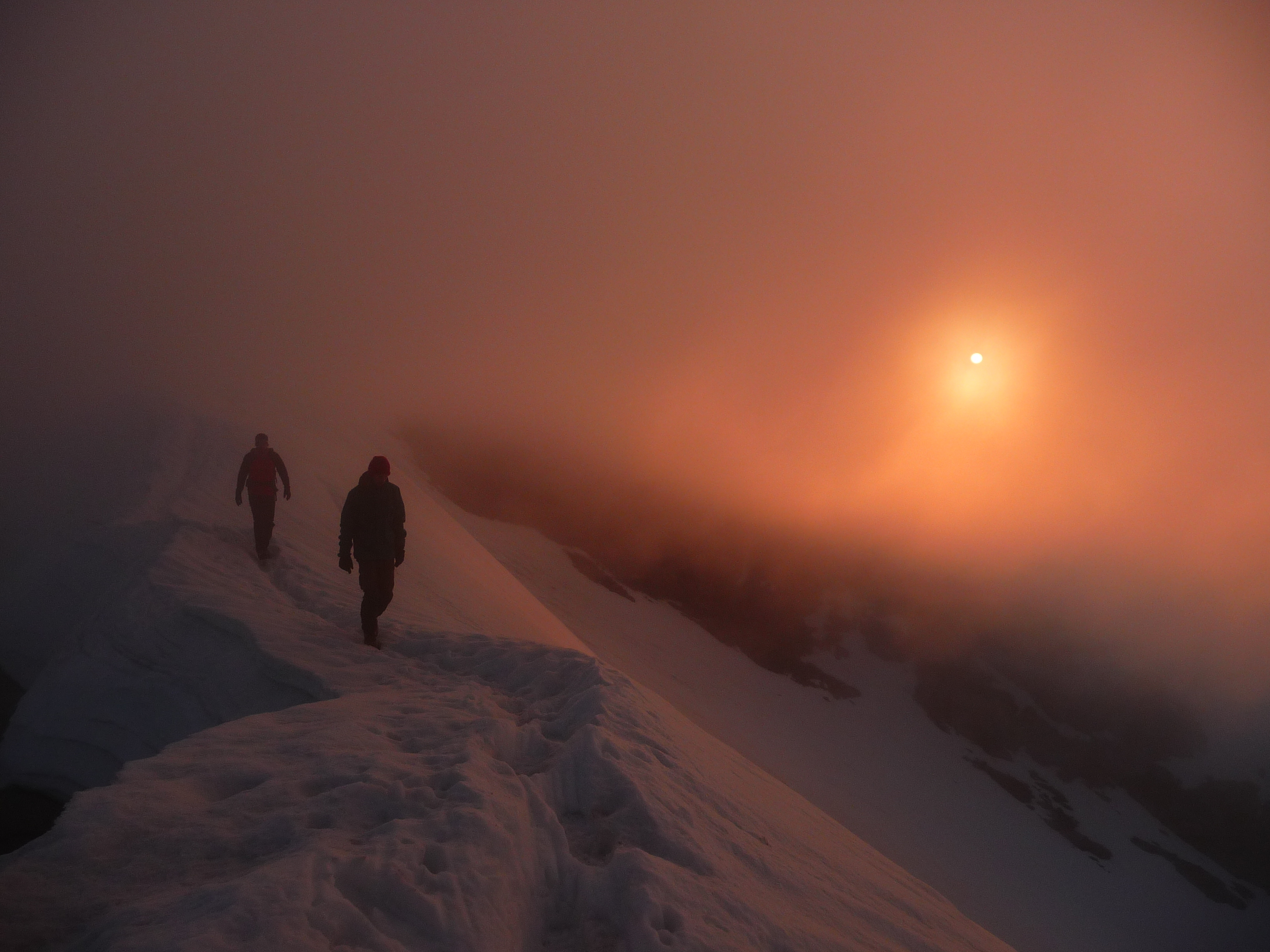
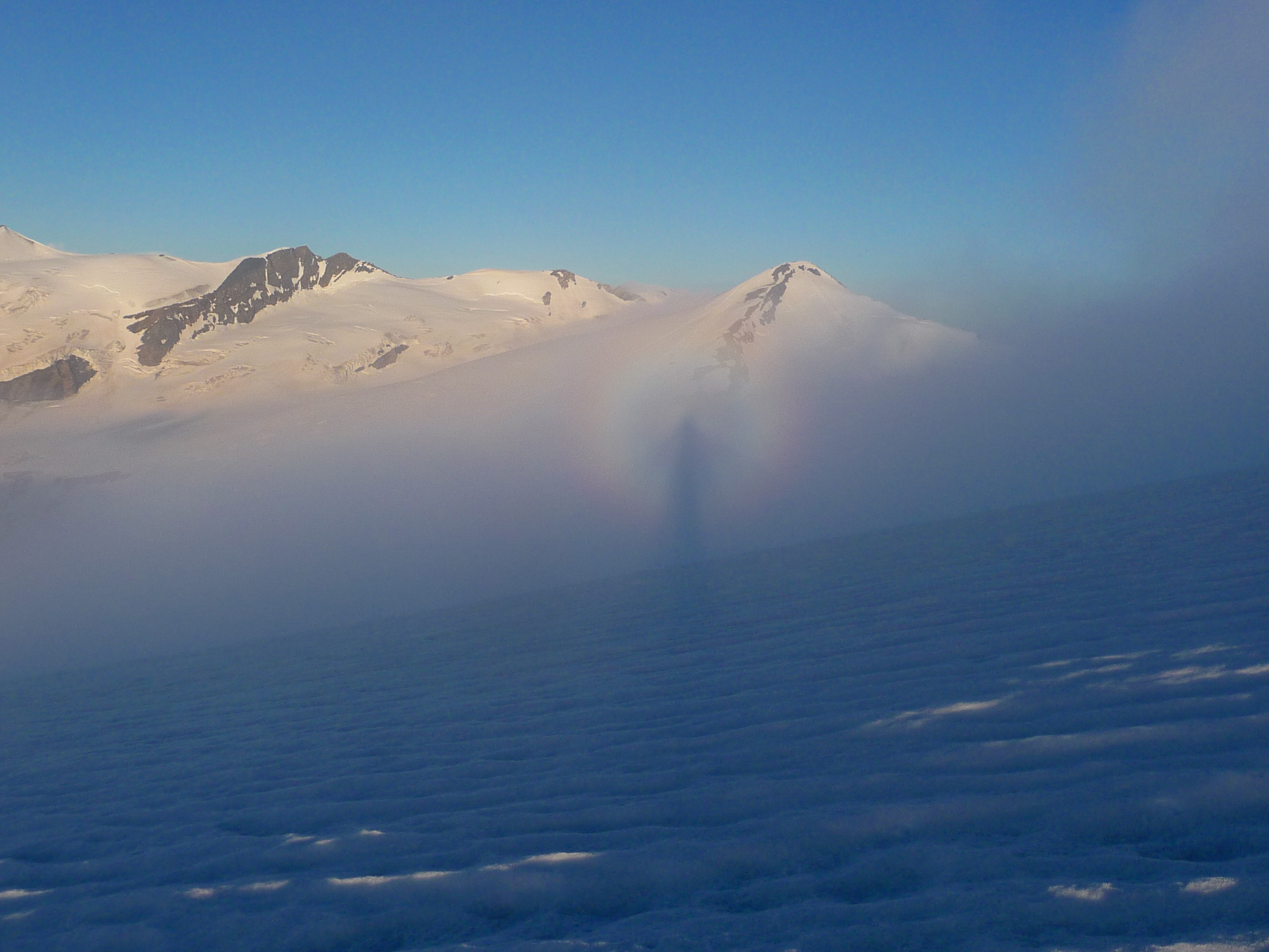
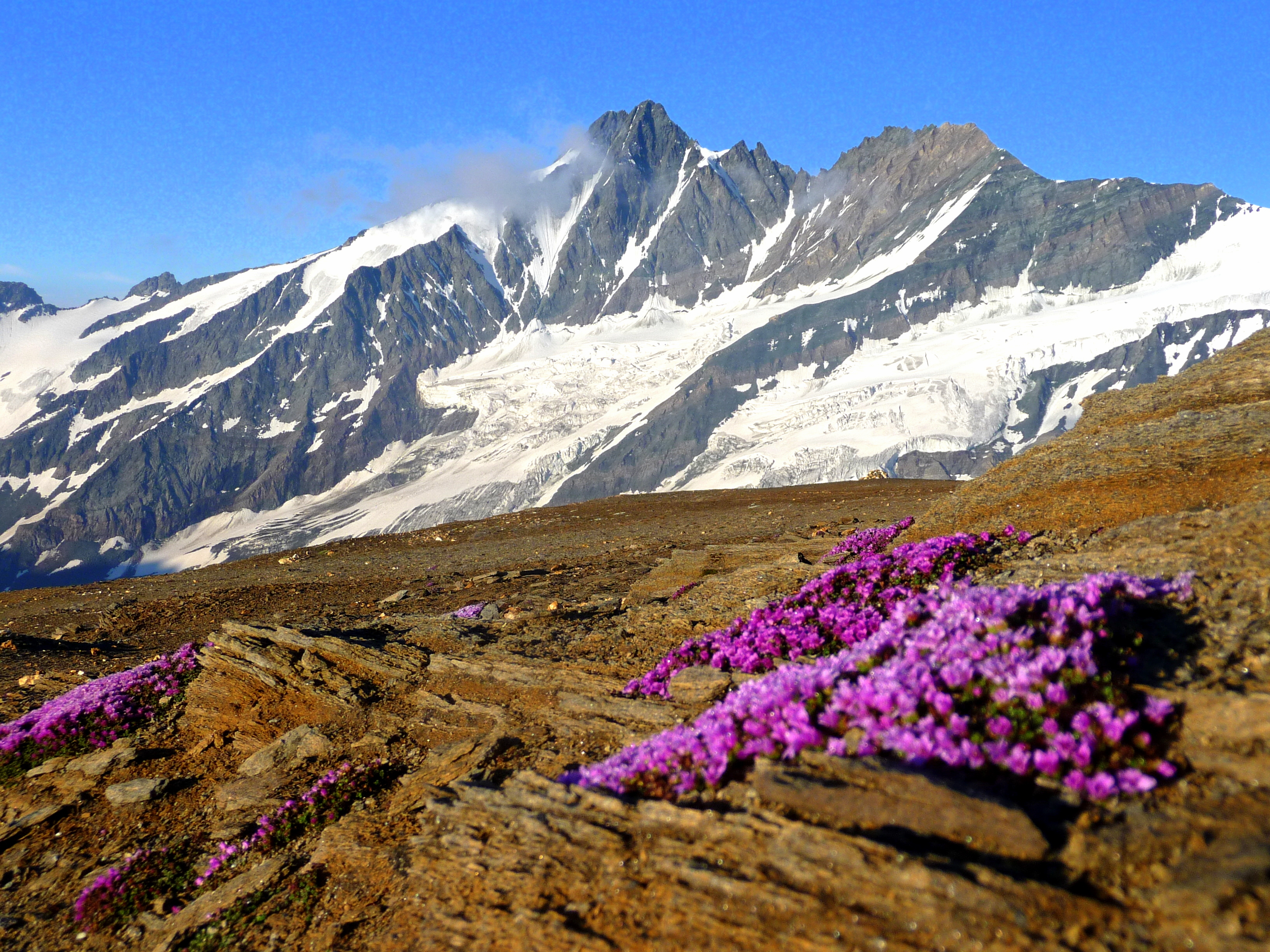
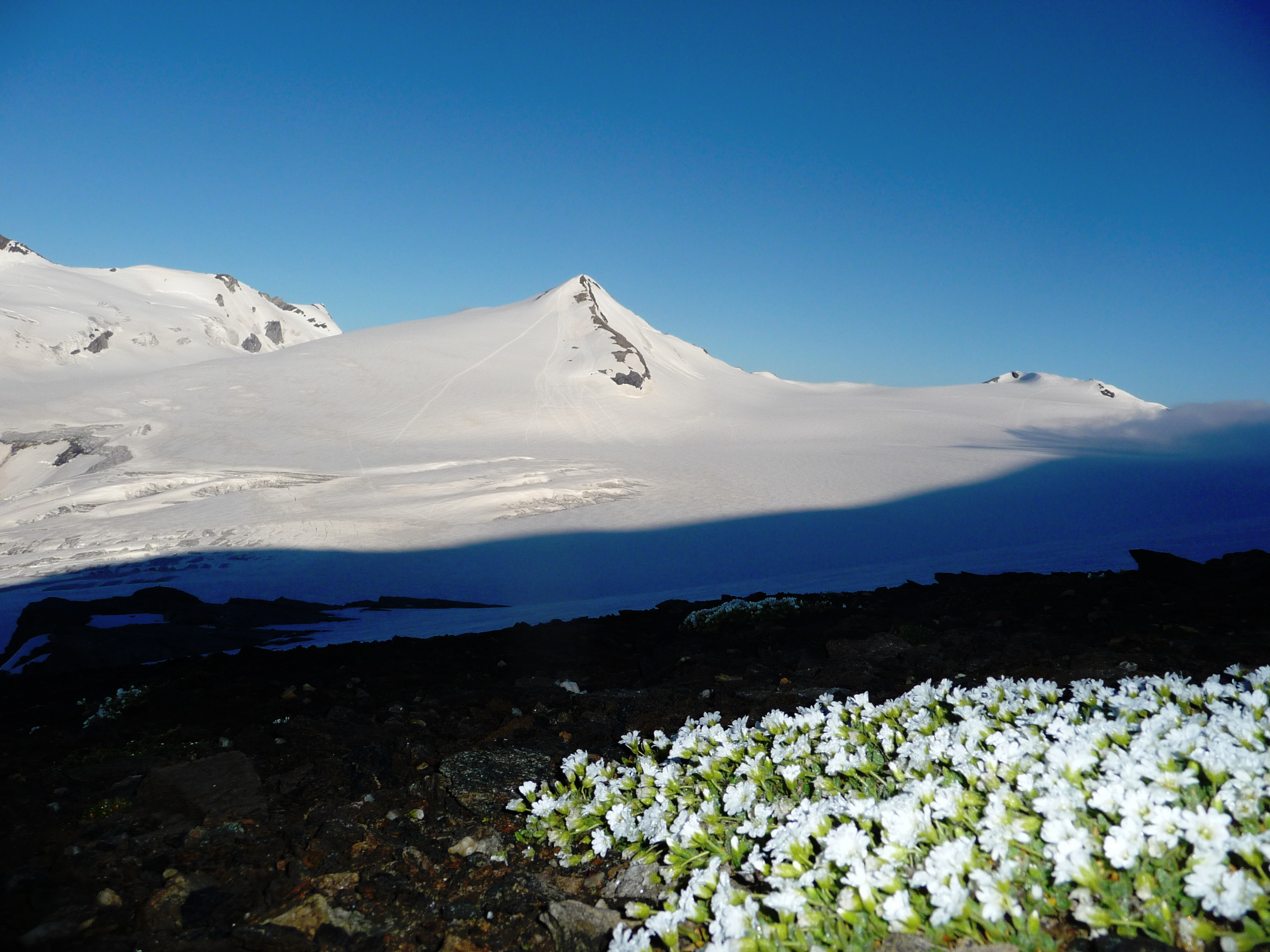
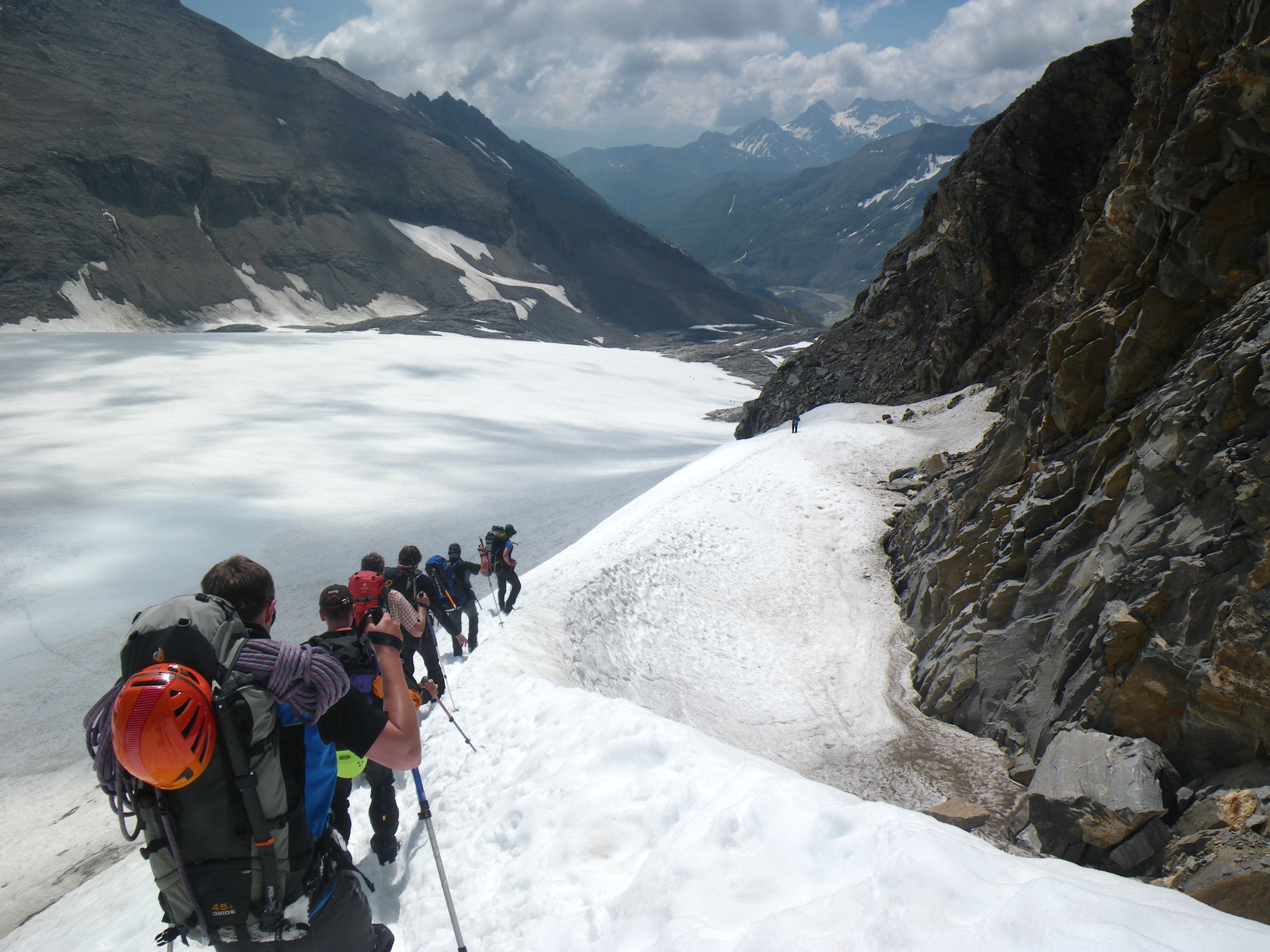
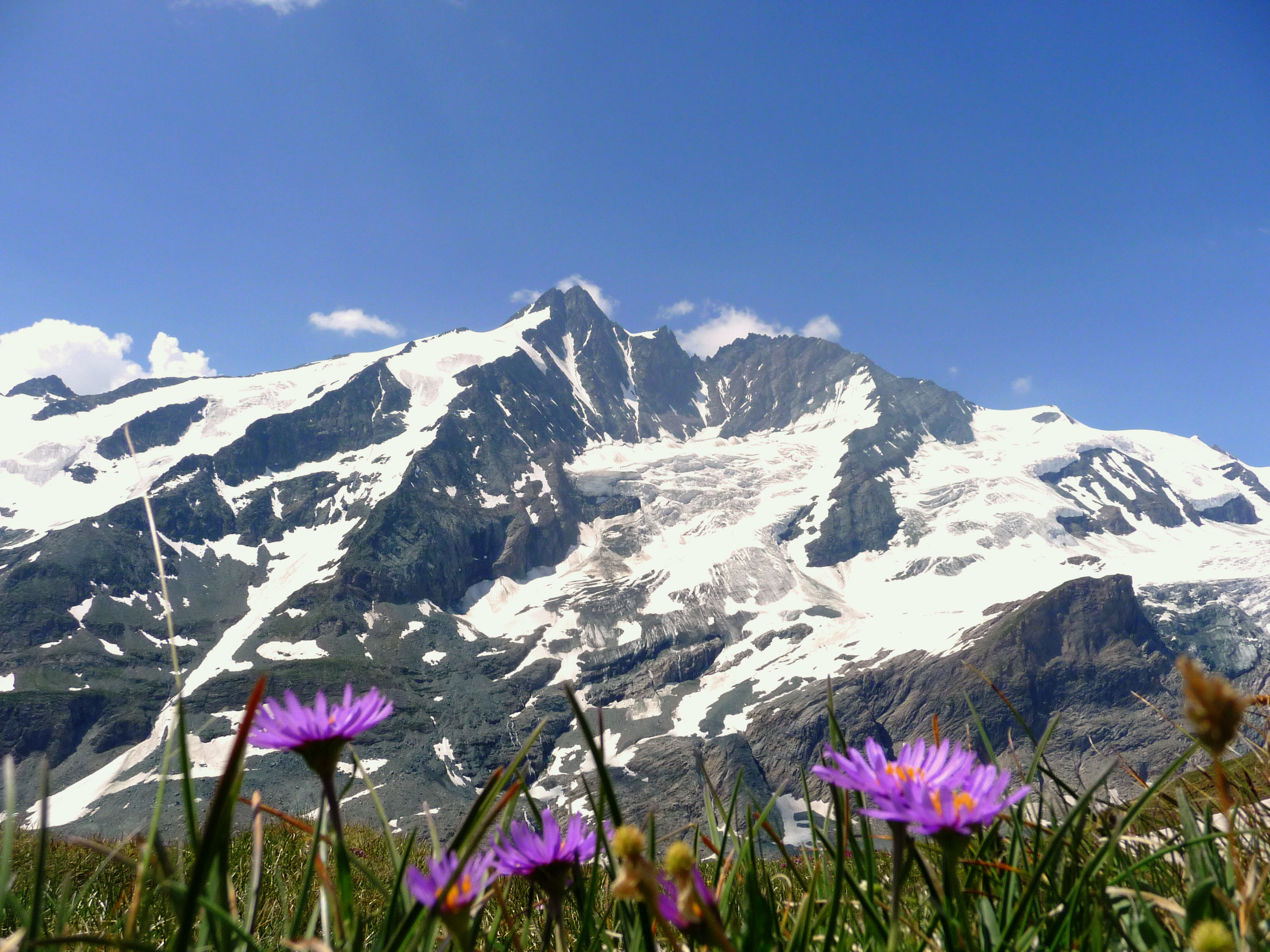
The Johannisberg at 3,453 m was summited early Saturday morning via the upper Pasterze glacier basin, the east flank, and the “Himmelsleiter” (Stairway to Heaven) in a good three hours, rewarding us with a magnificent panorama. The view toward the Großglockner and the Pasterze — the pitiful remains of what was once the largest glacier in the Eastern Alps — was breathtaking. In the distance, the monumental summit of the Großvenediger (3,657 m) was easily visible. The Kitzsteinhorn (3,203 m) and the Großes Wiesbachhorn (3,564 m) were particularly imposing, and the view down to the Weißsee with the Rudolfshütte was stunning. Numerous other well-known peaks could be spotted under a cloudless, deep-blue sky with outstanding visibility. After the summit bliss, both rope teams began the descent. Wherever possible, participants slid down on their backsides, which brought plenty of good cheer. The return route led back across the expansive glacier, which by now had been noticeably softened by the blazing sun, with one rope team making a small detour through the partly exposed crevasses of the Hufeisenbruch. Back at the hut, after a lunch break, the construction of a “loose pulley” (Z-pulley) system was practiced as a dry run — a technique needed for crevasse rescue. Additionally, the various possibilities of fixed rope belaying were explained.
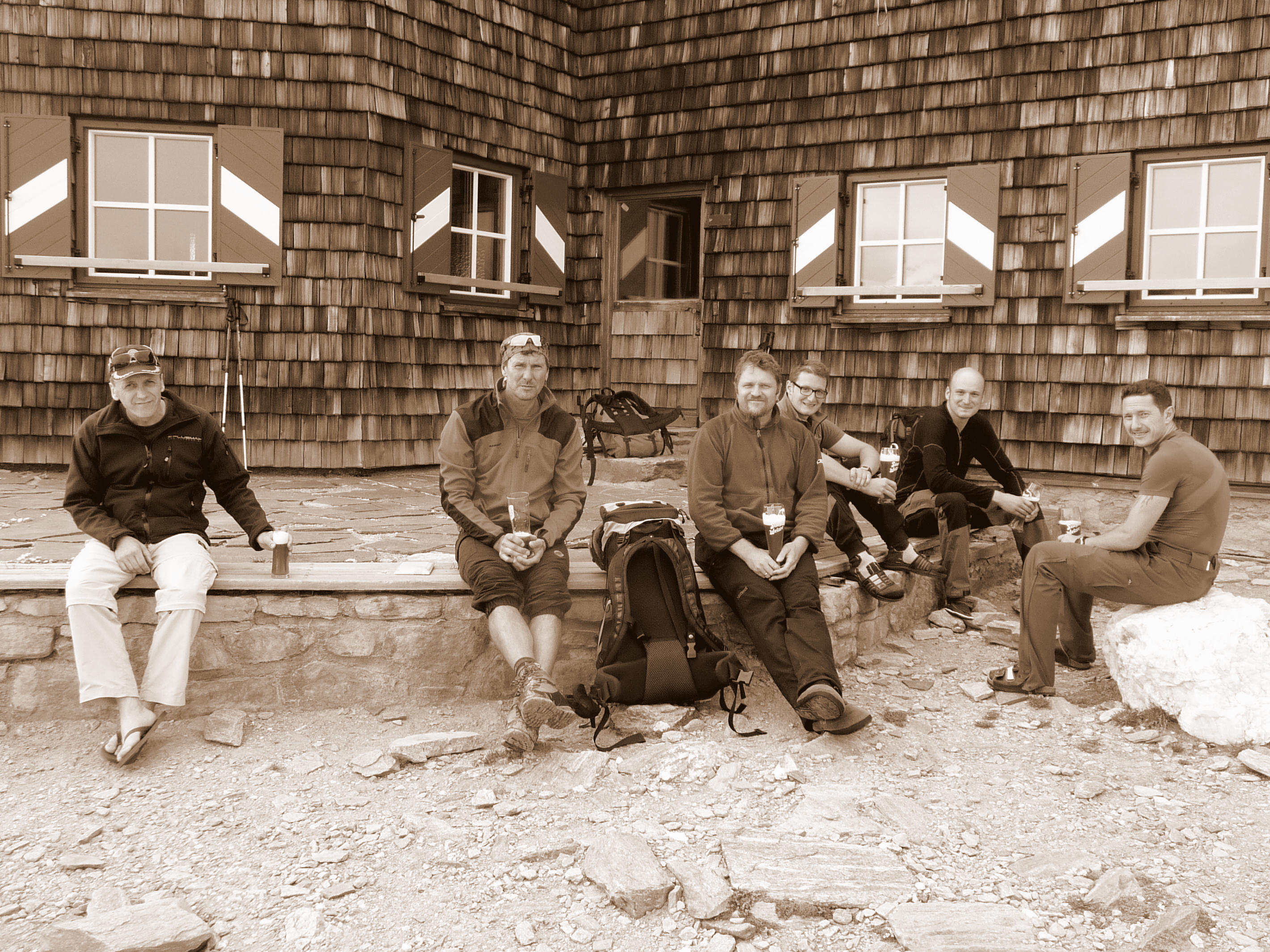
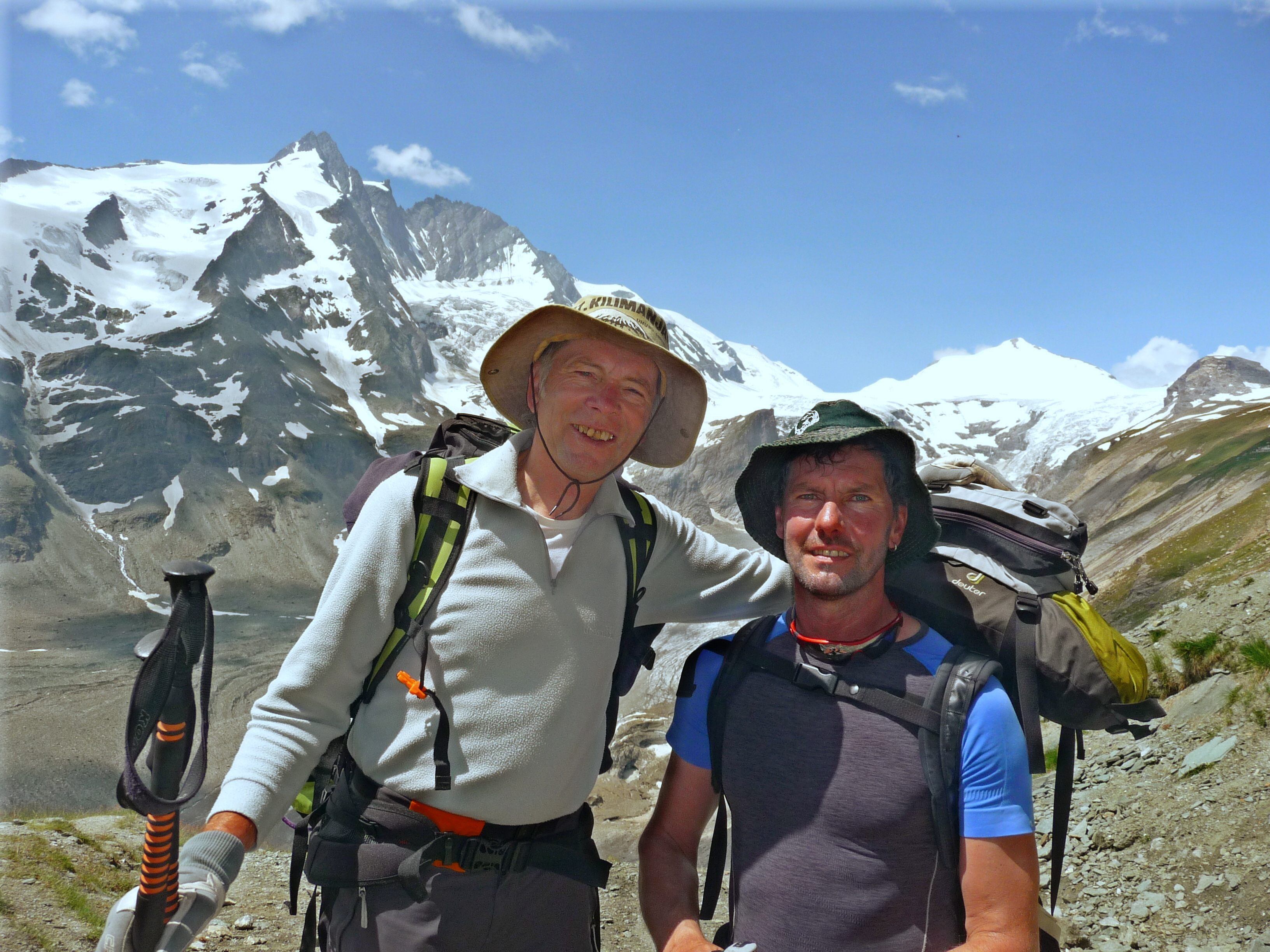
Sunday morning was used for the practical application of the crevasse rescue techniques practiced the day before. Participants had to master building a “dead man” anchor as well as every single station in a four-person rope team during a crevasse rescue with a Z-pulley system. With that, the course was complete, and the group made their way back together to the Kaiser-Franz-Josefs-Höhe, where the cars were parked. Over a shared lunch at the foot of the Großglockner High Alpine Road, the participants could reflect on the experience once more. In conclusion, the glacier course was extremely instructive overall — a must for anyone wanting to undertake high-altitude tours. Special praise goes to our instructors Erich and Sigi, who were highly competent in answering technical questions throughout the course and created a very friendly and pleasant atmosphere. Of course, the fun factor was not neglected either — many a joke was told and there was lots of laughter; in short: “A riesen Gaudi” (a great time). We must also not forget the two helpers from DAV Section Deggendorf, Max and Rudi, who contributed behind the scenes to the smooth running of the course. The dream weather ultimately crowned it all.
Participants: Group of DAV Section Deggendorf
Photos